


Intercultural Crosstalk
Foreign Residents Supporting Other Foreign Residents ①Getting Started in Support Work
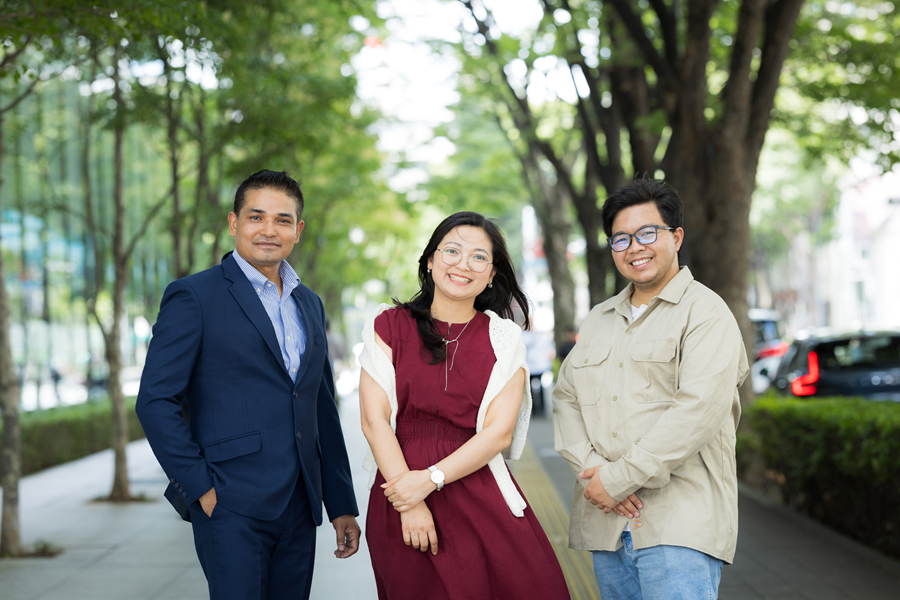
Profiles
Tama (from Indonesia)
- Years of residence in Japan
- 7 years
- Native language
- Indonesian
- Favorite Japanese word
- “Bimyō” (subtle, used to describe something hard to define)
- Favorite places in Tokyo
- Shibuya Ward
- Favorite food
- Tacos, basashi (horse meat sashimi), kebabs, satay, etc.
- Hobbies
- Airsoft, listening to music
- If you could say one thing to your past self right after arriving in Japan
- “I’m here!”
- Work
- Supervising organization for Specific Skilled Workers and Technical Intern Training programs
Hien (from Vietnam)
- Years of residence in Japan
- 11 years
- Native language
- Vietnamese
- Favorite Japanese word/saying
- “Senri no michi mo ippo kara” (a journey of a thousand miles begins with a single step)
- Favorite places in Tokyo
- Asakusa
- Favorite food
- Onigiri (especially salmon and tuna mayo)
- Hobbies
- Meeting all kinds of people and learning from them
- If you could say one thing to your past self right after arriving in Japan
- Set goals for 1 year and 5 years from now, and start with what you can do right now
- Work
- Regional Coordinator for Japanese Language Classes at JICE
Shiva (from Nepal)
- Years of residence in Japan
- 20 years
- Native language
- Nepali
- Favorite Japanese word
- “Ganbarimashō” (let's do our best)
- Favorite places in Tokyo
- Odaiba
- Favorite food
- Yakitori
- Hobbies
- Driving
- If you could say one thing to your past self right after arriving in Japan
- You just have to do your best.
- Work
- Providing daily life support through interpretation, recruitment services, and more
Round 1: Getting Started in Support Work
We’re presenting a 3-part series of round-table discussions featuring “Foreign Residents Supporting Other Foreign Residents”.
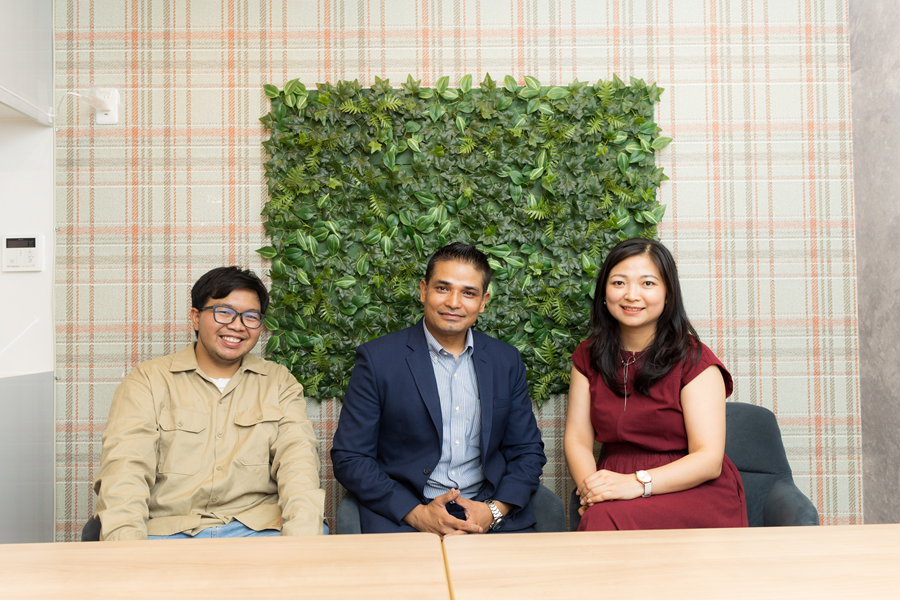
There are people who draw on their own thoughts and experiences from when they first arrived in Japan to support foreign residents. In this installment, we spoke with 3 individuals involved in providing assistance from different perspectives.
Please Tell Us About the Town You’re From and What Brought You to Japan.
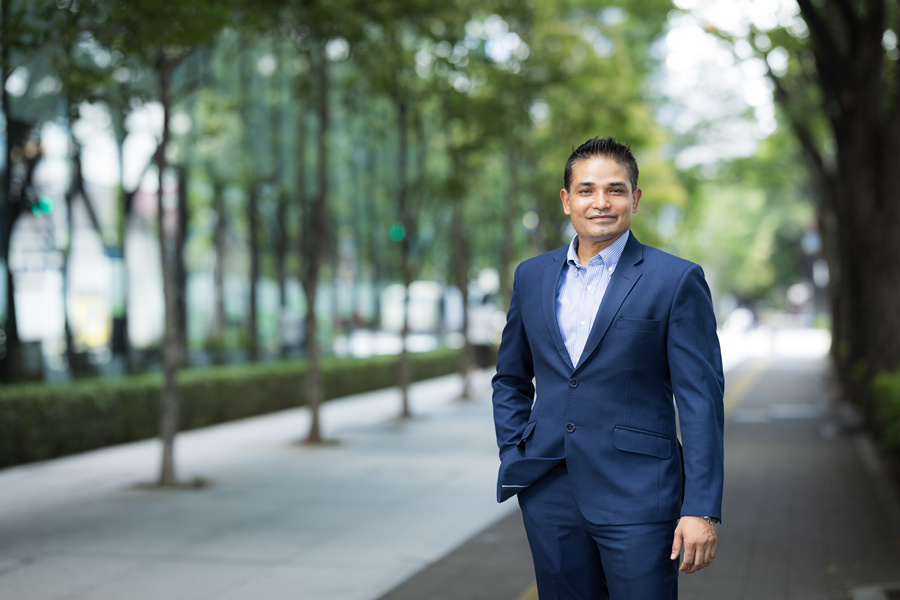
I’m from Kathmandu, the capital of Nepal. After graduating from high school, I studied Japanese in Nepal for half a year before coming to Japan as an international student.
In Nepal, Japan has a very positive image. While Japanese cars and electronics are well-known, the TV drama “Oshin” and anime are also popular. When I decided I wanted to learn a language, “Japanese” was the first thing that came to mind.
I’m from Surabaya on the island of Java in Indonesia. It’s the second-largest city after Jakarta—similar to Osaka in Japan.
I’ve always loved adventure, and ever since I graduated from high school, I’ve wanted to study abroad. I love anime, and my father loved Japanese cars, so I decided to study in Japan because of its positive image. I arrived in Japan 2 days after graduating from high school.
I’m from Hanoi, in northern Vietnam.
Unlike both of you, I came to Japan for family reasons. When my daughter was 2 years old, my husband became interested in Japan, and we started talking about moving there. I was younger then, so I felt, “If I’m going to take on this challenge, now is the time.” My only impression of Japan was that it had “a lot of earthquakes,” but I just really wanted to experience a new environment.
What Kind of Work Are You Doing Now?
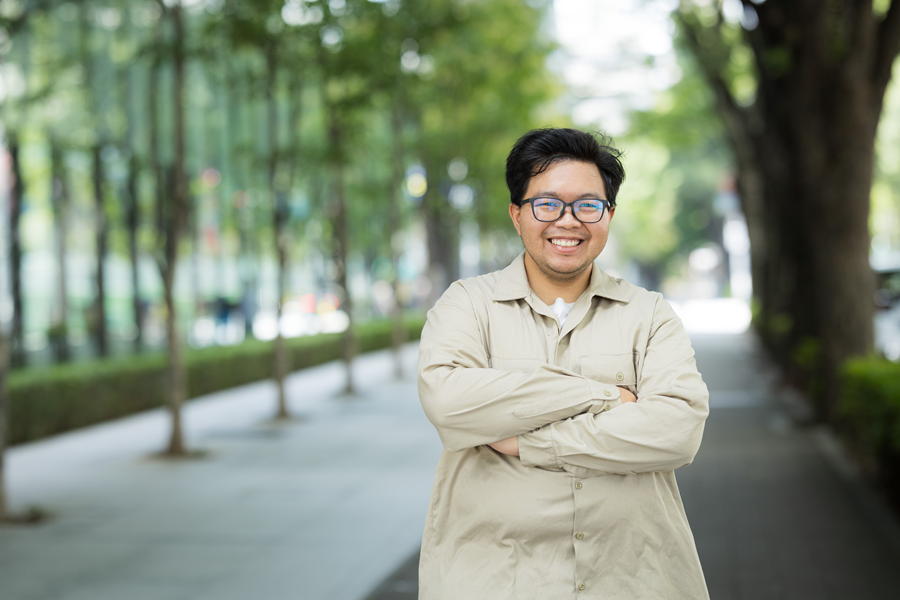
Immediately after arriving in Japan, I enrolled in a Japanese language school, and then studied business administration at university. After graduating, I joined a supervising organization that supports the acceptance of Technical Intern Training Program and Specified Skilled Worker program participants. I’m currently in my second year there.
Like Tama, I also started working right after graduating from university. I worked in the travel industry—including at a major Japanese travel agency—for about 10 years, and last year, I established my own company. In addition to travel arrangements, I provide interpretation and translation support for Nepalese residents and offer recruitment services.
After arriving in Japan, I learned Japanese by attending local volunteer classes and JICE’s “Japanese for Work” classes. My career progressed as my Japanese improved. I started out working in a factory, then moved on to a fast-food chain. After passing the Japanese Language Proficiency Test (JLPT) N3, I worked as a server at a hotel restaurant, and once my conversational skills improved further, I was hired by a major apparel chain. I still work at that same apparel store, and I also serve as a regional coordinator at JICE—where I originally studied Japanese—providing support to students.
How Did You Study Japanese?
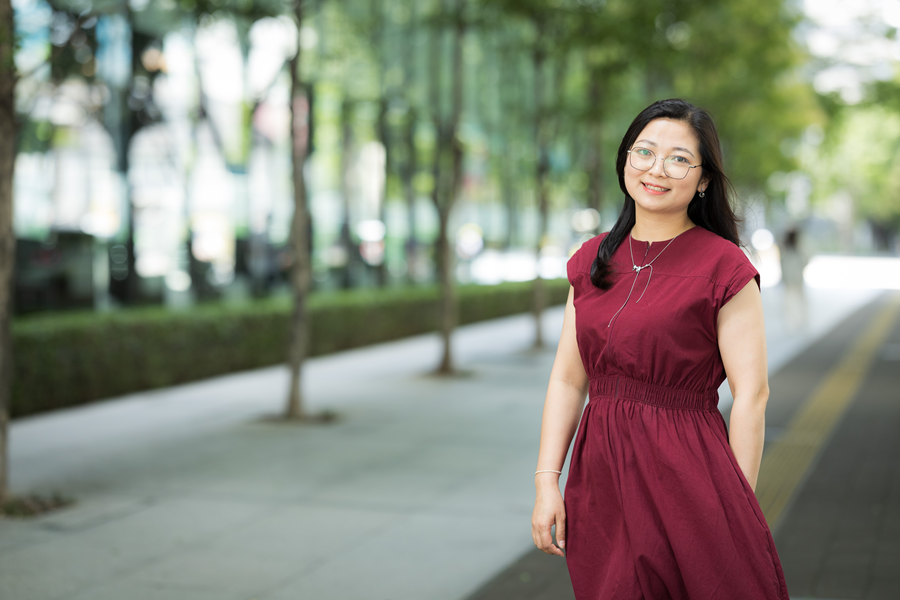
I studied at a Japanese language school before entering university.
Same for me. Since it’s difficult to enter a Japanese university directly from overseas, many students—not just me—first study at a Japanese language school.
The place I attended for the longest time was a local volunteer-run Japanese class. I feel like my conversational skills aren’t as good as those who studied at a Japanese language school.
That said, local Japanese language classes do have the advantage of helping you learn practical Japanese, don't they?
That's certainly true. Since the lessons focused mainly on everyday conversation, I was able to study with confidence.
What Other Languages Do You Speak Besides Japanese?
Vietnamese, Chinese, and English. Also, although it's not a language, I hold a law license in Vietnam.
Besides Nepali, I speak English and Hindi, which is similar to my native language.
Besides Indonesian and Javanese, I can speak English, and also read Arabic, the language of the Quran.
The languages I mainly use for work are Japanese and Indonesian, but if, for example, someone from the Philippines needs assistance, I sometimes speak English.
I’m the same. I have many opportunities to use English.
Even though interpretation and translation tools have gotten better these days, it’s still really convenient to be able to speak for yourself. That way, you can talk at the same pace as the other person face-to-face.
I know what you mean. It’s important to be able to talk directly with the other person, isn’t it?
What Motivated You to Take a Job Supporting Foreign Residents?
It all started with my own experience. In families with children, fathers who work can learn Japanese through their jobs, so in many cases, their lives don’t change much even after moving to Japan. Mothers who handle housework and childcare, on the other hand, struggle greatly with Japanese in their daily lives—whether it’s at hospitals, schools, or when dealing with government procedures. I’ve been in that difficult situation myself, so I understand how they feel, and I strongly want to help mothers in similar circumstances. Even now, when I hear stories at JICE—such as “I don’t know how to handle the enrollment procedures for my child”—I sometimes volunteer to provide support, whether by interpreting over the phone or accompanying them in person.
Since I came to Japan with a young child myself, I fully understand the anxiety of not having anyone to watch your child. I want to share information with people in need about available government services, such as temporary childcare and parenting support.
Like Hien, I’ve gained a lot of insight from my own experiences. When I first came to Japan, I faced the language barrier every day. Over the past 3-4 years, the number of Nepalis in Japan has been increasing, and I’ve started hearing about various concerns they face. Among those concerns, the language barrier remains the most common issue even today. It was the same problem I had experienced myself. Now that I’ve worked hard to learn the language and understand Japanese society, I feel I can truly be of help to others.
Currently, in addition to my work at my own company, I provide Nepali interpretation and translation support at the Suginami Ward Office. Suginami Ward has one of the largest Nepali populations in Tokyo. I still strongly feel a desire to use my own experiences to serve as a bridge for everyone.
I share that same desire to serve as a bridge.
In recent years, many people have been coming to Japan from Indonesia under residence statuses such as Technical Intern Training or Specified Skilled Worker. Among them, I had a friend who became worried about their family back home and returned to their home country in the middle of their work assignment. After returning, they contacted me asking, “Please help me find a job,” but once someone has returned home, it’s difficult to help. There are many cases like this where people make decisions without having enough information and end up at a disadvantage. My desire to serve as a confidant for such people and provide them with solid support was what sparked my interest in this support work.
In Round 1, we heard from the 3 individuals about what led them to start working in support roles. In Round 2, we’ll hear more about the specifics of their work.
── Continued in the Following Issues