


Intercultural Crosstalk
Working and Changing Jobs in Japan ③Japanese Business Culture
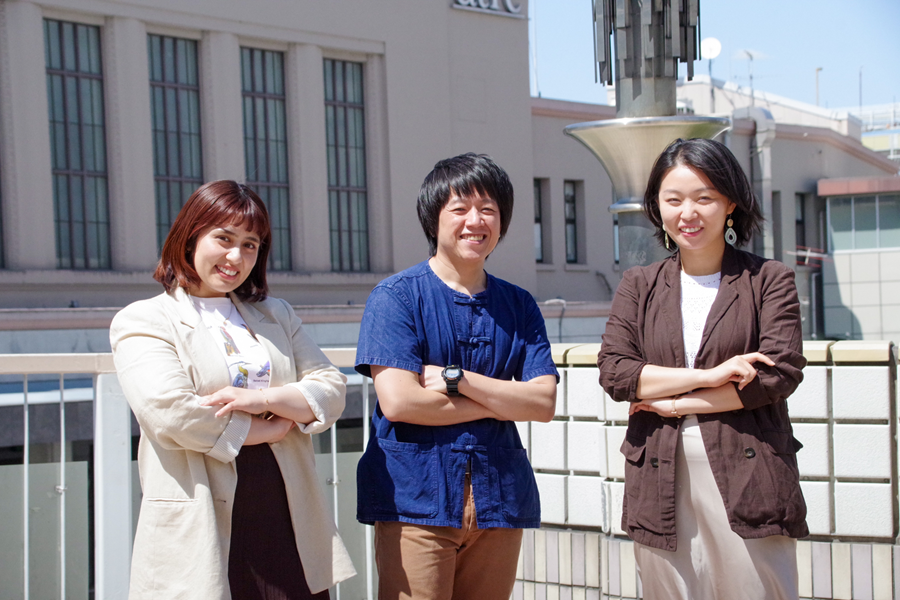
See their profiles here
Click for “1st Round” Here
Round 3: Japanese Business Culture
This is the final installment of our 3-part round-table series on “Working and Changing Jobs in Japan.”
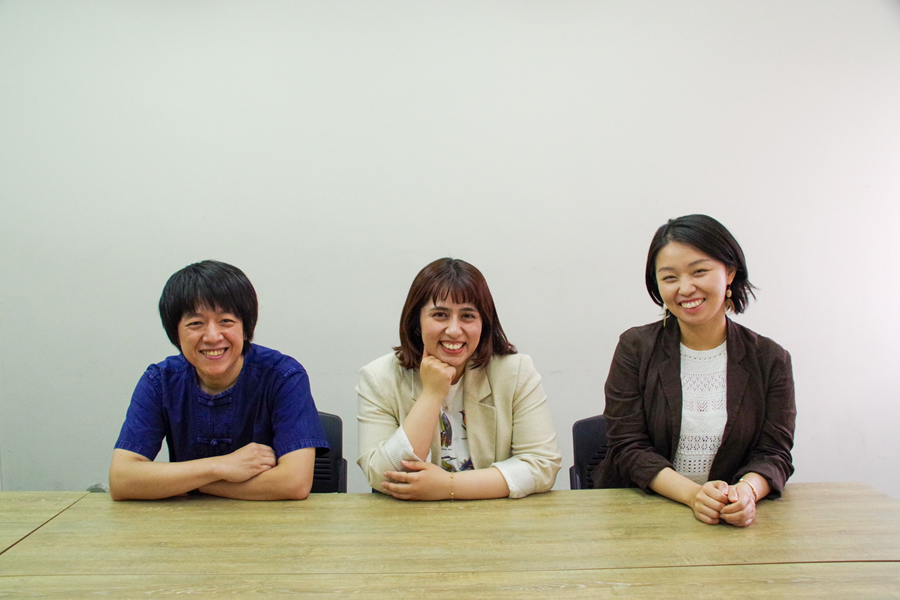
In this installment, we speak about Japanese business culture with 3 individuals who leverage their diverse backgrounds in their work.
Do You Ever Feel Confused by Cultural Differences While Working in Japan?
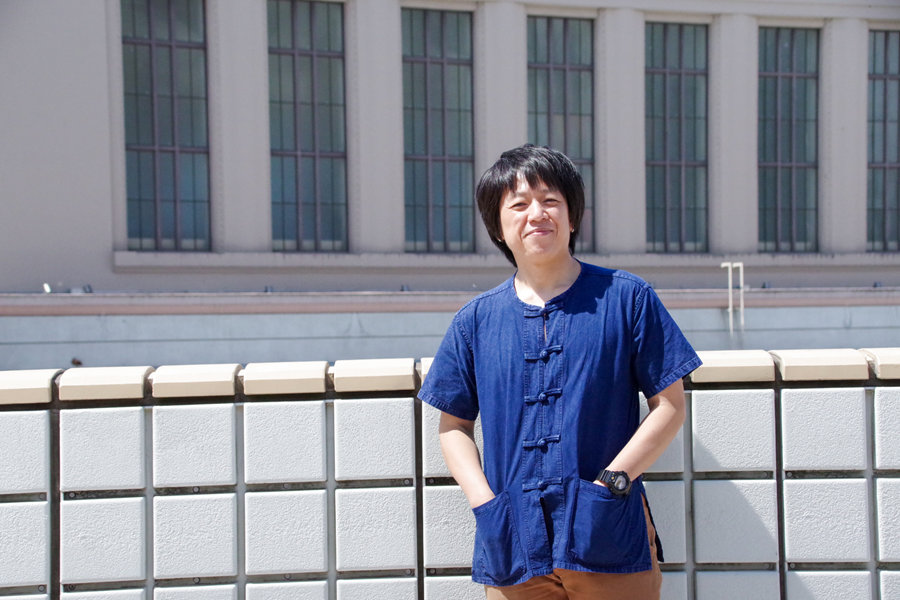
As Nueng mentioned last time, I sometimes find it confusing when Japanese people speak in a way that’s considerate of others but doesn’t state things clearly—like leading you to realize a mistake on your own instead of pointing it out directly. But I find it scary when I don’t notice that consideration and end up continuing with my work without even realizing I’ve made a mistake. I feel like communication at foreign companies tends to be more straightforward.
Japan is a high-context society with a culture of unspoken understandings and expecting others to read between the lines, right?
I have two stories that surprised me. The first was during a meeting at my first job. While my male coworkers’ questions were answered, my comments were ignored—perhaps because I was a woman. When I consulted a female supervisor in her 50s about this, she told me, “You should accept that this is part of the culture. Make the most of your ‘feminine qualities’ and do your best.” Rather than a cultural difference, this incident made me feel a generational gap regarding what it means to be “feminine.”
The other incident happened at my second company, when I was working as an assistant store manager in sales. When I made a decision on my own initiative, I was scolded: “Why did you decide on your own without consulting me first?” Since the scope of individual discretion is ambiguous in the Japanese workplace, it can be difficult to know how to make judgments.
I totally get that. I’ve also been told to “think for myself,” and when I did just that and took action, I failed and got scolded. I thought, “If that’s the case, just tell me clearly!”
The biggest difference between Thai and Japanese companies is the work environment. In Thailand, there’s a cheerful atmosphere where everyone chats while they work. But in Japanese companies, all you can hear is the sound of keyboards. Sometimes it’s so quiet you can even hear a fly buzzing!
Hahaha! (laughs)
But you’re right. There’s definitely an atmosphere in Japan where everyone is expected to focus on their work. However, I think building relationships at work is incredibly important—and this isn’t limited to Japan. It might sound a bit odd to call it “small talk,” but I feel that talking about things unrelated to work is necessary for maintaining those relationships.
I really started to fit in once I began to understand everyone and could read the room. It felt like we’d both come to understand each other’s cultural differences.
What Kind of Relationship Do You Have with Your Coworkers?
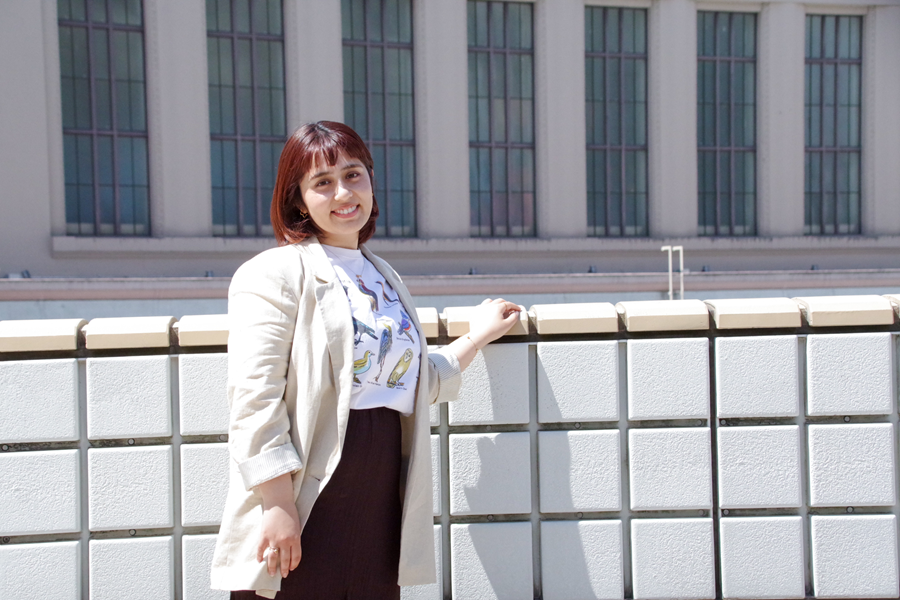
I think we have a good relationship. Since everyone else is Japanese—and many are older than me—I’m in charge of digitizing documents and such. Now that I’m in a position to teach others how to use computers and other tools, I feel like people are relying on me.
Japan has a very strict senior-junior hierarchy, doesn’t it?
I’d never had a “junior” before, so when I worked as a salesperson at my second company, I wasn’t sure how to interact with younger colleagues. I think this ties in with what Yeonju mentioned earlier—at first, I was confused about how much I should interfere in my colleagues’ affairs. For example, one day, a young colleague came to work wearing clothes that weren’t appropriate for the sales floor. The old me would have told her straight out, “You can’t wear that in front of customers,” but thinking about her feelings, I didn’t know how best to convey it. So I had her put on a spare jacket and held my tongue. Then, she sensed the reason behind my actions. I realized that even without saying a word, the message really does get across!
I’ve done a lot of remote work in the past, and I’ve sometimes found it difficult to build trusting relationships. But by making an effort to enhance my professional expertise, I’ve come to realize that relationships naturally develop as we work together. I’ve come to believe that trust is built up through each and every experience.
Also, there’s a strong sense of “working together” in Japan, isn’t there? Working as a team on a project was fun because it led to ideas that I never would have come up with on my own.
What Do You Consider Important When Building Your Career in Japan?
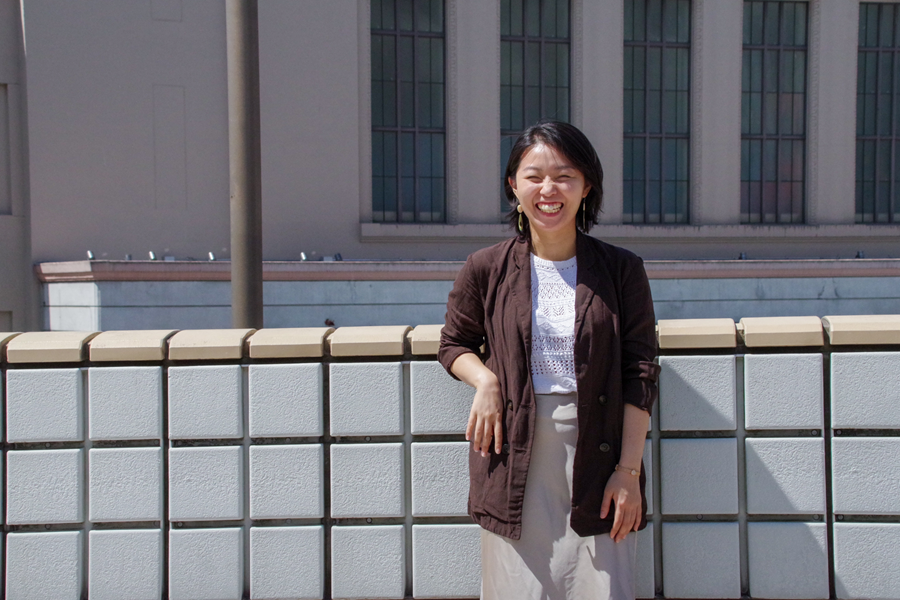
As Yeonju mentioned, it’s all about building trust. If you maintain a mindset of continuous learning, people will see you as someone who’s willing to study even when you don’t understand something, and that will lead to new opportunities.
I started my current job with no prior experience, and at first, I made mistakes—like in my email correspondence. But my eagerness to learn came across to those around me, and I gradually earned their trust. Recently, I was happy to be entrusted with new import-export responsibilities.
Earning money is necessary to get by in life. But if I’m going to earn a living anyway, my personal philosophy is that I want to do it “enjoyably and in a way that’s true to myself.”
Until now, I think I was too concerned about my roots and limited my own potential too much in an effort not to be seen as a foreigner. But now, I hope to share something with—or leave a legacy for—people who, like me, have diverse roots. I believe the number of people with various backgrounds will continue to grow in Japan. When that happens, I want to think about what I can do to contribute.
I always feel that since I’m being paid, I want to do my job properly. But I also want to learn as much as I can on the job so I can perform my current duties even better. To that end, I feel it’s important to approach my work with a spirit of improvement, without getting too rigid. As I’ve gained more experience, my understanding of what it means to “do a good job” has broadened. I want to be mindful not only of myself but also of making it easier for my coworkers to do their jobs.
Please Tell Us About Your Future Dreams and Goals.
I love nature. In the future, I’d love to move away from the city and live surrounded by nature and greenery. I also love traditional Japanese architecture. I appreciate the unique Japanese sensibility where the boundary between nature and the home is blurred, and the fact that it’s not “perfect” is part of its beauty. When I’m in my 50s or 60s, I’d love to open a café in a traditional Japanese townhouse, serving tea in mugs from all over the world.
Lately, I’ve been thinking about the balance between my personal life and my work. I’ve been wondering how to reconcile the sense of accomplishment I get from work with the stability and happiness I find in my personal life. For example, I recently had a really enjoyable long weekend. And because I was able to enjoy that time off, I was able to shift my mindset and feel motivated to give my all at work. I want to value both my work and my personal life—not just divide them by time.
I want to become someone who’s trusted more at work. My goal is to reach a point where people say, “I’m glad I left that to him.” I want to keep learning so I can get there as soon as possible.
Also, my family is what matters most to me. From now on, I want to stay at one company for a long time and watch my daughter grow up as a father. And once my child is independent, it’s my dream for my wife and I to return to Thailand and live a peaceful life there. I’d like to live quietly in the countryside, surrounded by cats and dogs.
This is the final installment of our series, “Working and Changing Jobs in Japan.”
Throughout this series, we heard from 3 individuals who have built their experience while approaching their work with their own unique perspectives. We hope you gained some insights into Japan’s unique business culture through their stories.
A new series will begin next month.