


Intercultural Crosstalk
Working and Changing Jobs in Japan ②My Experience Changing Jobs
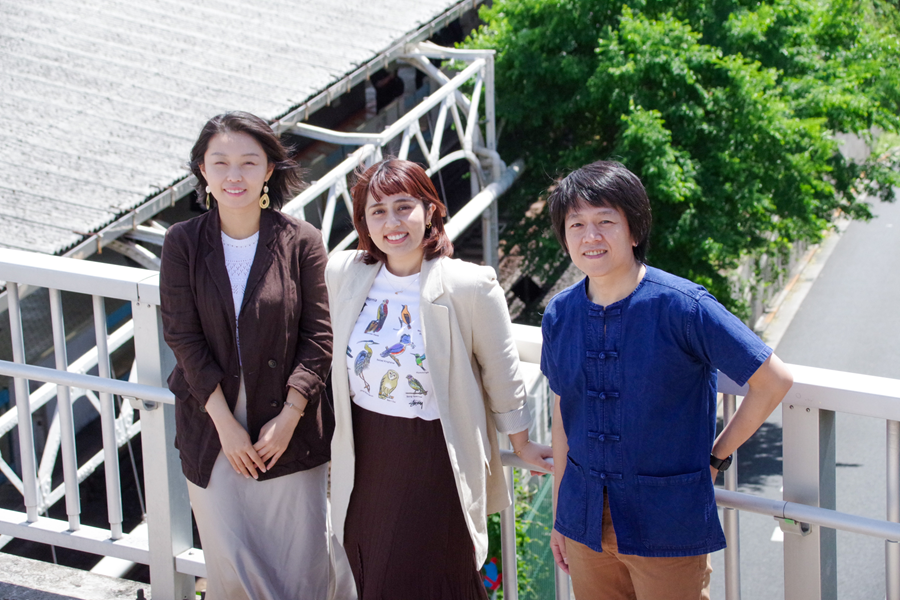
See their profiles here
Click for “1st Round” Here
Round 2: My Experience Changing Jobs
This is the second in a 3-part series of round-table discussions on “Work and Career Changes in Japan.”
In this installment, we speak with 3 individuals currently working in Tokyo about their career changes—including what prompted them to switch jobs, how they chose their new employers, and their experiences after the transition.
All 3 of You Have Changed Jobs.
What Prompted You to Consider a Career Change?

I’ve been working at Japanese-affiliated factories and other companies, putting the Japanese I learned in university to good use. Before joining my current company, I worked for a Japanese-affiliated travel agency in Thailand. The reason I changed jobs was that the COVID-19 pandemic completely transformed the travel industry. There was talk that half the office staff would be laid off.
I have a Japanese wife and a daughter. After discussing our future and our daughter’s future with my wife, I decided to look for a new job in Japan.
After working at my first company for about 2 years and getting the hang of things, I was promoted to a mid-level management position. That’s when I started thinking I wanted to advance my career a bit further. At my first company, my main responsibilities were in technical support within the IT field. Wanting to further develop my specialized skills, I chose to pursue a career as an infrastructure network engineer and changed jobs.
I’ve changed jobs twice. For my first career change, I went from being an IT consultant to an apparel sales associate. At the IT company, we worked almost entirely remotely, so I had very few opportunities to interact with people face-to-face. I’d always thought I was interested in languages, but after starting that job, I realized I actually enjoyed interacting with people. That’s why I chose a face-to-face sales position at my second company.
What Criteria Did You Use to Choose Your New Job?
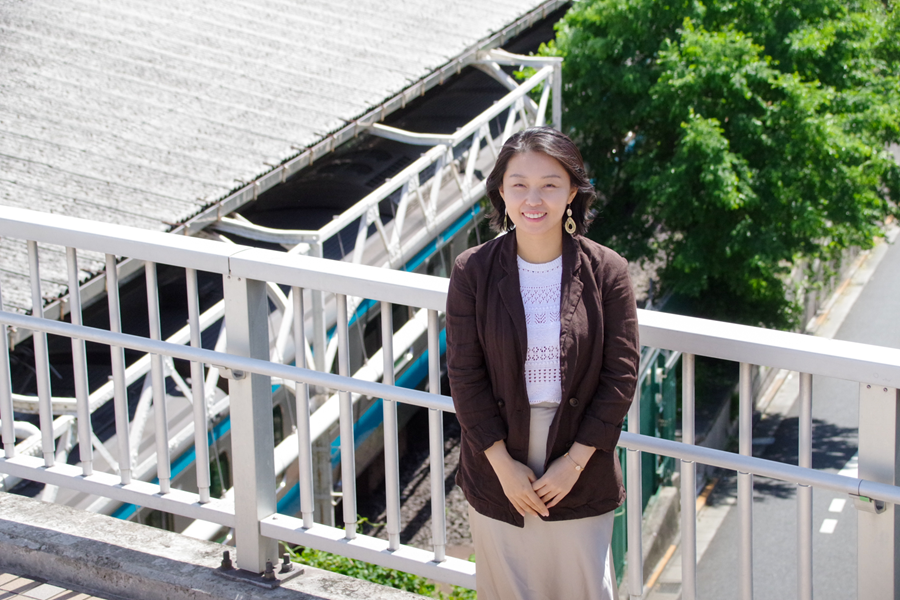
After that, I changed jobs again from my sales position, and I’m now at my third company. Working as a salesperson was a job that gave me a great sense of fulfillment—knowing that my sales contributed to the company and society. However, it was just too hectic. I felt I needed more breathing room and time to take on a variety of other challenges. That’s why I decided to change jobs, and I now work for a company involved in multicultural communities.
I currently work for a security equipment manufacturer. I’m in charge of administrative tasks related to imports and exports to Thailand, as well as quality assurance.
I have experience working in a factory, and the fact that I felt I could leverage my career in manufacturing was one of the deciding factors. I also wanted to expand my skills, so I feel this job in Japan is a perfect fit for me.
So, Nueng, you’ve expanded your career from the manufacturing sector. I, on the other hand, chose my next job with the intention of narrowing my career focus even further. I started out as a general IT engineer, but at my second company, I’m working as a network engineer. When choosing my new employer, I prioritized gaining diverse experience in the field of networking, so I selected a large foreign-owned IT company.
Was There Anything That Surprised You When You Started Your Job Search in Japan?
I conducted my job search through a recruitment agency, and I was surprised to find that a resume and a detailed work history were required. I had never been asked for these when changing jobs in Thailand. However, writing out my career history in such detail allowed me to reflect on my past experiences, so I’m glad I put them together.
I used English for my first job search, but starting with my second company, I conducted my job search in Japanese. As Nueng mentioned, I did notice some differences in the details, such as the application documents.
Well, for starters, the format of the application documents is different from English, isn’t it?
That’s true. In an English resume, you present yourself in a much stronger light. But in Japanese, while you include the necessary information, there’s a subtle difference in nuance—you have to be careful not to overstate things.
For interviews, too, there are various etiquette rules and set phrases, so I wrote down the spoken language and practiced it. At foreign-affiliated companies, I felt like the company and the candidate were selecting each other, but in Japan, I get the impression there’s a hierarchical relationship between those who choose and those who are chosen.
I also learned a lot from my agent and studied hard. In Thailand, interviews often start with a joke. I thought Japan was pretty strict.
Since both my first and second jobs were at foreign-owned IT companies, I didn’t feel there was a major difference in the format of my initial job search and my subsequent job change. But during my initial job search, I think my pitch was centered on a youthful enthusiasm—saying things like, “I can do this, and I want to do that.” When changing jobs, however, I was able to discuss things like compatibility with the company based on my self-understanding gained through my work experience. It felt like a two-way dialogue where we were working to find a good fit.
Do You Notice Any Differences in the Culture Surrounding Changing Jobs Between Your Home Country (or Another Country) and Japan?
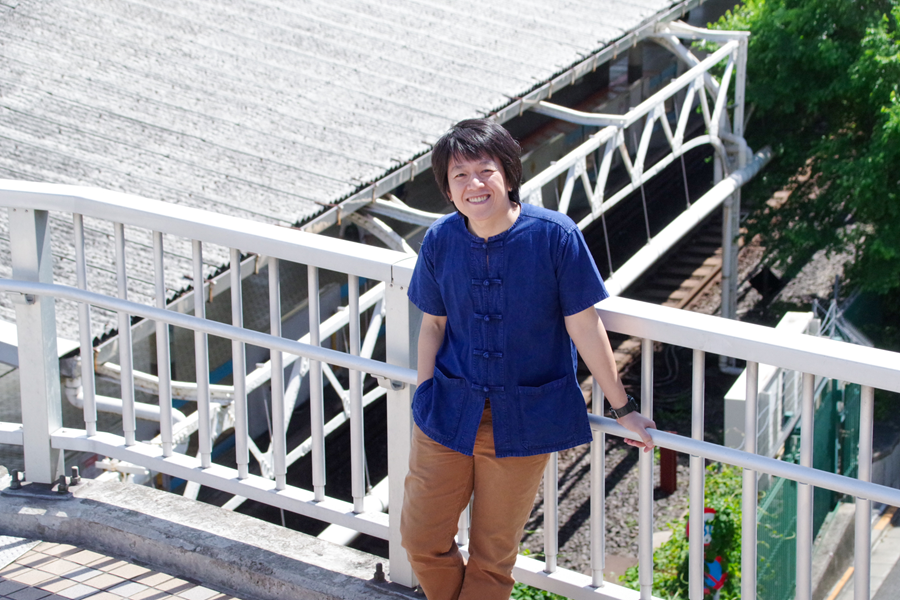
I get the impression that in Japan, companies take a long-term view of young employees and teach them their jobs carefully and patiently. Both at my first job and at my current workplace, they put thought and effort into how to develop new hires. I’ve never worked in Korea, but from what I’ve heard from friends, I get the impression there’s a strong culture of personal responsibility where you learn by hitting walls on your own. In Korea, you develop a mindset of “how should I take action?” while in Japan, you can grow step by step. I feel there are pros and cons to both.
In Thailand, it’s quite difficult to take a job unrelated to your previous work when changing careers. I feel that Japan offers an environment where it’s easier to take on a new industry compared to Thailand. I’m also very grateful that I was hired from a different industry.
Japanese companies tend to focus heavily on potential, don’t they? As Yeonju mentioned, perhaps they’re able to hire people without experience because they have a culture of nurturing talent.
At the first foreign-owned company I worked for, I felt like I was suddenly thrown straight into the field. But at the Japanese company I joined next, I was required to check with my supervisor on every single detail. You really can feel the difference in corporate culture.
Another characteristic is that they “don’t speak explicitly.” You’re told, “Figure out for yourself what went wrong.” If you can’t grasp the other person’s intentions, you’re seen as someone who can’t read the room. In Thailand, people express their opinions clearly, and things move forward through mutual discussion, so I’m sometimes taken aback by that difference.
Please Share Your Thoughts on Changing Jobs.
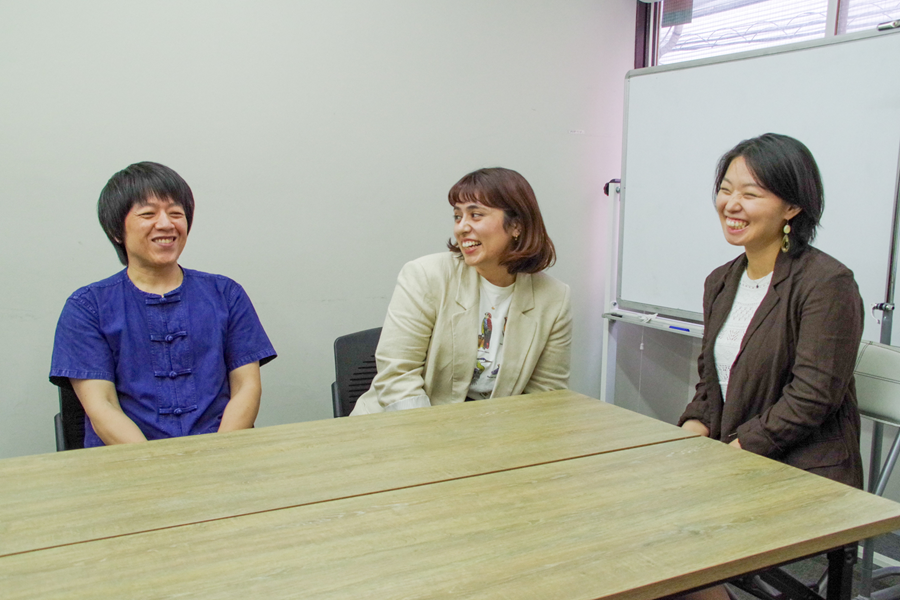
What I appreciated most was that everyone at work was warm and kind. Although there are cultural differences, it’s an environment where I can easily ask for advice when I’m facing a challenge. I believe a good work environment is the most important factor in doing good work. If I can maintain a state of mental ease, my work will naturally improve.
Having worked at 3 companies, I feel I’ve been able to explore how I relate to society. While being multilingual is often seen as a strength, working in environments where it’s taken for granted—or, conversely, in environments where I had to work solely in Japanese—allowed me to reevaluate my own skills. I was able to understand the background in which I grew up and what I had actually learned.
I feel the same way as Marian. Because I’m a foreigner, my language skills tend to stand out. I often think about what skills I need to be evaluated as a person—not just as a “foreign employee.” I’m grateful that my current workplace is an environment where my work is valued.
In Round 2, we talked about changing jobs. Everyone seemed surprised at first by Japan’s unique career-changing culture.
In Round 3, we’ll hear about Japanese business culture.
── Continued in the Following Issues