


Travel in time to the Edo period at the Fukagawa Edo Museum!
Thanks to the iconic Museum of Contemporary Art Tokyo and the third wave of coffee--a movement to produce high-quality coffee--Kiyosumi-shirakawa in Tokyo's Koto Ward is quickly becoming a fashionable area. Yet, despite these modern developments, you can still find remnants of the shitamachi or old Tokyo atmosphere from the Edo period (1603-1868) in the neighborhood.
Located near Kiyosumi-shirakawa Station is the Fukagawa Edo Museum, where the townscape of the area in the Edo period is reproduced to give visitors a sense of what it was like 180 years ago.
Experience Fukagawa during the Edo period
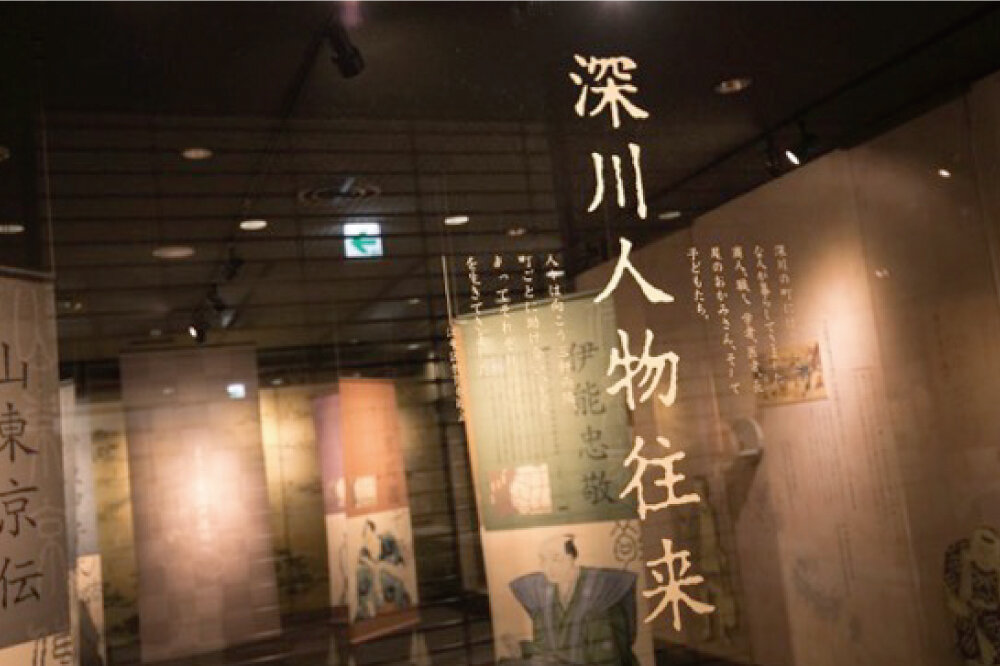
The Fukagawa Edo Museum commemorated its 30th anniversary in November 2016. The cultural facility replicates the town of Fukagawa Sagacho during the Edo period, and houses a small theater and lecture hall.
According to Shuji Ikeda, who works at the museum, "one of the characteristics of our museum is that there are no written explanations throughout the recreated town. This is because we don't want visitors to get distracted from their experience. We'd like visitors to feel as if they've traveled 180 years back in time to Fukagawa during the Edo period."
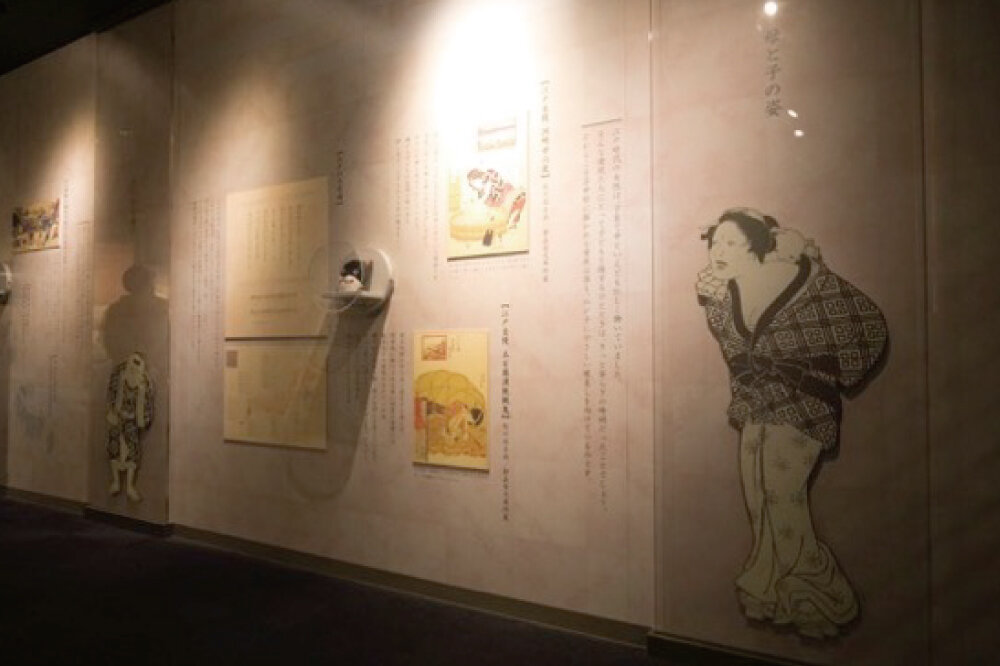
The recreated area is divided into three sections: large shops on a main street from which there is a small alleyway lined with houses, a watch tower overlooking a vacant plaza designed as a firebreak, and a waterfront zone along a canal. The homes and furniture seem small, but one can understand why after hearing Ikeda's explanation that, "the average female was about as tall as this picture. In the Edo period, people were much shorter than people today." Even the size of the items on display tells us about the lives of past inhabitants, and is evidence of the painstaking attention to detail in crafting the Fukagawa Edo Museum's exhibits.
A cat welcomes you to Fukagawa Sagacho
As you enter the townscape of Fukagawa Sagacho, which extends out in a large open space, you'll suddenly hear the "meow" of a cat.
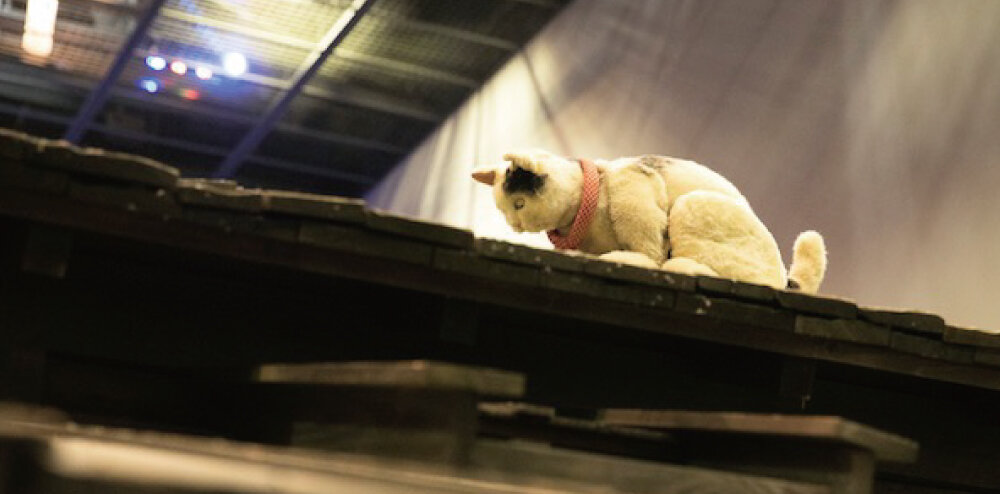
Ikeda explains that, "the cat is our museum mascot, Mamesuke. I've heard that he is modeled on a cat in the Edo period that received this posthumous Buddhist name after passing away." Mamesuke detects visitors with a sensor, and his role is to inform museum staff that guests have arrived. He is quite the hard worker.
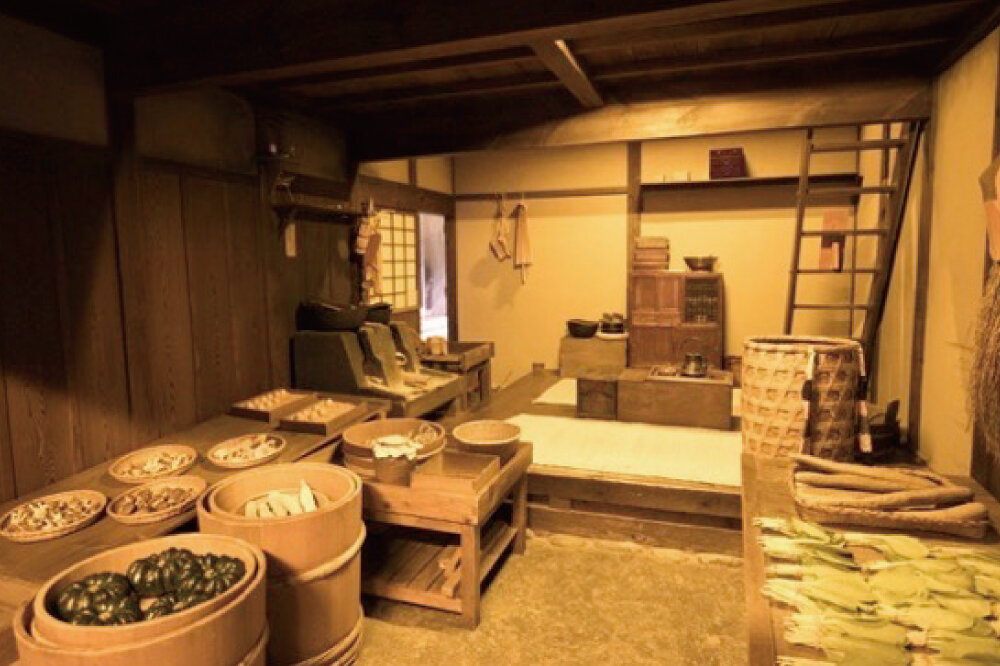
"This is a greengrocer's shop. All of the props for this recreation, such as the furniture and vegetables, were made 30 years ago. We no longer have craftsmen who can make elaborate replicas as good as these ones, so they are very valuable," Ikeda says.
In the rice shop next door, you can try using the foot-operated rice polishing machine. The good thing about the Fukagawa Edo Museum is that you can enter the shops and touch the objects inside. Tourists from overseas have been delighted by this activity.
Take a break in a boathouse with charm
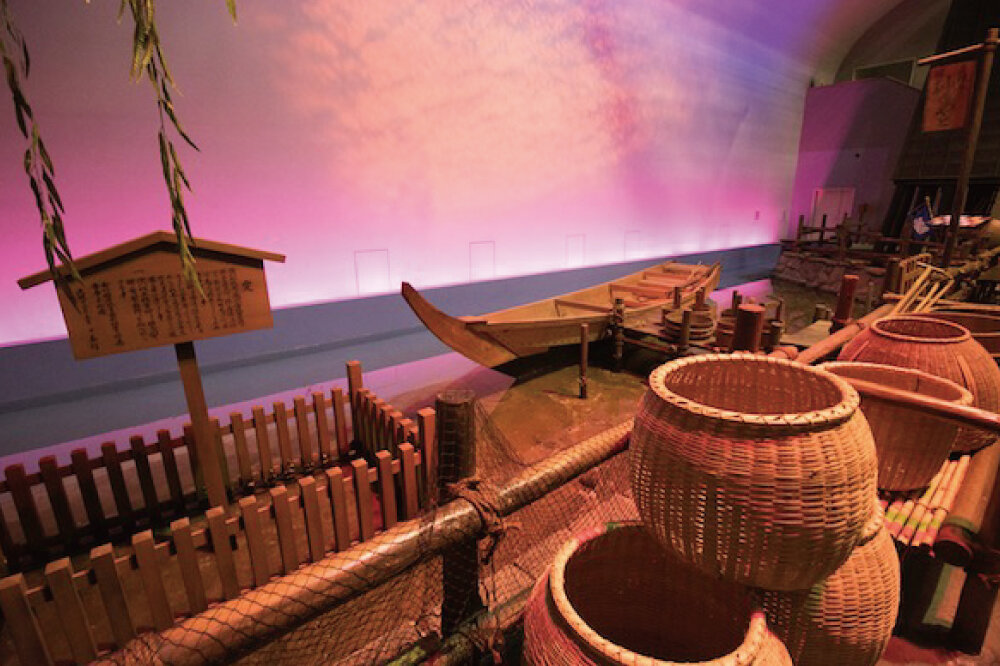
Leaving the main street, you'll soon encounter a canal, which creates a charming atmosphere. Tied up at the dock is a small boat known as a chokibune, a long, thin, and roofless small boat used as a river taxi during the Edo period. At that time, residents could make a reservation at the boathouse for a chokibune to take them wherever they wanted to go.
At the time, going to the Yoshiwara pleasure quarters by chokibune was a popular pastime for the elite. Just when I started imagining how nice it would be to row down the Arakawa River in this boat, I heard the calls of crows and noticed that the sky had started to take on a reddish tint. The museum makes you feel as if you're spending a day in old Edo by changing the ambient sounds and lighting in the recreated area.
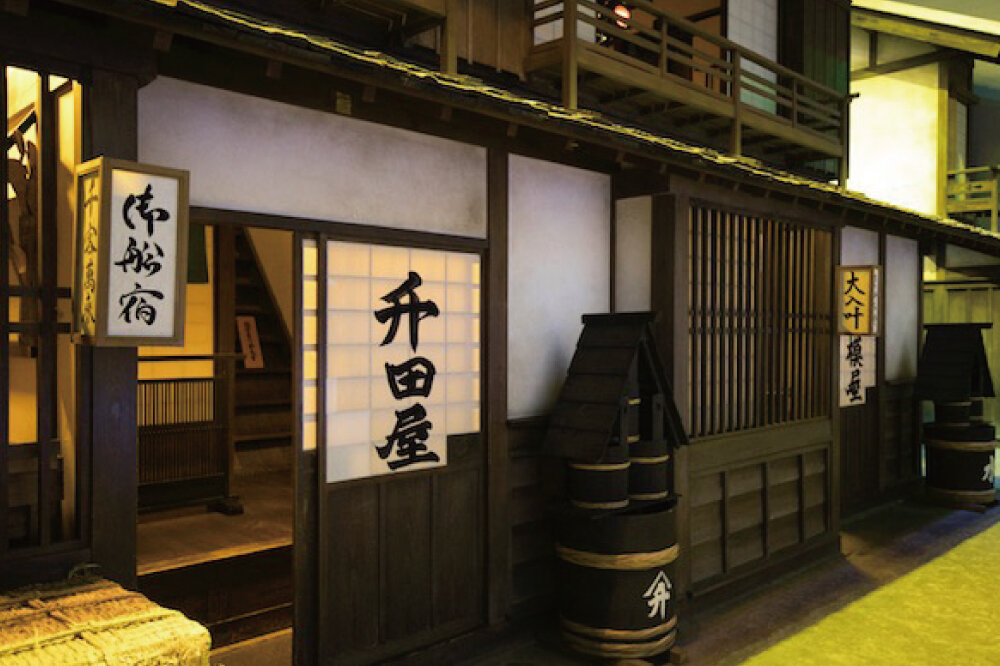
In front of the waterway are two neighboring boathouses that add to the feeling of an Edo canal waterfront. The boathouse was less of a place for accommodation and more of a place for patrons of the chokibune to have a meal, or for the boatmen to rest. Ikeda's favorite boathouse is Masudaya.
"I like the view from here the most as you can sort of see the alleyway. There are also visitors who like to simply sit on this veranda and relax," he says.
True Edo residents see fire as "a flower"
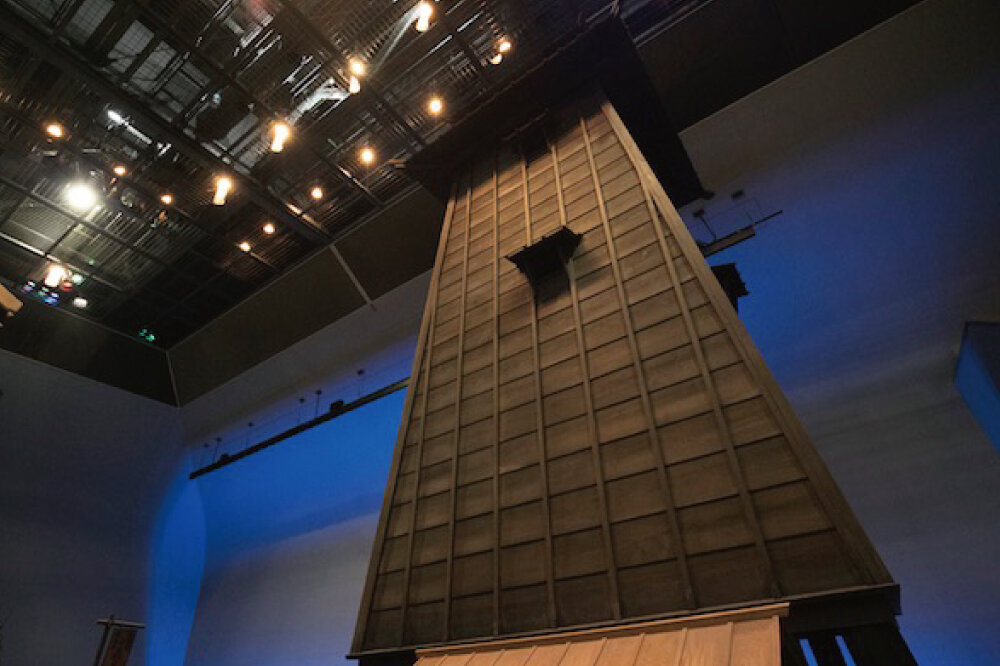
One structure that draws the eye in the recreated area is the 10-12 meter fire lookout. Although one could climb to the top, visitors are unfortunately not permitted to do so, as it is dangerous.
Around the fire lookout is a wide plaza known as the hiyokechi, a place for people to seek refuge if a fire broke out. Normally it was a place for people to relax and pass the time, in mizuchaya (tearooms of that time) or soba and sushi eateries.
Nowadays we would probably think of this area as a food court. Edo experienced many large fires, to the extent that fires and fights were said to be the flowers of Edo. When we consider that the people of Edo turned an emergency evacuation area into a place for relaxation, we have a sense of their positive attitude and bold spirit.
A place full of memories loved by a father
The Fukagawa Edo Museum is built on the site of the former Fukagawa Ward office. Fukagawa is well known for its role in historical dramas, but there are not many people who know the kind of place it was. The museum was constructed so that many more people could learn about the appeal of Fukagawa.
Recently foreign visitors have been coming to the museum. In particular, there has been an increase in French visitors who really like manga. Many visitors are fans of author Shotaro Ikenami and Japanese historical dramas, and enthusiastically pepper volunteer staff with questions. The museum is also becoming popular as a place for foreign residents to bring their friends visiting from overseas.
"The staff told me that there was once a woman who stood at the base of the fire lookout. After talking to her, she said that it was her late father's favorite place. She decided to come and see it for herself, and said that she realized why her father liked it so much. I was really moved by this story.
Some parents have visited the museum with their children, and tell us they're happy that the exhibits completely reflect those used 30 years ago, making visitors very nostalgic. There are children in Japan who don't know what tatami is, so I really hope that many guests will come visit this place in the future to learn about Japan's old way of life," says Ikeda.
The Fukagawa Edo Museum offers a rich and exciting Edo experience, so don't miss out. Pay it a visit. After spending some time, the warmth of the locals and staff who share its charm will help you feel a sense of nostalgia, making you long to return to the Edo period.
Fukagawa Edo Museum
https://www.kcf.or.jp/fukagawa/
Tel: 03-3630-8625
Address: 1-3-28 Shirakawa, Koto-ku, Tokyo, 135-0021
Entrance fee: 400 yen for adults, 50 yen for high, junior high and elementary school students
*This article was posted on the Life in Tokyo website operated by the Tokyo International Communication Committee on March 29, 2017.(Last updated on March 16, 2026)