


Close UP
Tokyo Metropolitan Fuchu Nishi High School’s Multilingual Project ~“You Are Not Alone”: A Message of Encouragement from High School Students with Foreign Roots to Children Through Multilingual Picture Books~
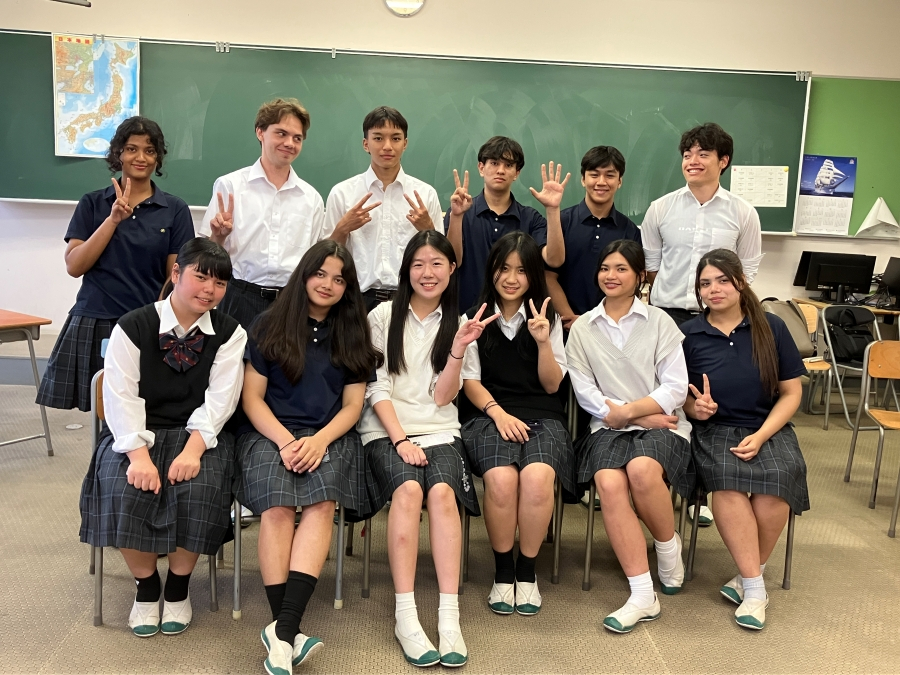
About 20 students with foreign roots are enrolled in each grade at Tokyo Metropolitan Fuchu Nishi High School. In addition to the current Japanese language support, a new class called the “Multilingual Project” began in the 2026 school year to value and nurture students’ mother tongues.
We spoke with students taking in the “Multilingual Project” class: Miyoshi sensei, who teaches the class; Takimoto sensei and Yokoi sensei from the school’s Division for Diversity, Equity and Inclusion ; Ueda san from the NPO Fuchu JSL Japanese Language Support Association, who serves as a coordinator supporting the class; and language supporters and activity supporters for this project.
- “I want the students to value their mother tongues as well,” says the teacher.
- Rebuilding One’s True Self Through Encounters with Adults Who Speak the Same Language
- Transform Experiences into Stories, Turning Lonely Moments in the Past into Fuel for the Future
- Expanding the Circle of Multicultural Coexistence Throughout the School
- Aiming for Classes that Bring Out the Potential of Each Student—Potential That Cannot Be Measured by Japanese Language Proficiency Alone
“I want the students to value their mother tongues as well,” says the teacher.
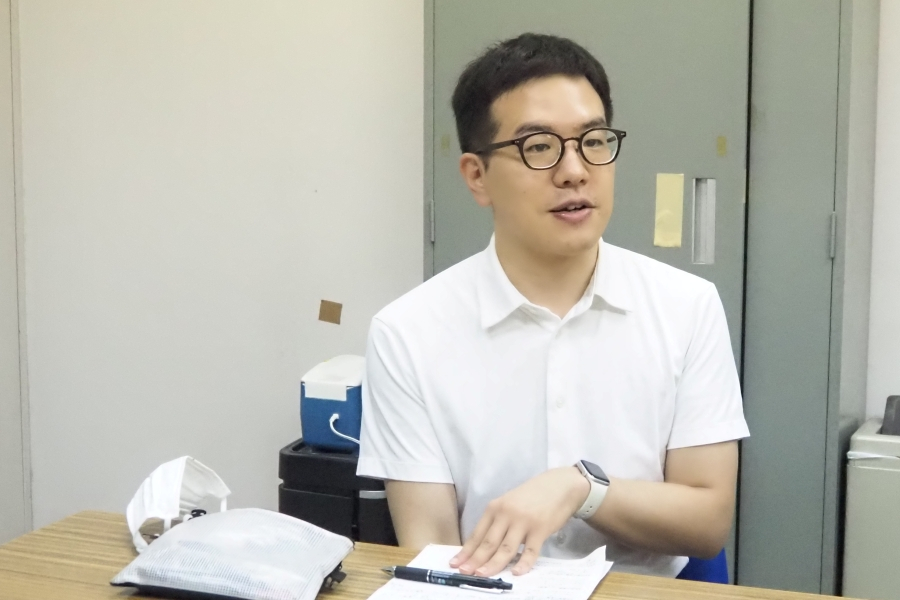
Fuchu Nishi High School is one of the Tokyo Metropolitan high schools that participates in the special admissions program “Admissions for Resident Foreign Students in Tokyo,” which is designed for students who require Japanese language support. Fuchu Nishi High School admits approximately 20 students with foreign roots each year and currently has 54 students from 16 different countries. At Fuchu Nishi High School, various initiatives support students from diverse backgrounds, including small-group support classes in certain subjects and Japanese language classes. In addition, teachers from the school’s Division for Diversity, Equity and Inclusion help students with foreign roots adapt smoothly to school life.
As part of this initiative, an elective class called the “Multilingual Project” was launched this April for second-year students. Miyoshi sensei, the Japanese language teacher in charge of the class, explains the reason for starting the Multilingual Project class as follows:
“As I interacted with students, I realized that more and more students were expressing not only problems related to their Japanese language skills or life in Japan, but also anxiety about losing their mother tongue due to fewer opportunities to use it. Students who came to Japan between early childhood and their teens not only lacked sufficient time to improve their mother tongues in their home countries, but also have almost no opportunities to use them in Japan. Some students who have struggled to express themselves in their mother tongue tend to lose confidence and a sense of cultural identity. It has been 10 years since we began accepting students with foreign roots in this school. And while our Japanese language support has become more substantial, we have not yet been able to implement initiatives that address each student’s mother tongue. We decided to launch this class (Multilingual Project) in the hope of creating opportunities for students to share their experiences and thoughts in their mother tongues.”
Rebuilding One’s True Self Through Encounters with Adults Who Speak the Same Language
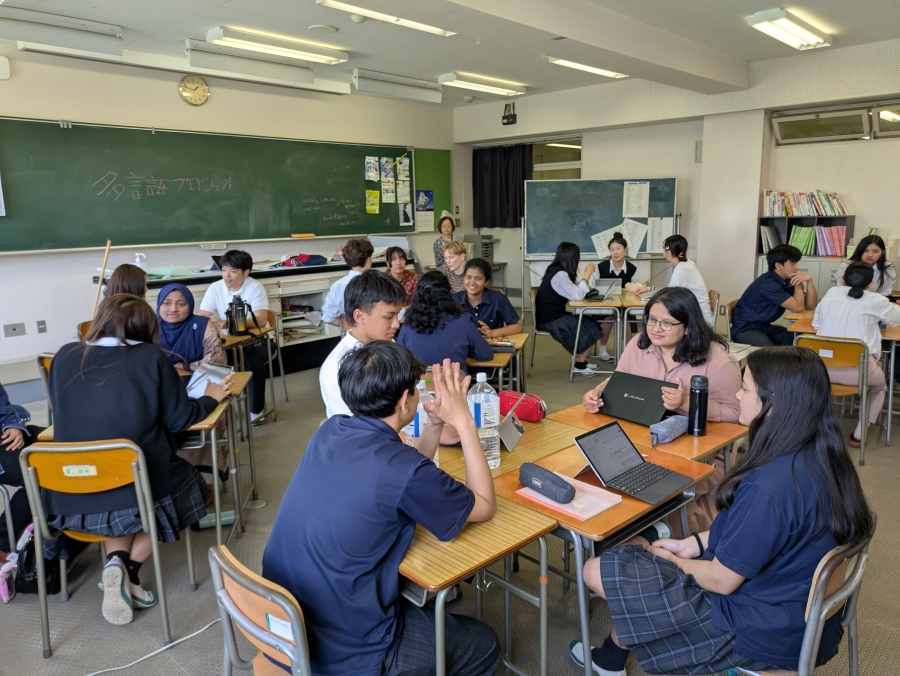
Photo Courtesy: Multilingual Project
In the first semester of this school year, students made story books in both their mother tongues and Japanese, based on their own experiences, under the theme “Challenges I’ve Experienced Since Coming to Japan.”
“Our students now have friends who understand their circumstances. However, each of them has gone through their own difficult experiences—such as being the only foreign student at their middle school or struggling to make friends because they couldn’t speak Japanese. That’s exactly why I wanted to turn their experiences into picture books—so that children going through similar hardships right now would read their stories. I hope that by reading these picture books, many other people will come to understand our students’ backgrounds and feelings,” says Miyoshi sensei.
The Multilingual Project class is conducted with the support of local partners, including Ueda san from the Fuchu JSL Japanese Language Support Association, as well as students from Tokyo University of Foreign Studies and Tokyo University of Agriculture and Technology. Ueda san also teaches after-school Japanese classes at Fuchu Nishi High School. Students are divided into groups according to language, with language support staff assisting with instruction in their mother tongues and activities support staff providing help across all groups.
“Many of the students usually have no opportunity to speak their mother tongue except with their family members. It was really impressive to see students happily speaking in their mother tongue thanks to these supporters coming to visit,” says Ms. Ueda.
Supporters also warmly watch over the students’ growth, sharing comments such as, “I was happy to meet students who speak the same mother tongue as me,” “It was fun to share our experiences since coming to Japan with one another,” “I’m glad that the language I speak is proving useful,” and “I feel like the students can express themselves fluently in their mother tongue, and their Japanese is improving as well.”
Transform Experiences into Stories, Turning Lonely Moments in the Past into Fuel for the Future
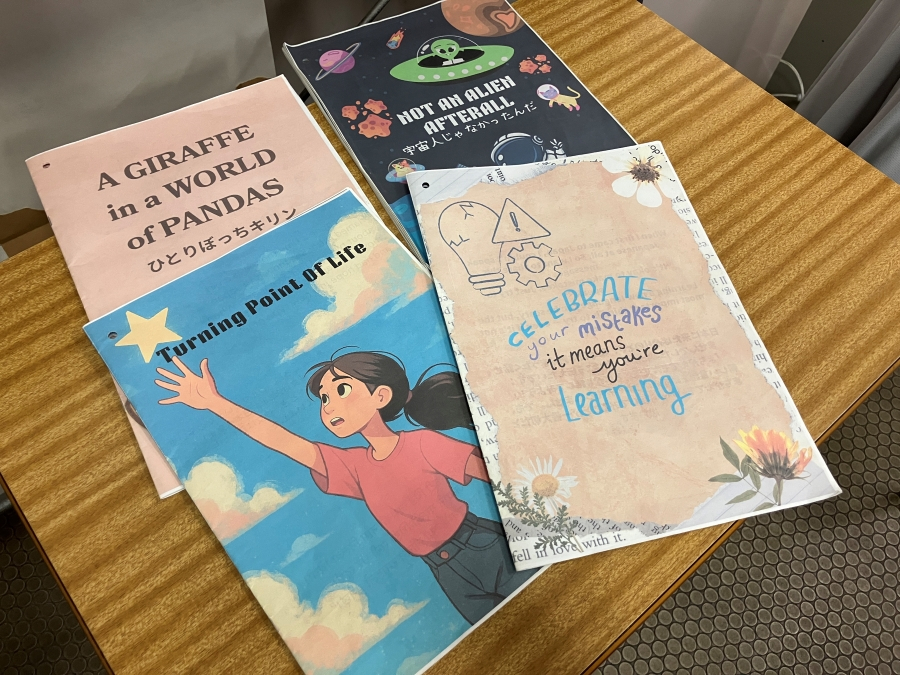
Using their own experiences as a basis, the students create stories and illustrations by themselves.
The students say things like, “I don't usually have many chances to speak my mother tongue, but I was able to speak a lot in this project (class),” and “Making picture books helps me remember my homeland's language and culture, so this class is very important.” Creating picture books in their mother tongues, which they haven’t had many opportunities to use since coming to Japan, seems to be a meaningful time for the students to engage with their own language and culture.
Among the students who came to Japan against their will, some say, “At first, I wanted to go back to my home country.” The students say they often felt confused in a school where the language, culture, and systems were different.
“I’d be happy if, by reading picture books helped elementary and middle school students feel reassured that they’re not alone,” “I want them to know that they’re not the only ones going through a tough time,” and “I want to tell children who are feeling anxious right now that it’s going to be okay—they have friends like us,”—these messages, directed at children in similar situations or students’ younger selves, are contained within the picture books.
In addition to distributing the picture books to elementary and middle schools in the city, they will be displayed at a city event in November, where storytelling sessions will also be held.
Expanding the Circle of Multicultural Coexistence Throughout the School
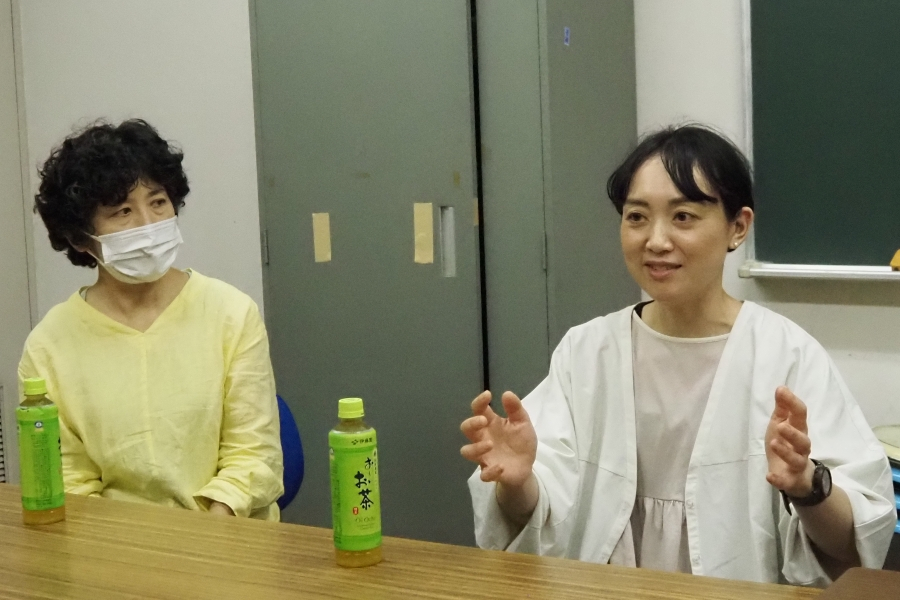
In school life, Takimoto sensei and Yokoi sensei from the Division for Diversity, Equity and Inclusion warmly look out for students with foreign roots.
“It was the first time I’d seen students speaking so lively in the Multilingual Project class, and I was really moved. I’m getting to see a whole new side of them,” says Yokoi sensei.
“The Multilingual Project (class) was created as a place for students with foreign backgrounds, but I really want Japanese students to see it too,” says Takimoto sensei. “I want Japanese students to see those with foreign roots speaking a variety of languages, and to experience the beauty of their languages for themselves.”
Starting in the 2024 school year, Fuchu Nishi High School established the Division for Diversity, Equity and Inclusion, and teachers from the Division conduct one-on-one meetings with each student. Teachers listen to students about any difficulties they or their families may be facing due to family circumstances or cultural differences, and work in collaboration with each student’s homeroom teacher to provide the necessary support.
In addition, the Division for Diversity, Equity and Inclusion has been working on planning and implementing “a Cross-Cultural Food Experiences.” We invited guest instructors from outside to showcase “Myanmar's edible tea (Laphet Thoke),” “Indian spiced lemonade (Nimbu soda),” and “Asian mung bean sweet soup,” providing students and school staff with an opportunity to sample these local specialties. In addition, as part of the cooking and craft club’s activities, the Division organized an exchange event where students of foreign roots and Japanese students made onigiri together.
“We organized these events hoping it would provide an opportunity to learn about and enjoy differences through food. As the Division of Diversity, Equity and Inclusion, we cannot meet all of our students’ needs, but we do what we can for them, one step at a time,” Ms. Takimoto says.
Aiming for Classes that Bring Out the Potential of Each Student—Potential That Cannot Be Measured by Japanese Language Proficiency Alone
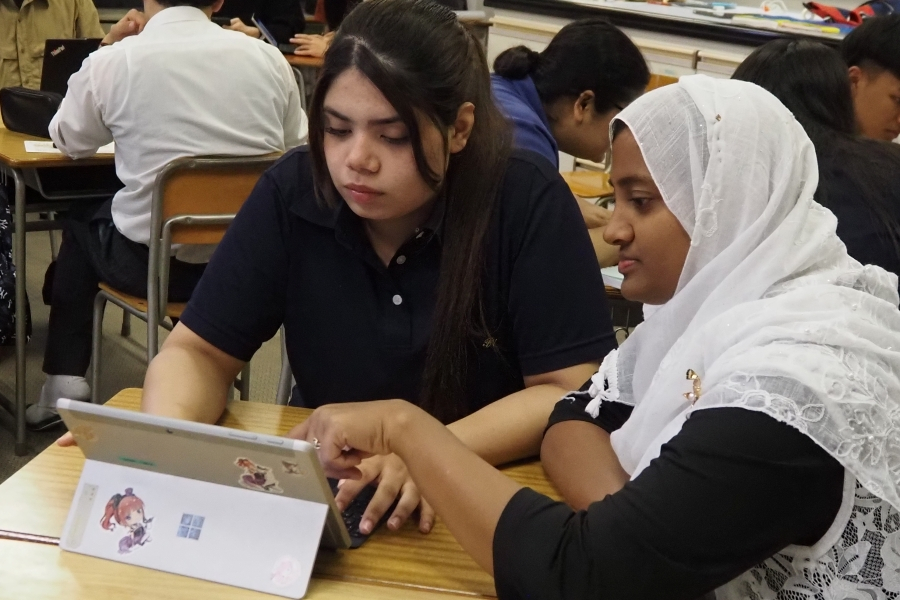
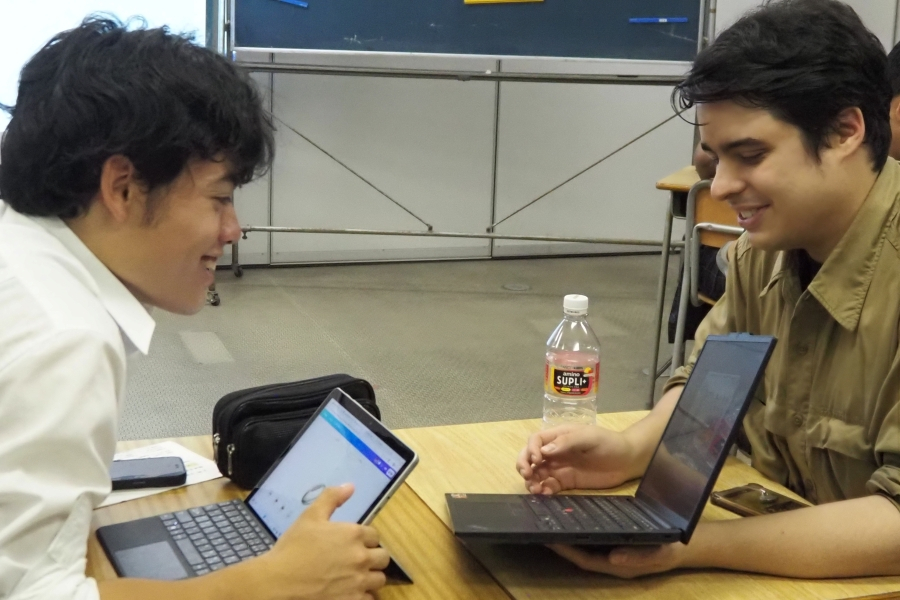
“Our students always work hard, and they are also enthusiastically participating in this class (the Multilingual Project). Just because someone can’t speak Japanese well enough yet doesn’t mean they can’t do anything. Through the Multilingual Project class, we hope to make visible the strengths and abilities that each student possesses that may not be apparent from their Japanese language proficiency alone. This project gives students with foreign roots an opportunity to recognize their own strengths and potential, while also giving other students and teachers an opportunity to recognize them. I had already seen a change in how the school principal and other teachers who observed my class viewed students with foreign roots. I believe it is more meaningful to include this class in our school curriculum than to offer it as an extracurricular activity,” says Miyoshi sensei.
In the second semester’s Multilingual Project class, students will make a multilingual booklet to introduce the Japanese and international boxed lunches they typically eat in multiple languages, similar to the “Bento Encyclopedia.” Seemingly, many foreign parents in Fuchu City are struggling to prepare for “lunch” because they don’t know what kind of lunch to pack for their children in the school in Japan. Miyoshi sensei says he hopes the “Bento Encyclopedia” will be a helpful reference for such parents.
The Multilingual Project class has become a new learning environment for a multicultural society, where the entire school community not only respects the languages and cultures of students with foreign roots, but also discovers the strengths and charms of each student with foreign roots—qualities that were previously overlooked.