


Close UP
Hikari JS Mirai ~A Future for Children, Watched Over and Illuminated by Everyone Involved~
Hikari JS Mirai carries out a variety of activities aimed at expanding future opportunities for children with foreign roots. Its diverse initiatives span a wide range of areas, including online Japanese language learning support, nurturing the next generation, and promoting a multicultural society as well as raising awareness.
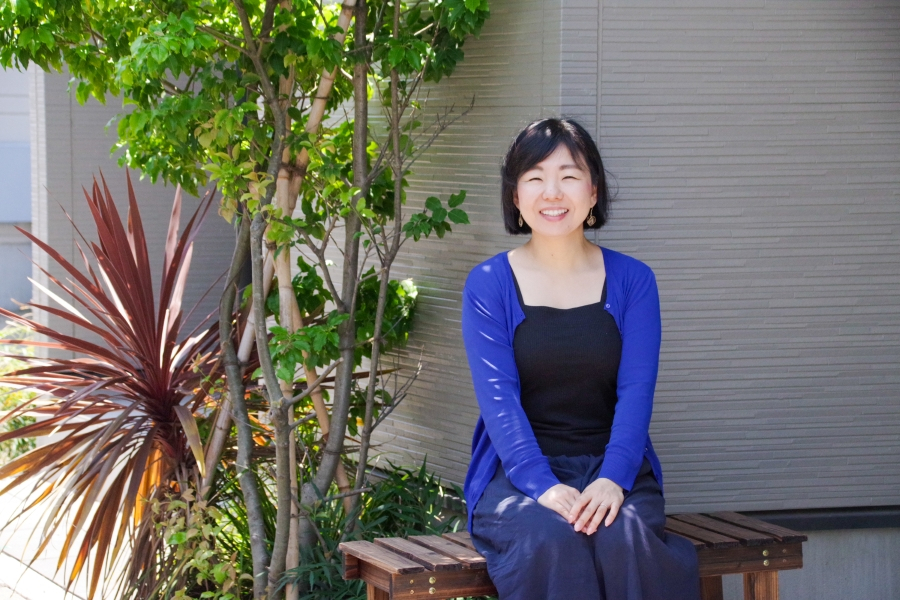
Guided by its philosophy of “Connecting People Through Language,” the organization provides support to children of foreign roots across Japan who need Japanese language learning and their parents. We spoke with Ms. Sachiko Umemoto, a representative of Hikari JS Mirai, who had worked as a primary school teacher and volunteered as a teacher in Brazil before establishing her organization.
- Insights Gained from Experiences Both Inside and Outside of Schools
- Supporting Children’s Learning Through Close Collaboration with Their Families
- Personalized Support Made Possible Because It's Outside of a School Setting
- Building a Multicultural Community Where Everyone Is an “Amigo (Friend)”
- Making Children Aware of the Wide Range of Future Options Available to Them
Insights Gained from Experiences Both Inside and Outside of Schools
Hikari JS Mirai, a general incorporated association, was established in 2022 and has been providing online Japanese language support to children of foreign roots whose first language is not Japanese. Ms. Umemoto, the organization’s representative, had worked with many children of foreign roots at the primary school where she was a teacher. However, she says that her job as a teacher was so busy that it was difficult for her to provide each child with individualized Japanese language support. For the next two years, Ms. Umemoto taught Japanese to children in Brazil as a volunteer teacher through JICA (Japan International Cooperation Agency). That was when she truly realized the importance of Japanese language education. “Watching children in Brazil learn Japanese and absorb it so quickly, I could sense their future possibilities expanding. When I returned to Japan and resumed my teaching career, I thought that if children of foreign roots living in Japan could receive a solid Japanese education, it would surely broaden their (future) choices,” says Ms. Umemoto.
Captivated by the warmth and cheerfulness of the Brazilian people, Ms. Umemoto began considering moving to Brazil after returning to Japan. Then, in 2020, just as she had resigned from her teaching position to make the move, the COVID-19 pandemic began, and her plans were put on hold. Around the same time, invited by an acquaintance, Ms. Umemoto began teaching Japanese online to children with foreign roots.
“I witnessed the tremendous efforts children made at home—something I couldn’t see when I was a teacher. I thought there might be something I could do to help, since I’m now outside the school system and am no longer a teacher.” This is how Ms. Umemoto, utilizing her experience as a teacher, and her time living abroad, founded “Hikari JS Mirai” with her peers, as an organization dedicated to supporting children with foreign roots as well as their families.
Supporting Children’s Learning Through Close Collaboration with Their Families
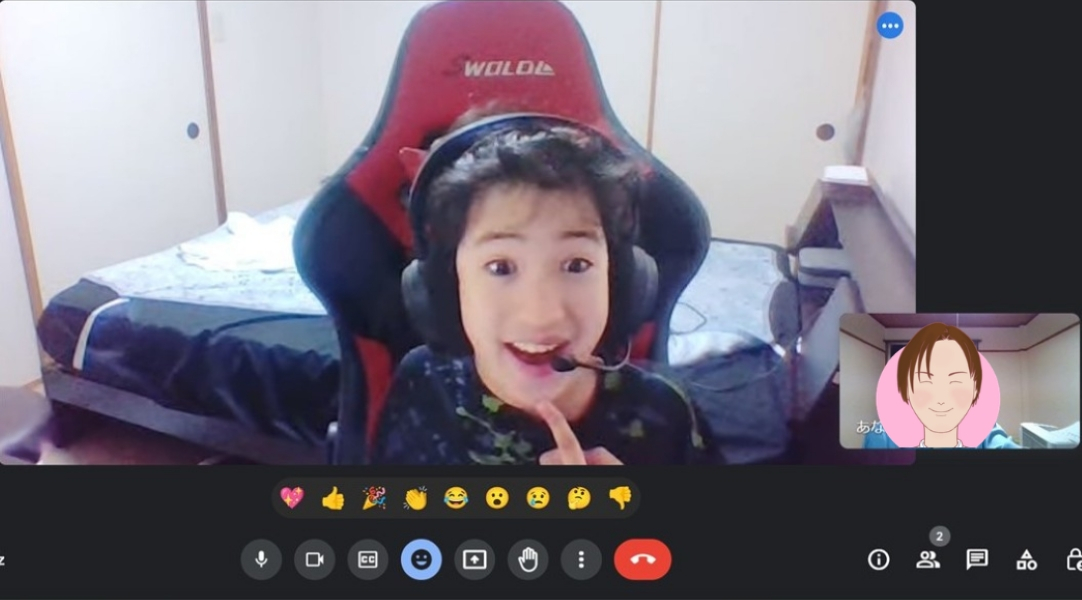
Photo Courtesy: Hikari JS Mirai
The classes at Hikari JS Mirai are taught by Japanese language teachers and former school teachers. Since the classes are held online, the organization receives inquiries from all over the country, including from areas where there are no Japanese language classes. For families facing financial hardship, Hikari JS Mirai offers learning opportunities at a low cost, made possible by donations from supporters.
The classes are primarily attended by children who have just arrived in Japan, as well as middle and high school students who, despite having lived in Japan for a long time, have not yet mastered the vocabulary used in class.
“For some children, their first language may not yet be fully established. They speak Japanese outside the home and use their parents’ heritage language—which they’ve only learned as a spoken language—at home. However, they cannot read or write in either language,” says Ms. Umemoto.
Math problems are solved in different ways in different countries. If parents aren’t able to help at home, children may struggle. Recognizing that just teaching Japanese isn’t enough—that children may struggle to keep up with their schoolwork—Hikari JS Mirai goes beyond Japanese language instruction to provide comprehensive academic support, including help with classwork and homework, while actively involving the family.
“We accompany and support children, but this is based on the premise of working hand in hand with their families. It is important for families to maintain an attitude of working together to support their children’s education. At the same time, I believe we need to focus more on how to engage families who lack information or don’t feel the need for learning Japanese,” says Ms. Umemoto.
Personalized Support Made Possible Because It's Outside of a School Setting
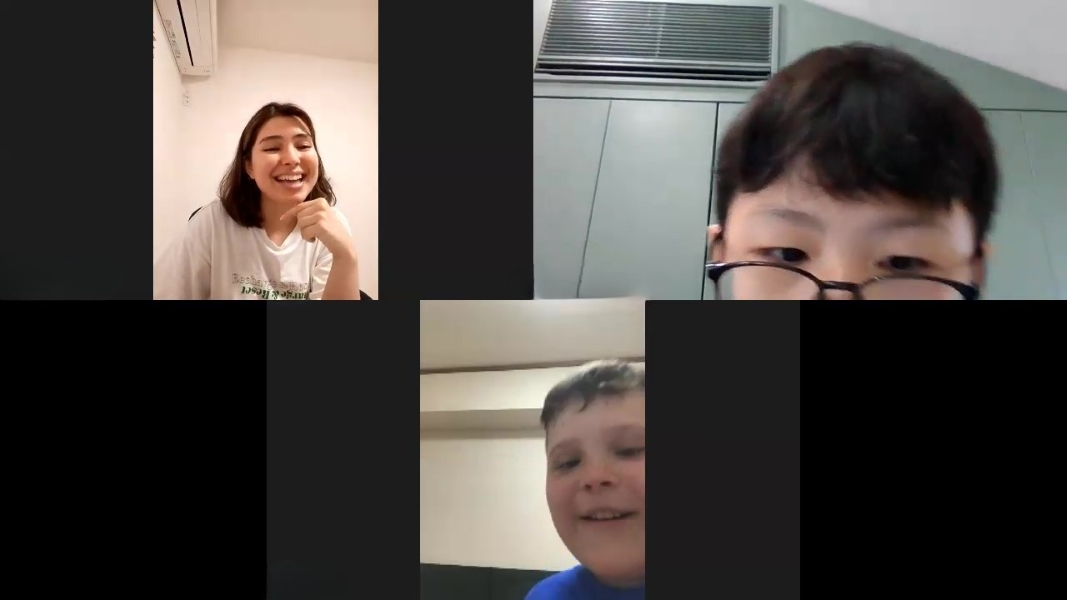
Photo Courtesy: Hikari JS Mirai
Through the organization’s ongoing activities, Ms. Umemoto has come to realize once again the importance of support that can only be provided outside of a school structure.
“A boy of Brazilian roots - whom I met through an online learning support program - wouldn’t say a word to me for the first month. I kept wondering if my computer had frozen. But in the second month, he started speaking Portuguese little by little. Then, when the third month began, he suddenly burst into tears, saying in Japanese, ‘It’s not that I’m not doing my homework—it’s that I can’t do it.’”
He came to Japan when he was three years old, and although he had studied Japanese before, lacking confidence in his language skills, he hardly spoke at school. The boy couldn’t do his homework on his own, and he felt very frustrated whenever his teacher scolded him, asking, “Why didn’t you do it?”
“Once he opened up, he began sharing all sorts of thoughts with me, even confiding in me his dream of getting a perfect score on a kanji test. ‘Let’s aim for a perfect score!’ we decided. And, by studying kanji together while relating it to the history he loved, he actually managed to get a perfect score. Support from the school is, of course, important. But he made me realize that there might be things we, as people outside the school, can do,” says Ms. Umemoto.
Building a Multicultural Community Where Everyone Is an “Amigo (Friend)”
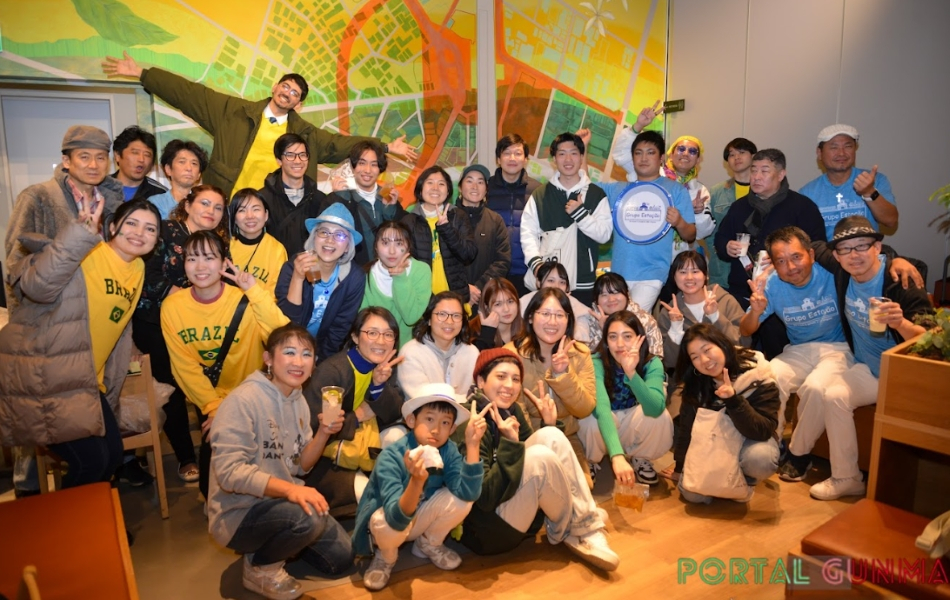
Photo Courtesy: Hikari JS Mirai
Currently, Hikari JS Mirai operates based on four pillars: supporting Japanese language learning, promoting a multicultural society, raising awareness, and nurturing the next generation. In each case, these initiatives were launched because Hikari JS Mirai felt a new need arise as they continued to provide support for Japanese language learning.
They regularly hold in-person gatherings where local Japanese residents of Edogawa City, where the organization is based, and residents with foreign roots can interact; with the aim of promoting a multicultural society. At the gatherings, participants play Brazilian games and sometimes enjoy a drink while socializing. People drawn to Brazil’s lively atmosphere and culture come together to have a good time.
“We’ve also hosted a language bar for international exchange. However, when we tried to make it a casual event open to everyone, we didn’t attract many people. So, after I gave a big shout-out about Brazil, which I love so much, lots of people started coming. I learned the importance of first building a foundation with people who have a passion for Brazil, and then expanding that circle from there. It would be great if we could gradually expand our circle of amigos (friends),” says Ms. Umemoto.
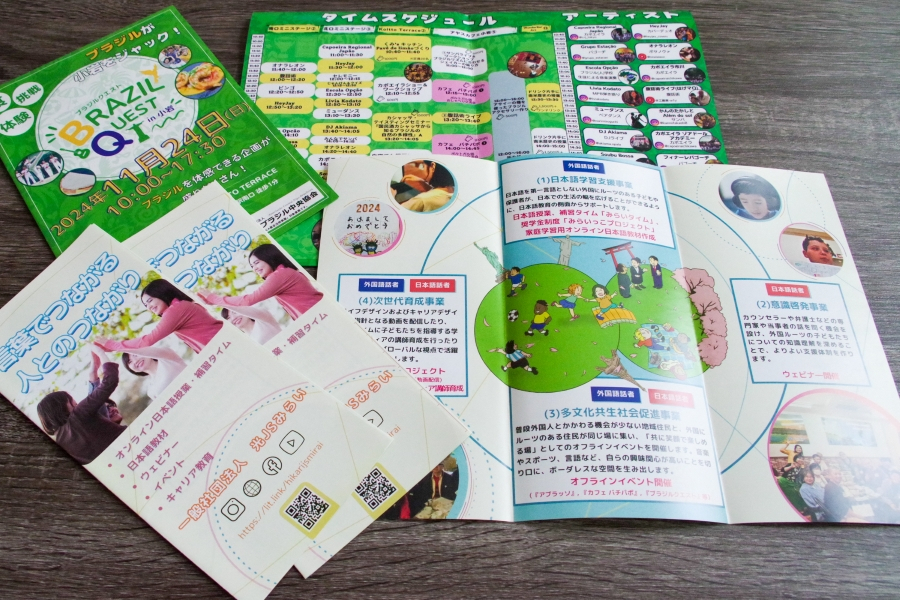
In addition, Hikari JS Mirai organizes “Brazil Quest,” an annual event that engages the entire community. The event features workshops and live performances at shops around Koiwa Station that introduce Brazilian history and culture. And participants explore the neighborhood while taking part in a stamp rally.
“I casually mentioned at my regular hangout that I’d like to try hosting an event like this and, one after another, people introduced me to their contacts; which is how (Brazil Quest) came to be. The people in the Koiwa area are very caring and warm-hearted, and I think the neighborhood has a Latin vibe to it,” says Ms. Umemoto. When Brazilian music and dance were performed on the stage in front of the station, local residents joined in the dancing, and the event was a huge success.
Making Children Aware of the Wide Range of Future Options Available to Them
Furthermore, Hikari JS Mirai conducts awareness-raising initiatives that provide opportunities to deepen understanding of multicultural society by listening to experts and those directly involved. It also conducts next-generation development programs that expand career choices through outreach classes at Brazilian schools and exchanges between companies and students.
“I feel that the network of people involved in our activities is expanding as our various initiatives complement one another—for example, people who attend our exchange events learn about children with foreign roots and sign up to volunteer as learning support mentors, or participants in our awareness-raising webinars then come to our exchange events themselves,” says Ms. Umemoto.
Hikari JS Mirai says that one of the areas they are particularly focusing on in their activities is expanding the future options available to children and young people.
“It’s mainly a small group of proactive children who learn about our initiatives and decide to participate. I think there are many children who find it difficult to step outside their community. It’s unfortunate that children’s future options are narrowed simply because they assume, for example, that since their parents work in a factory, they must work in a factory too. We want children and young people to know that there are many other options and possibilities available to them, and we want to build a society that is accepting of them. That’s why I want to create activities that inspire more people to get involved, while expanding the network of connections between people.”
Hikari JS Mirai will continue its efforts to help children with foreign roots learn about the various options and possibilities available to them in the future and empower them to take on new challenges. Through these efforts, the circle of “Amigos”—those who watch over and support the children—will grow.