


Close UP
Passerelle ~Serving as a Bridge Connecting Families with Connections to Foreign Countries to Elementary Schools Through Specialized Support in Japanese Language Education and Childcare~
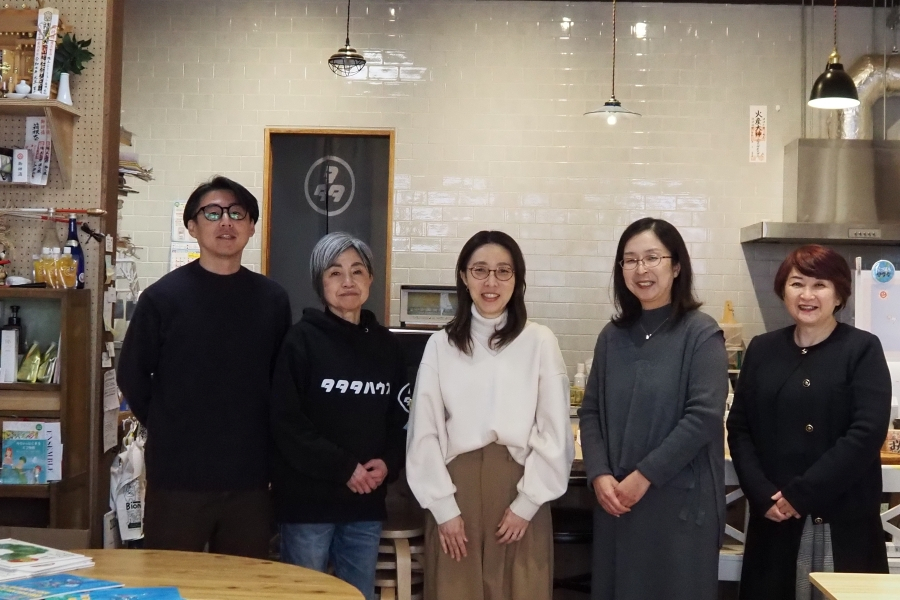
Ms. Hiroko Inoue, Ms. Asuka Tochigi, and Ms. Akiko Mera of Passerelle.
Passerelle is an organization that supports families with connections to foreign countries, as well as childcare facilities for their children, ensuring those children face no difficulties when entering Japanese elementary schools. This organization is led by members specializing in Japanese language education and childcare. They work closely with families from diverse backgrounds to ensure a smooth transitional path to elementary schools. We interviewed Passerelle members Ms. Hiroko Inoue, Ms. Asuka Tochigi, and Ms. Akiko Mera.
- Serving as a Bridge to Connect Preschool-Aged Children - and Their Parents who Lack Sufficient Support - to Elementary Schools
- Aiming to Create a Place Where a Community’s Parents and Children Can Gather Casually
- Supporting Teachers Who are Experimenting and Refining Their Approaches in the Classroom
- Expanding Activities While Collaborating with Local Partners
- Activities to Reach Each and Every Person You Come Across
Serving as a Bridge to Connect Preschool-Aged Children - and Their Parents who Lack Sufficient Support - to Elementary Schools
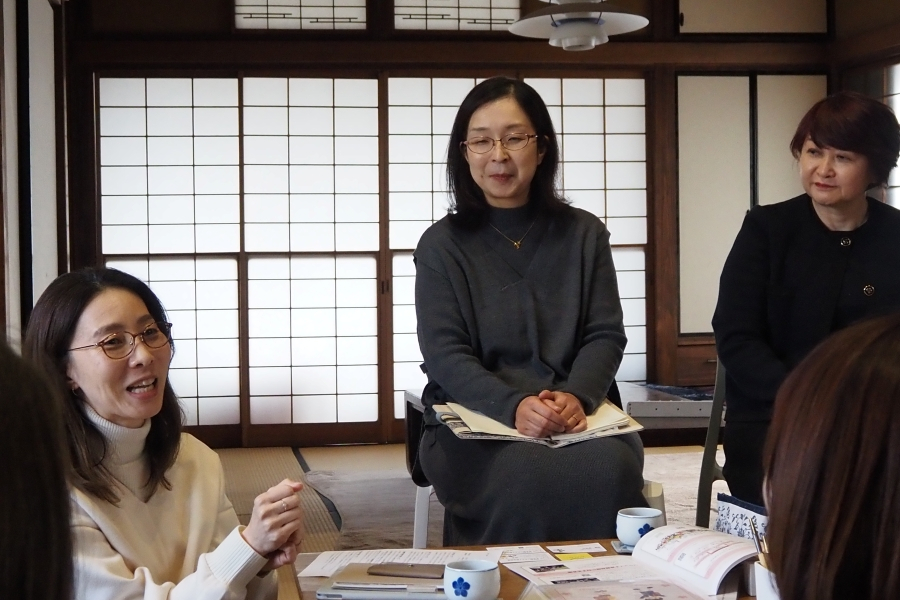
Passerelle, which began its activities in 2022, is an organization primarily active in the Setagaya area. Passerelle is a group formed by four faculty members from Shirayuri University who specialize in Japanese language education and childcare. The impetus for the group’s founding came from awareness gained by its representative, Ms. Inoue, while raising her child.
“While sending my child to kindergarten, I noticed that many families had connections to foreign countries. Kindergarten teachers have also mentioned that such families have been increasing significantly lately. I’ve seen several situations where parents connected to foreign countries seem to struggle communicating with teachers. I thought that if children from those families enter public elementary schools as they are, they might end up facing even more challenges in understanding things,” says Ms. Inoue.
Ms. Inoue said that while talking with Ms. Tochigi, who was working as a Japanese language instructor for special classes at an elementary school at the time, Ms. Inoue realized that while Japanese language support after elementary school enrollment was gradually improving, it was still far from sufficient for preschool children and their parents.
Therefore, Ms. Inoue founded her organization to help parents and children with foreign connections feel secure about advancing to elementary school. The organization’s name, Passerelle—French for “small bridge”—was chosen with the hope of becoming a bridge connecting preschool-aged children and their parents to elementary schools, as well as connecting people.
Aiming to Create a Place Where a Community’s Parents and Children Can Gather Casually
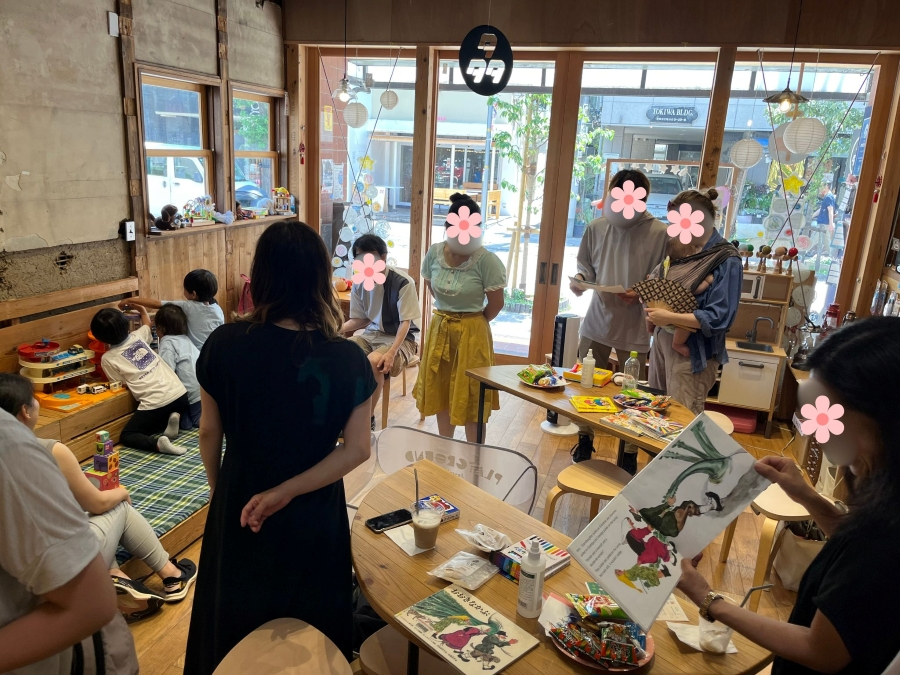
Photo Courtesy: Passerelle
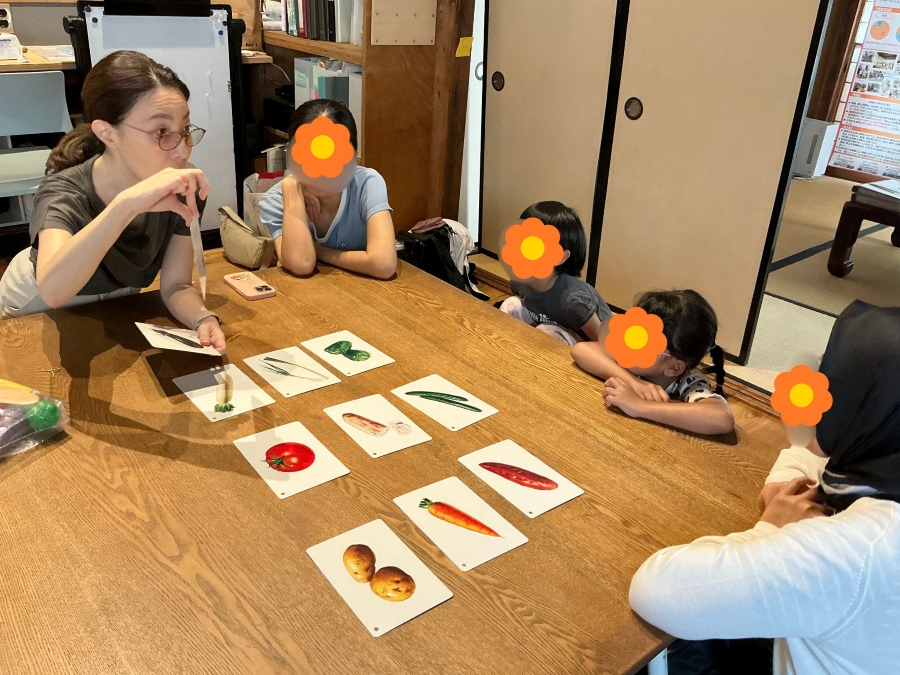
Photo Courtesy: Passerelle
Passerelle has held its Oyako (parents and children) Salon every month since its founding to support families with foreign connections. The salon provides a place where families with international connections can gather and let their children play, while also offering support for visitors’ concerns and consultations.
“My Italian friend at the same kindergarten said that while her child seems to enjoy (this kindergarten), the mother has no idea what children do there. I could tell that must be unsettling for the mother. At the request of parents connected to foreign countries, I began holding sessions to read letters from the kindergarten, which led to the current Oyako Salon,” says Ms. Inoue.
The Oyako Salon requires no reservations and allows free entry, and people are free to leave as they please. Since it’s held on Saturdays, many couples participate together. Additionally, some come to let their children play, while others visit when they have problems. Some come to exchange information with parents in similar situations about matters like their children’s education.
“We watch over the children as they interact at their own pace and space. We talk among ourselves about wanting this to be a place where anyone can drop by to play anytime, not a place of teaching and learning,” says Ms. Tochigi.
Additionally, we offer a preschool program for children planning to enter public elementary school, where they learn the Japanese syllabary, numbers, and the names of shapes together. Even children who rarely spoke Japanese began to speak more on their own, little by little, after attending preschool. Some mothers who accompany their children end up learning alongside them.
Supporting Teachers Who are Experimenting and Refining Their Approaches in the Classroom
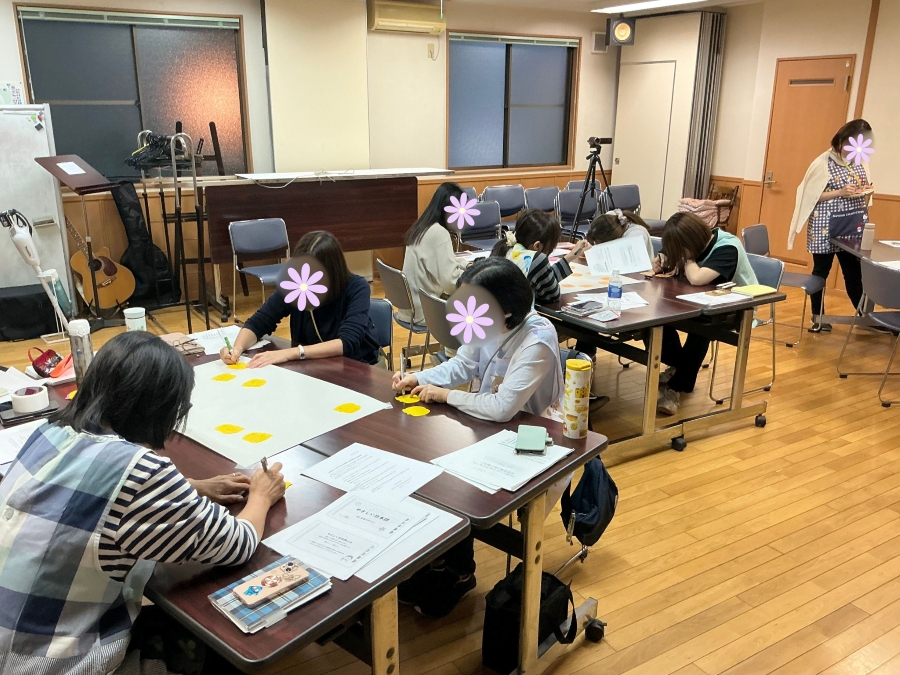
Photo Courtesy: Passerelle
Passerelle also supports kindergartens and daycare centers attended by children with foreign connections. When conducting surveys and interviews at these facilities, they received responses such as: “We want to share how children are doing at the center, but communication with parents is difficult,” and “Instructions about what to bring (for parents) often don’t get through.” These responses reveal that teachers in the classrooms are working to support families with international connections while exploring approaches. To address the challenges those teachers faced, Passerelle launched a multicultural seminar for teachers at nearby kindergartens.
“In response to the growing number of children with foreign connections, the Ministry of Education has issued guidelines. However, the honest feeling among those on the front lines is that while they recognize the necessity, they lack sufficient capacity to implement them,” says Ms. Mera, a childcare specialist.
The seminar introduced the backgrounds of foreign families currently residing in Japan, as well as initiatives at various childcare facilities regarding multicultural childcare. Participants also practiced rephrasing sentences using easy Japanese suitable for use in kindergartens.
Passerelle offers templates for notices and handouts distributed at kindergartens and daycare centers, created with easy Japanese, photos, and illustrations, and freely available on their website.
“When creating templates, we interviewed kindergarten and daycare teachers to find out what types of messages are difficult to understand for parents with foreign connections. When we showed teachers the template we created, they mentioned that Japanese parents might also find the easy Japanese version easier to understand,” says Ms. Inoue.
Expanding Activities While Collaborating with Local Partners
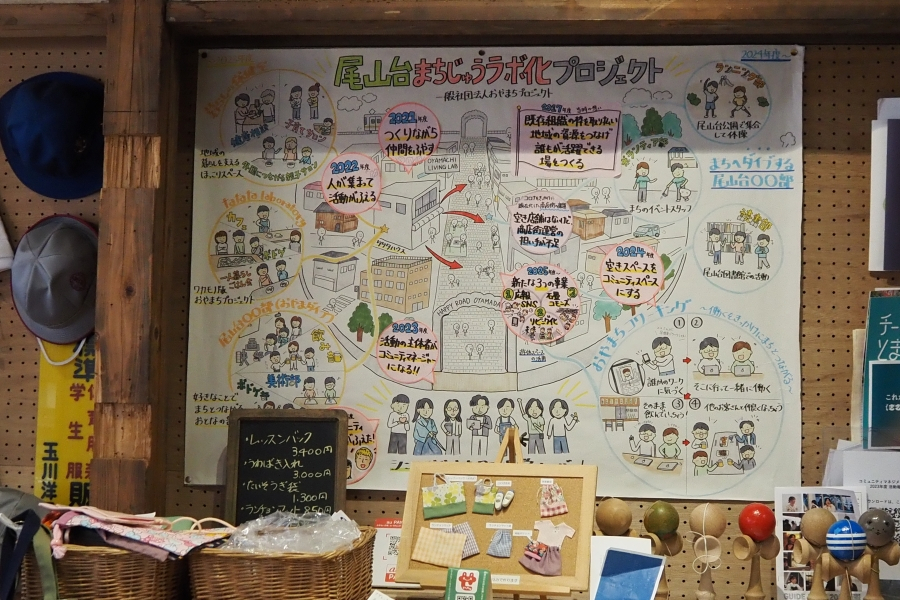
In the Oyamadai area of Setagaya City, where most of Passerelle’s activities take place, the “Oyamachi Project” is underway. This initiative brings together diverse members of the community to engage in activities that enrich life in the neighborhood. Passerelle’s community activities, including Oyako Salon, are also being implemented as part of this resident-led project. “While many people live in urban areas, they rarely have opportunities to meet people outside their own communities. That’s why we started a project to create new encounters, connections, and relationships of mutual support in the community. We hope that people with connections to foreign countries will also participate in community activities like Oyako salon, and connect with local people,” says Mr. Takano of TaTaTa House.
Additionally, Passerelle participated in the Setagaya Sekai Family Day event held in the Setagaya area in January 2026, which brought together parenting-related organizations active in multiculturalism and diversity. They distributed booklets summarizing how to prepare your child for entering Japanese elementary schools, and also offered consultations. “Going forward, I hope we can expand our activities by collaborating with other Oyamachi Project initiatives and cooperating with other organizations active in the community,” Ms. Inoue expressed enthusiastically.
Activities to Reach Each and Every Person You Come Across
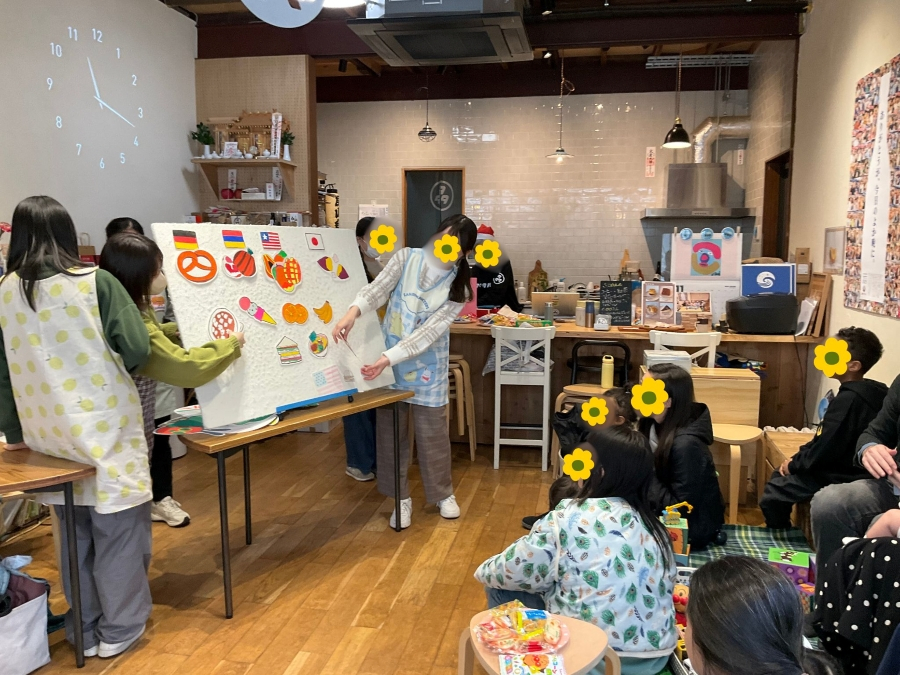
Photo Courtesy: Passerelle
Students studying childcare and Japanese language education also proactively participate in Passerelle’s activities.
“We want to keep things open for students who participate. Also, when I see children and students enjoying time together through picture books and songs, I feel that language differences really don’t matter much,” says Ms. Inoue.
Recently, at Oyako Salon, Ms. Mera’s students studying childcare held a panel theater show where children enjoyed storytelling while looking at pictures displayed on panels. Using a globally beloved picture book, students made a few changes to transform the story into one in which a creature travels the world eating foods from different countries. When the storyteller included pictures of foods from the participants’ home countries, the children were extremely excited. Additionally, activities such as students studying Japanese language education and reading picture books aloud to children provide students with practical learning opportunities.
Passerelle members also gained insights through their daily activities.
“Through my work with Passerelle, I’ve learned that Japanese language education and childcare—fields I once thought were distinct—actually share many commonalities in terms of human interaction, with no real barriers between them. I believe that bringing in people from other fields will spark new ideas, so we’d love for them to get involved with Passerelle—even starting with something casual like reading picture books together,” says Ms. Tochigi.
Ms. Inoue also shared her aspirations for the future as follows.
“Since founding the organization, I’ve been exploring how to expand our activities. Though it’s a small project, I want to keep doing it so that it reaches every person right in front of me.”
Passerelle’s activities, aiming for a society where both families with connections to foreign countries and Japanese families can raise children together with peace of mind, have only just begun.