


Close UP
Nonprofit Organization Katariba ~Aiming For a Diverse Society Where High School Students with Foreign Roots Can Design and Achieve Their Future Careers~
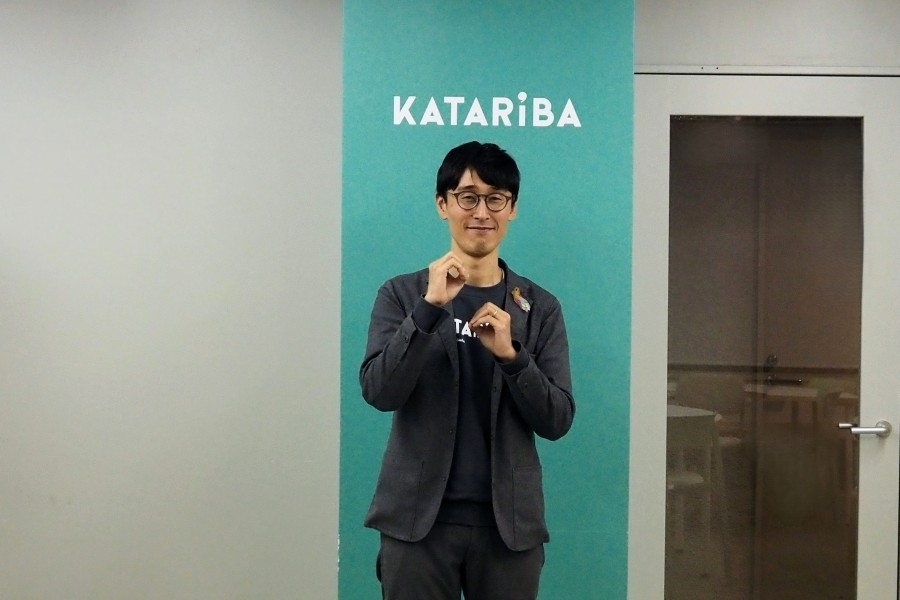
Kataribais a certified nonprofit organization that delivers diverse opportunities for connections and learning through various dialogue programs for teens. Among their activities, the Roots Project provides career support for high school students with foreign roots, such as internship programs run in collaboration with partner businesses. We spoke with Mr. Kouki Yamaguchi, who is in charge of the project.
Fostering a “Diagonal (naname)” Relationship From the Perspective of an External Mentor Outside the Family or School
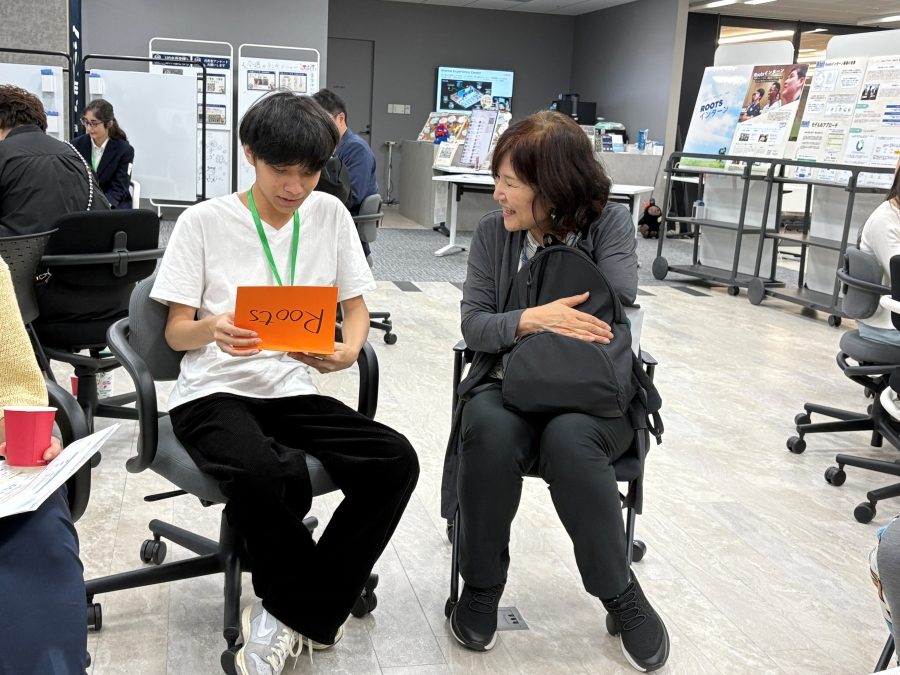
Photo Courtesy: Katariba
The certified nonprofit organization Katariba was established in 2001. They aim to create a society where young people from any background can develop the power to shape their future: providing a space where teens can gain motivation and creativity from the perspective of an external mentor outside their families and schools. As societal divisions and inequality widen today, Katariba provides children with diverse opportunities to learn and connect. This ensures that opportunities to nurture children’s motivation and creativity are not limited by the environments into which they are born and raised—such as disasters, poverty, or depopulation. The name of the organization, Katariba*, embodies the desire to create a space for honest dialogue and conversation. Katariba says it values dialogue through a “diagonal (naname)” relationship with slightly older mentors —neither parents nor teachers (vertical (tate) relationships) nor friends (horizontal (yoko) relationships).
*kataru: talk, ba: space
Katariba currently operates 17 programs across its Tokyo headquarters and five centers located in Tokyo, Iwate, Fukushima, and Shimane. And it has supported approximately 150,000 children to date. Through its early work with teens, the organization recognized the challenges faced by high school students with foreign roots, which led to the launch of the Roots Project in 2019.
“While the number of children with foreign roots continues to increase year after year, the development of support systems and educational programs has not kept pace, leaving the burden on teachers in the field to manage the situation. A sense of division has emerged among students from different languages, cultures, and backgrounds. Furthermore, the high school dropout rate among students with foreign roots has remained extremely high. We started this initiative hoping that our position, distinct from that of teachers and students, might help create a breakthrough,” says Mr. Yamaguchi.
Approaching Communities and Businesses that High School Students with Foreign Roots Will Engage with After Graduation
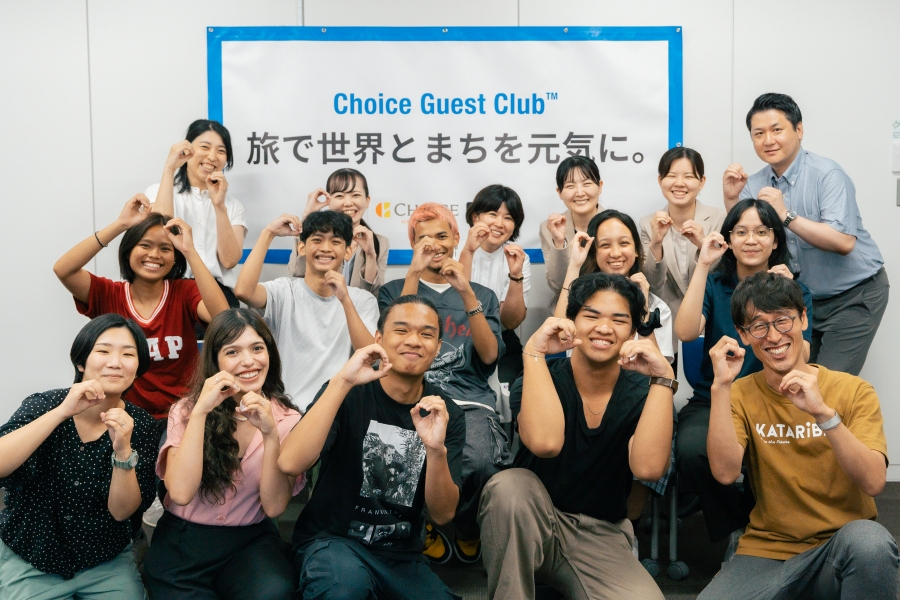
Photo Courtesy: Katariba
For the first three years after its launch, the Roots Project operated as an in-school program, conducting outreach programs and offering after-school activities. Katariba designed the curriculum to enable students with foreign roots to participate actively. This includes sessions exploring multicultural coexistence, attempts to communicate in sign language as a liberation from the language, and activities that express the personal interests of students.
“We prioritized making students (with foreign roots) feel that school was their place. Through these efforts, one school supported by the Roots Project achieved a zero-dropout rate among its students with foreign roots. However, we discovered new challenges: low rates of higher education attainment after high school graduation and high rates of non-regular employment. Since teachers expressed concerns about sending children out (into the world), as the next step, we decided to approach companies and communities with which these children would become involved after graduation.”
Therefore, starting in fiscal year 2023, Katariba launched a new program called “Roots Internship,” which provided students with hands-on work experience at companies. The aim is for students to broaden their engagement with companies and communities by visiting them in person.
“Many companies express interest from the perspective of promoting diversity, future recruitment, and contributing to the local community. While internships in Japan are typically conducted with the intention of hiring, our Roots Internship Program is unique in that students can participate even if they haven’t yet decided what they want to do. It’s an educational program where students engage in deep conversations with working adults to think about their own future careers,” says Mr. Yamaguchi.
Helping Students Expand Career Options and Envision Their Future
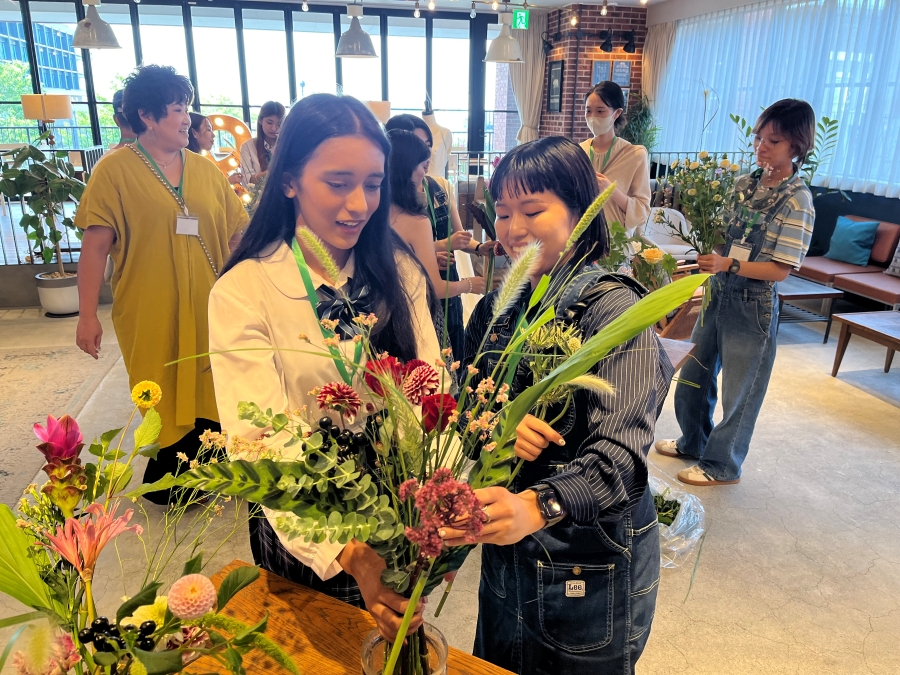
Photo Courtesy: Katariba
The Roots Internship Program starts with career dialogue sessions, followed by company-specific programs related to each business and industry, allowing students to deepen their understanding of work through workplace experiences and employee interviews. Following the completion of the internship, a presentation session will be held where students share what they have learned. Representatives from the companies and school teachers also participate in the presentation sessions. Teachers say that seeing students study diligently outside of school reveals a side of them not seen in academic or club activities: deepening teachers’ understanding of their students.
“Teachers were amazed at the transformation they saw in their students when students who were initially reluctant to participate in the internship program spoke confidently at the final presentations. (Students who participated) gained insight into their own interests and passions through the internship, and each one showed a vibrant, lively spirit. Furthermore, since the presentation sessions are conducted in Japanese, the experience seems to help build their confidence, leading them to take new actions, such as taking on part-time jobs or taking the Japanese Language Proficiency Test. While language barriers often make it difficult for students to gain that first sense of accomplishment, it is wonderful to see them brim with positive energy,” says one Roots internship program coordinator.
Through the program, students gain insights into their future, realize how their interests and strengths can be applied across various fields, and begin to think about their careers from a broader viewpoint.
“Precisely because this is not about job hunting, I believe the program allows students to broaden their horizons. It would be great if students could see the many ways their language skills and diverse backgrounds can be applied, Not just in roles conventionally associated with people with foreign backgrounds,” I believe that (for students with foreign roots), it not only allows them to leverage their strengths but also broadens the paths and possibilities open to them,” says Mr. Yamaguchi.
Equal Dialogue That Sparks New Perspectives for Both Students and Companies
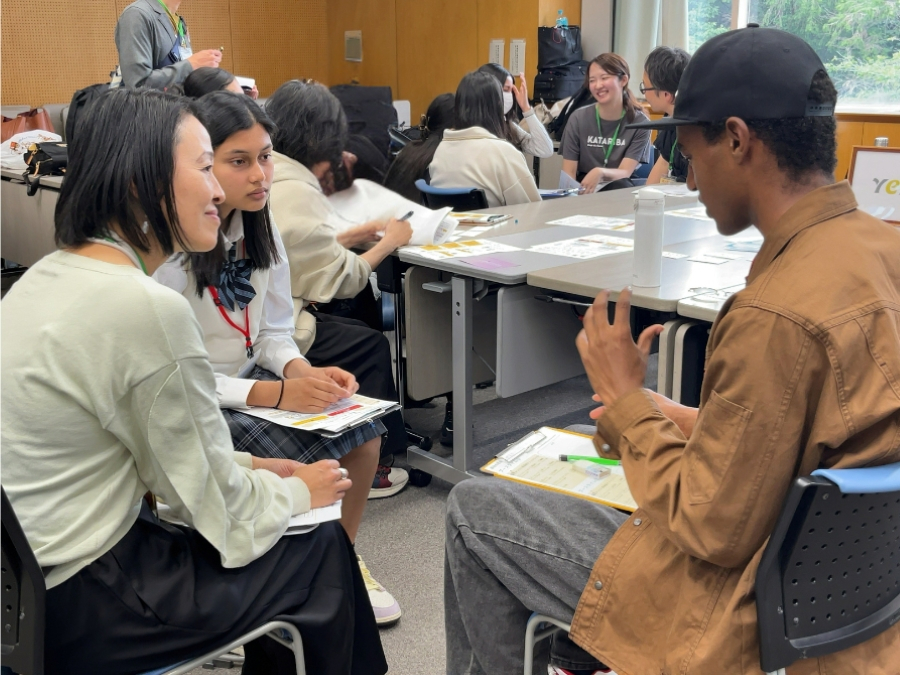
Photo Courtesy: Katariba
So far, students from diverse backgrounds and origins have participated in the program. Some companies say they’ve never had the chance to talk with students with foreign roots before, and they’re often impressed by the passion and dedication they see in those students during the programs. Katariba has also received feedback from one company stating, “It made us realize the importance of creating an environment where diverse personnel who will lead the next generation can thrive: prompting us to reevaluate our corporate values.”
“Companies hesitating to participate often tell us they don’t speak English. However, students themselves aren’t all native English speakers anyway. What really matter is, that when students try to express their thoughts, there are someone willing to hear them out. That alone gives them courage. As long as there is a desire in both parties to communicate, there are many ways to make it happen,” says Mr. Yamaguchi. Mr. Yamaguchi states that rather than companies one-sidedly teaching students, asking questions and engaging in dialogue allows companies and students to think together, which creates an opportunity for both students and companies to gain new perspectives.
Creating an Environment Where Children with Foreign Roots Can Thrive - Aiming for the Next Decade
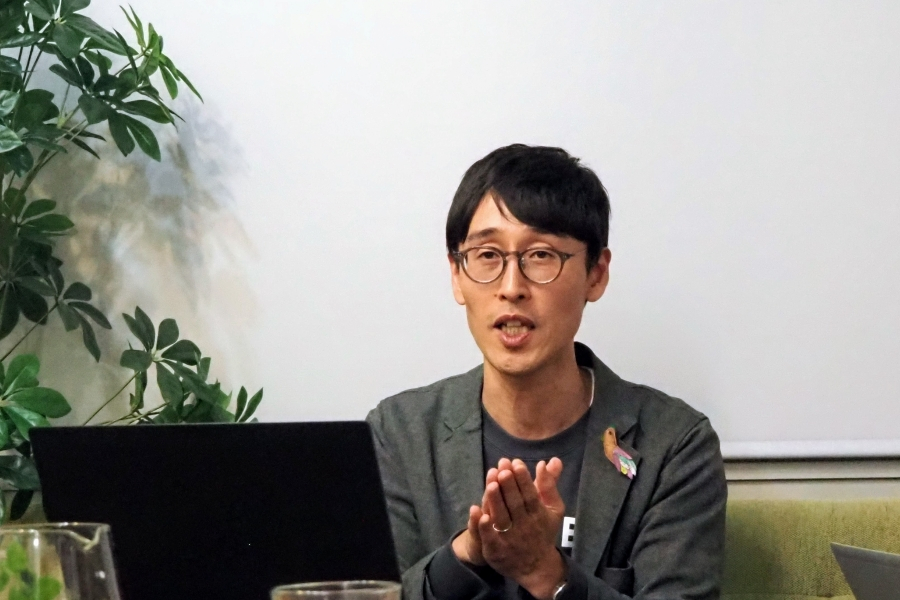
In February, the Roots Project held the #meet5000 Fes 2026, creating a space for high school students with foreign roots and members of society (working adults)to connect. The event brought together eight companies and a total of 90 students gathered from the Tokyo metropolitan area, Shiga Prefecture, and Shizuoka Prefecture, making it a major career-dialogue event.
“We planned this event in the hope that it would provide a space where students could participate more casually and connect with peers who also have foreign roots. We also hope it will serve as an opportunity for students to start thinking about their future, and feel inspired to take on new challenges through meeting new people,” says Mr. Yamaguchi.
“The ‘5000,’ in #meet5000, represents the number of high school students in Japan who need Japanese language support. However, that number of 5,000 is only within the scope of data captured by the Ministry of Education’s survey, and there are also young people not attending high school. As Katariba, we want to create more opportunities to meet as many students as possible, so that we can at least provide those 5,000 students with options that lead to higher education or employment,”. The Roots Project is currently focusing its activities in the Tokyo metropolitan area, but it has also begun collaborating with organizations, companies, and local municipalities in other regions, steadily expanding its network.
“The number of children with foreign roots is increasing year by year. Currently, in elementary schools, one child with foreign roots is found in every class of 35 students. This means that in ten years, one in every 35 employees joining companies as new graduates, after completing middle school, high school, and university, will have a foreign background. Aiming for the next decade, we want to prepare for that, in collaboration with administrations, businesses, and organizations active in the community,” says Mr. Yamaguchi. The Roots Project continues its challenge of aiming for a diverse and creative future for children.