


Close UP
Nakano Himitsukichi ~A Gentle Circle of Coexistence Arising from a “Secret Base (Himitsukichi)” Where Anyone Can Get Together~
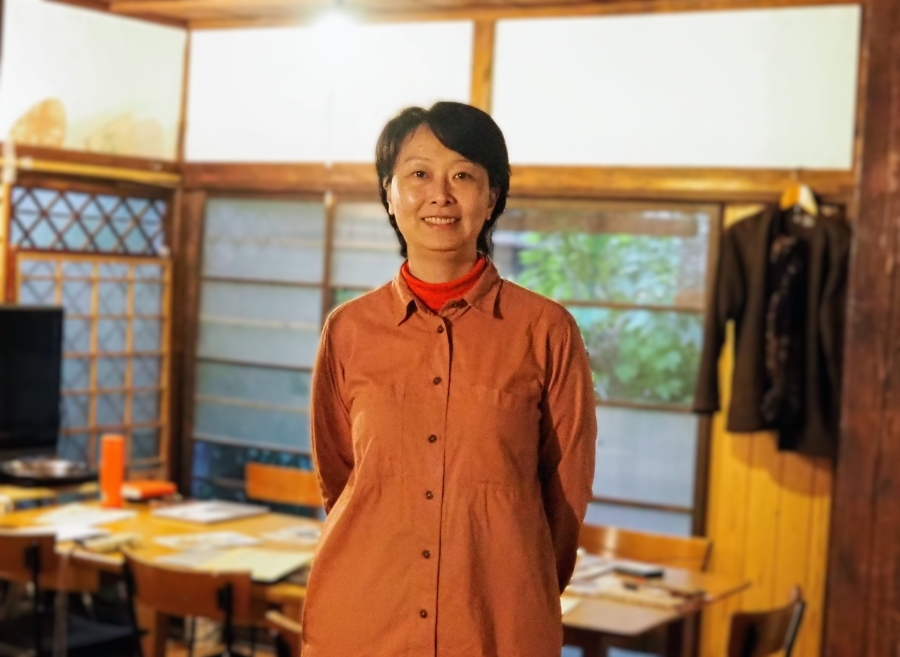
“Nakano Himitsukichi(中野秘密基地),” is set in an old traditional Japanese house (kominka), quietly nestled in a residential neighborhood of Nakano. This place has become a gathering spot where people of various ages and nationalities from the community come together to relax. The representative of Nakano Himitsukichi is Ms. Mariko Yamamoto, who once traveled the world as a backpacker. We visited a kominka community aiming to create a space where diverse people in Nakano can connect casually through events such as a multicultural children’s cafeteria.
“Nakano Himitsukichi” was born in a renovated traditional Japanese house in the wake of the COVID-19 pandemic.
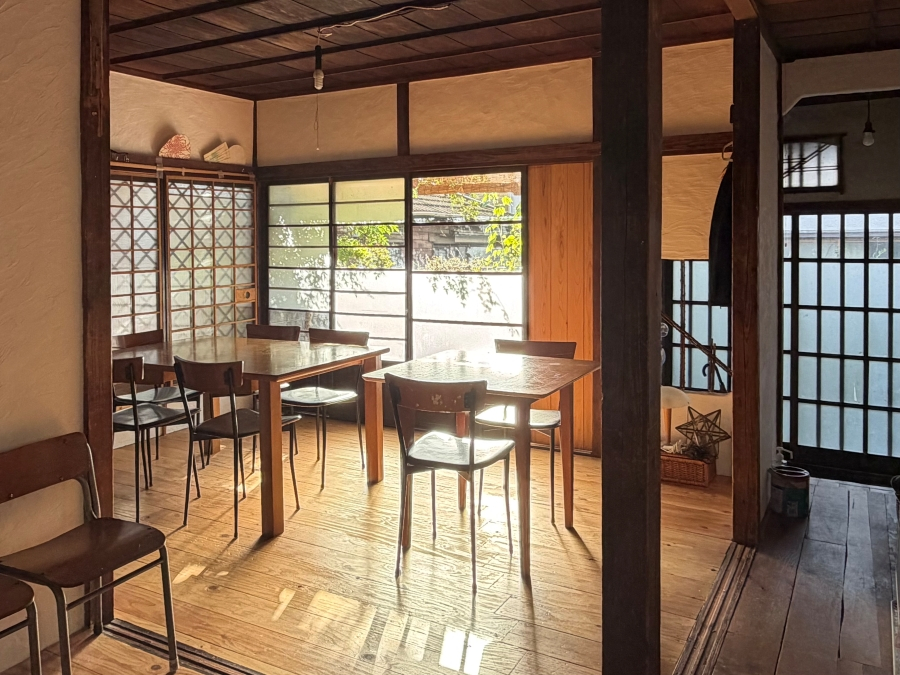
Photo Courtesy: Nakano Himitsukichi
After graduating from high school, Ms. Yamamoto went to Australia on a working holiday. Since then, she has traveled to 50 countries around the world as a backpacker. After returning to Japan, she opened her first guesthouse, “Yadoya Guesthouse” in Nakano City, in 2002.
“While traveling, my backpacking friends and I chatted about how we should run an inn after returning to Japan. It was a time when, even if I told friends I met on my travels to visit me in Japan, they’d say they couldn’t afford it because Japan was expensive. So, I wondered if they might come visit Japan if there were cheap lodgings.”
Since then, Ms. Yamamoto has operated several guesthouses - and shared houses - primarily in the Nakano area, which attracts many foreign visitors. However, the spread of the coronavirus in 2020 became a turning point, where she paused.
“I even thought about getting rid of everything. But it seemed such a waste to let go of this lovely traditional Japanese house (kominka), so I decided to do something more with it. Then, I came up with the idea of creating a space where diverse people could connect casually, so we renovated the old house ourselves,” says Ms. Yamamoto. This is how the “Nakano Himitsukichi” came to be, with the help of a carpenter, while retaining the atmosphere of an old traditional Japanese house. Ms. Yamamoto used to call this place “my secret base (himitsukichi),” and eventually, visitors started calling this place “secret base (himitsukichi)” too.
Aiming for a Space and Community Where Diverse People Can Connect Loosely and Feel at Ease
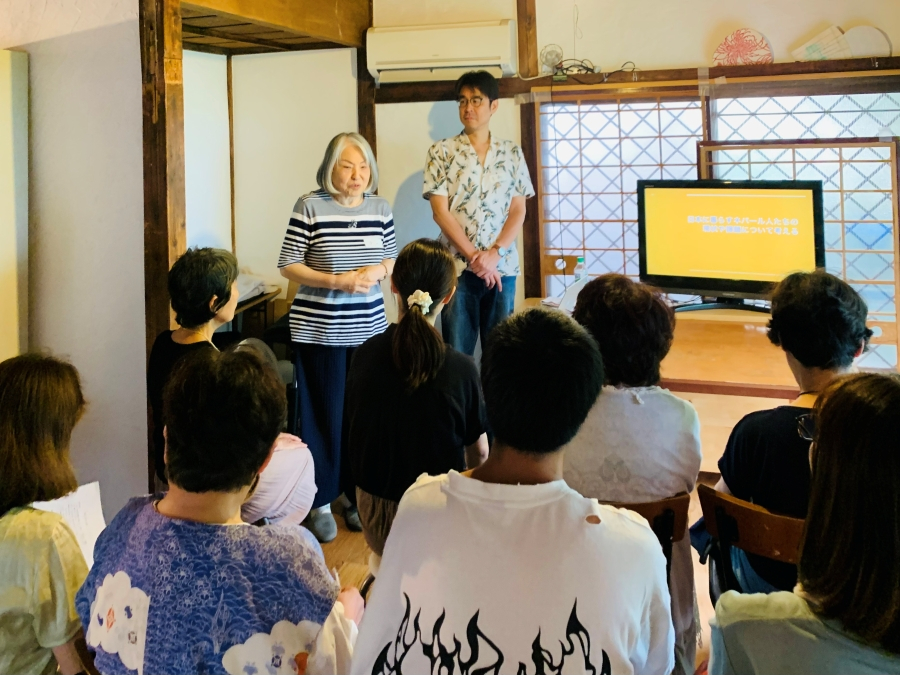 The group “Together We Live (Tomo ni Ikiru kai)”, primarily consisting of women with an average age of 80, meets regularly at Nakano Himitsukichi. At this gathering, participants listen to various guests speak while reflecting on what it means to “live together.”
Photo Courtesy: Nakano Himitsukichi
When Ms. Yamamoto ran the guesthouse, she employed staff and part-time workers. However, since the COVID-19 pandemic, she has been handling everything - from preparing to welcome guests, to running the place all by herself - with help from friends and volunteers. Ms. Yamamoto had chosen the business plan for Nakano Himitsukichi as the subject of her graduate thesis.
Even during the COVID-19 pandemic, she continued her activities within the scope of what was possible, such as hosting online sessions where Japanese residents abroad explained the current situation in their local areas. Through interactions with local residents, she says she found direction for the Nakano Himitsukichi.
“Since the pandemic began, I've had more opportunities to talk with people in the community, and I've learned many new things. For example, elderly women living nearby had been reaching out to the residents of our shared house, and they were active in a group called the ‘Nadeshiko Kai’ (which later evolved into the ‘Together We Live’). Through these interactions, my desire grew stronger for Nakano Himitsukichi to become a place where diverse members of the community feel welcome.”
Nakano Himitsukichi currently hosts various events such as “Tanudon Shokudo (Children’s Cafeteria).” It also serves as a gathering place for local residents and people living in the shared house run by Ms. Yamamoto.
“Rather than us simply creating this place, we hope it becomes a space and community where visitors can connect casually through the venue, and feel at ease.”
Intercultural Children’s Cafeteria Tanudon Shokudo: Practicing Intercultural Coexistence
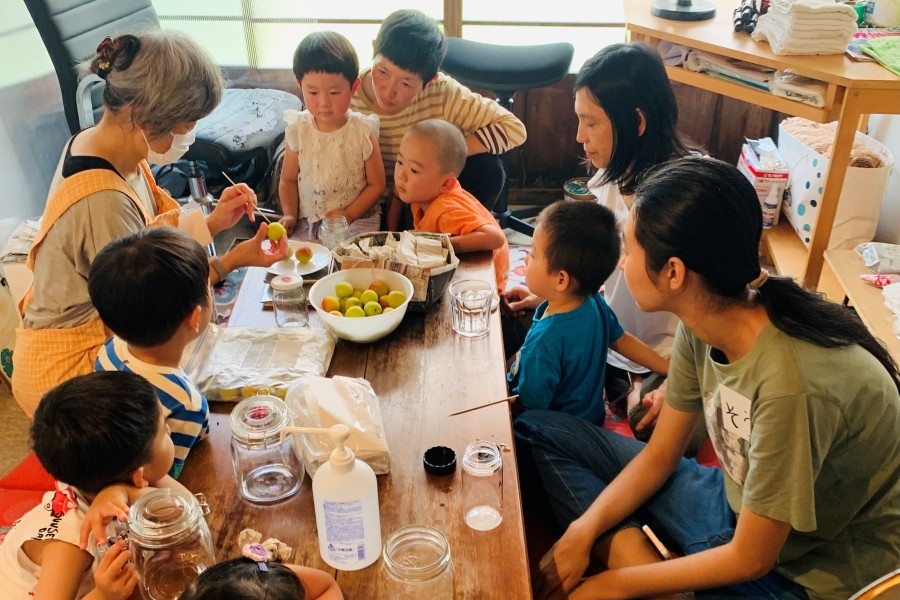
Photo Courtesy: Nakano Himitsukichi
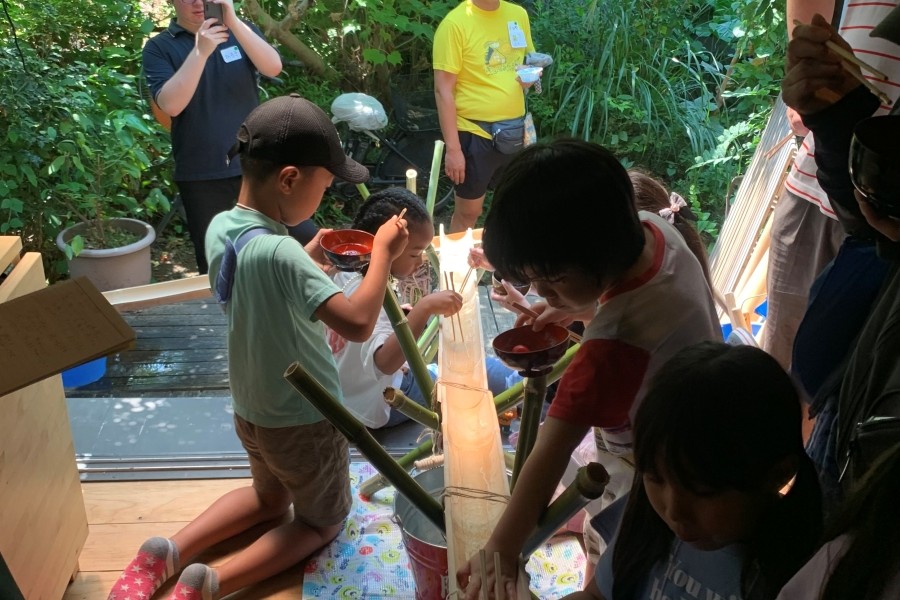
Photo Courtesy: Nakano Himitsukichi
The intercultural children’s cafeteria, “Tanudon Shokudo,” held monthly at Nakano Himitsukichi, is led by Satomi-san, a friend of Ms. Yamamoto. This volunteer-run cafeteria allows anyone to enjoy a meal with peace of mind.
“At first, I wanted to advertise it as ‘a place where anyone is welcome,’ but when you say ‘anyone,’ ironically, no one comes. I chose the name ‘Intercultural Community Children’s Cafeteria’ to convey that children eat for free and that we welcome foreigners to come at any time.”
When they held the first Tanudon Shokudo on a trial basis in January 2023, over 40 people gathered.
“We only advertised it on the local bulletin board, but I was surprised by how many people showed up—far more than I expected. It made me realize this is an event the community needs, so we started holding it every month,” says Ms. Yamamoto.
At Tanudon Shokudo, various activities such as craft workshops, and games from different countries, are held based on participants’ ideas. Once, a participant originally from Yemen had also cooked Yemeni dishes for others.
“We strive to create a space where people gather, not as providers and participants, but as equals; connected in a relaxed and open way. It makes me happy to see people who visit our place become friends naturally, exchange contact information, and go out together somewhere,” says Ms. Yamamoto.
The annual summer nagashi somen (flowing noodles) event is especially popular, drawing a crowd of 70 people this year. Starting by splitting bamboo to prepare for nagashi somen, children and foreign residents who participated were all smiles.
“Ultimately, our goal is for people to think Tanudon Shokudo is that kind of place (a place of multicultural coexistence), even without us having to specifically brand it as such,” says Ms. Yamamoto.
Creating Connections Through Food: Nakano Ethnic Map & Guide
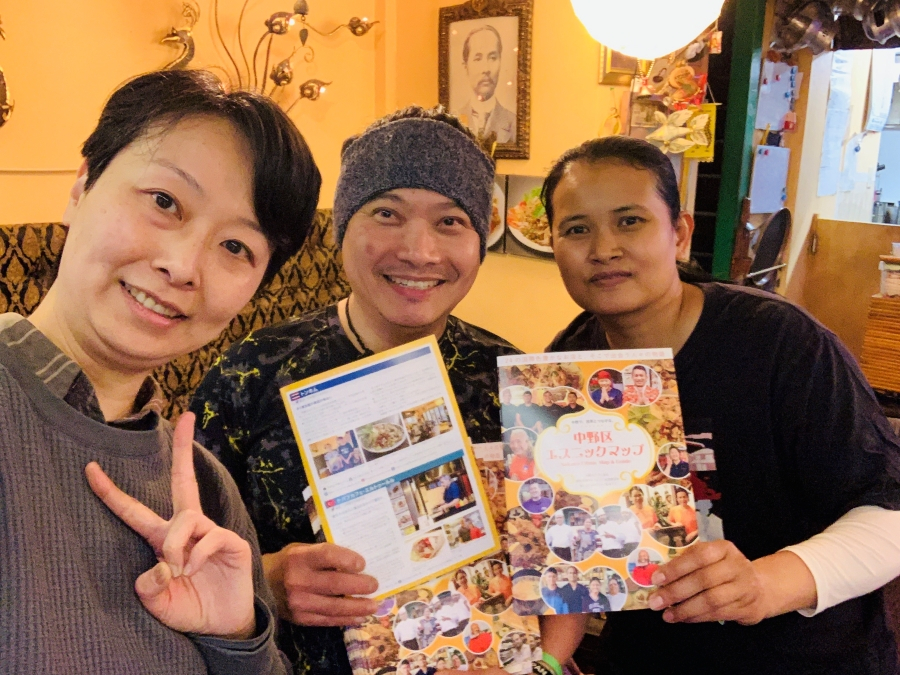 Ms. Yamamoto conceived the idea for the Ethnic Map while engaging in studies at her university on the themes of Nakano Himitsukichi.
Photo Courtesy: Nakano Himitsukichi
Alongside managing the Nakano Himitsukichi, Ms. Yamamoto established an executive committee and created “The Nakano Ethnic Map & Guide.” This map, published in March 2025, lists restaurants and eateries in Nakano City run by foreigners. The Map & Guide introduces 24 restaurants and eateries that Ms. Yamamoto personally visited and researched with her old backpacking companions, and others.
“We hoped that through articles revealing business owners’ personalities — why they came to Japan, what drives their business — that readers of the guidebook would feel a connection and be inspired to visit them.”
Ms. Yamamoto often faced difficulties, such as being refused interviews by shop owners or having appointments forgotten, and many things didn’t go as she planned. Sometimes, shop owners would be wary when unfamiliar Japanese people came in. Even so, Ms. Yamamoto’s strong conviction drove her to continue producing the Map & Guide.
“When I was working on my graduation thesis, I came across a survey conducted by Nakano City. It revealed that while 7.2% of Nakano City’s population consists of foreign nationals, approximately 85% of Japanese residents responded that they have ‘little or no contact with foreigners’. I decided to create this map because I believe that if people have an opportunity to get to know each other, it can help eliminate prejudice and fear. I hope that everyone can enjoy connecting through food,” says Ms. Yamamoto.
Ms. Yamamoto is currently working on the creation of the second map.
“For the first volume, I used the term ‘foreigners’ in large print for clarity. But for the second volume, I want to create a map that showcases diverse cultural atmospheres by featuring ethnic restaurants and eateries—regardless of whether they are run by foreigners or by Japanese,” says Ms. Yamamoto. The Nakano Ethnic Map & Guide is available in print at locations such as the Nakano City Office, community activity centers, and local movie theaters, and can also be viewed online.
Simply shifting your perspective can make even your everyday route feel like a journey.
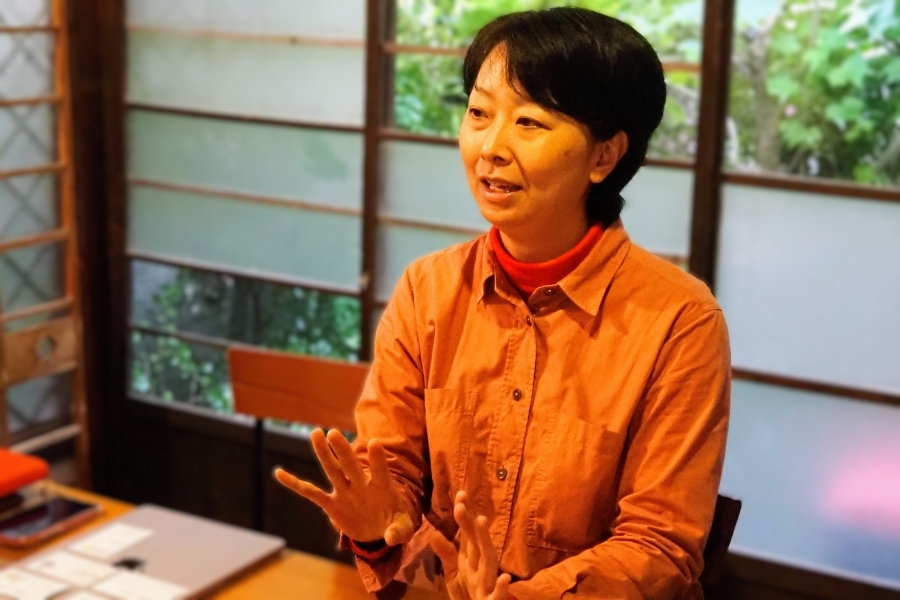 “It’s tough because it’s not a profitable business. But I guess I just love it,” says Ms. Yamamoto.
In addition, Ms. Yamamoto serves as a board member of the Nakano City Tourism Association and is involved in various activities within the Nakano area.
“I’m involved in various things, but all my activities are interconnected. The tourism association website, currently undergoing renewal, aims to present basic information about Nakano, while also showcasing its niche aspects—the diverse people and fascinating culture that make Nakano unique. For example, we plan to feature columns by niche enthusiasts connected to Nakano, such as an underground culvert enthusiast and a practitioner of Nindo (the way of life and philosophy of ninjas). Through columns that shift your everyday perspective just a little, I hope readers will feel differently when walking through their usual neighborhoods—as if they were traveling somewhere new.”
Reflecting on her activities over the years, Ms. Yamamoto says the following: “Running guesthouses and shared houses in Nakano, welcoming guests from various countries, has definitely laid the groundwork for my current activities. I feel like what I've been doing is gradually taking shape.”
At Nakano Himitsukichi, diverse people from the community gather, transcending nationality and generations. It is a new form of community where anyone can freely meet and loosely connect.