


Close UP
Student Organization Origami ~Connecting and Expanding the Circle of Volunteers Through Activities that Only Students May Undertake~
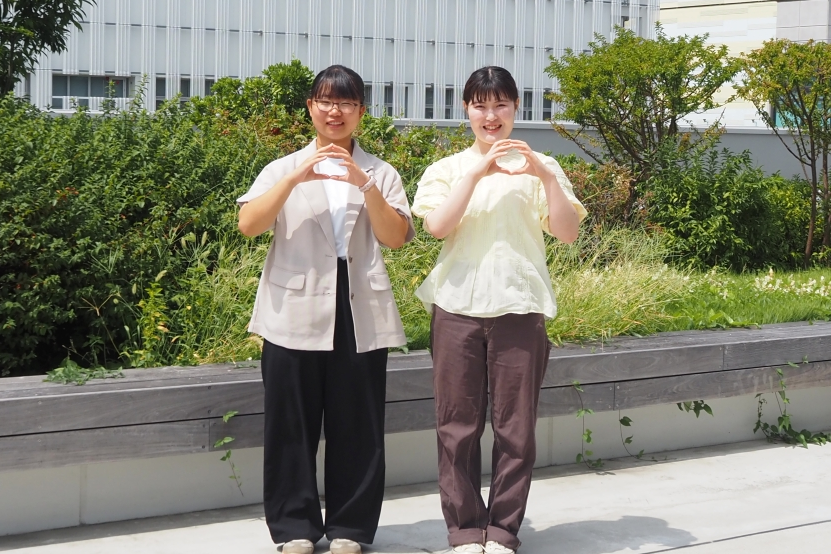
Origami is a student group that aims to create volunteer activities in six areas—culture, environment, sports, international affairs, welfare, and education—to build a cohesive society. This organization consists of approximately 400 students from 80 universities. We interviewed Ms. Kanon Nagata, a fourth-year student, and Ms. Yuina Sasaki, a second-year student from the International Team, who are promoting the appeal of international volunteer activities to domestic students.
The impetus for the organization's founding was the Tokyo Olympic and Paralympic Games.
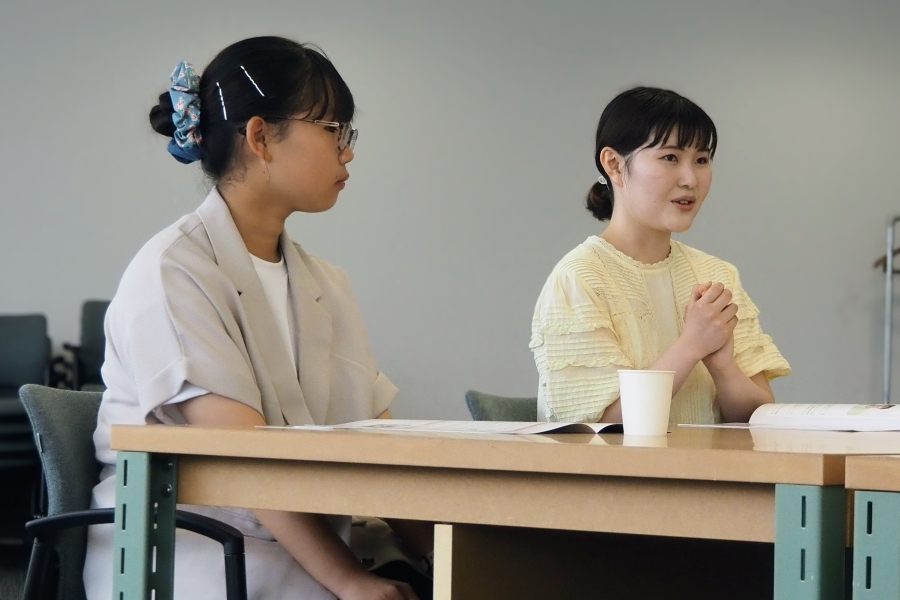
Origami is a student organization founded in 2014 to engage in the Tokyo Olympics and Paralympics through student power. The group’s name was formed by taking the initial syllables of certain words: “Ori” for Olympics and Paralympics, “Ga” for students (gakusei), and “Mi” for Let’s all get excited together (minna de moriageyo). Origami gradually expanded its activities beyond local volunteer work, like litter cleanup. Under its vision of “A Cohesive Society That Starts with Things That ‛Sound Interesting,’” it now operates through six teams focused on culture, environment, sports, international affairs, welfare, and education. Some students participating in the activities are involved in multiple teams that align with their interests. Origami also creates diverse volunteer activities across various categories, such as having two or three teams collaborate.
The International Team consists of approximately 30 members and engages in events and project activities related to international volunteering. The program aims to make it easier for participants to engage in international exchange and volunteer activities by enabling them to experience a cycle of three steps: “cross-cultural understanding”, “international support”, and the “emotional impact” gained from these activities. “We decide upon our activities by brainstorming ideas together, so it's exciting when my ideas get chosen,” says Ms. Sasaki.
Creating a Community That Serves as a "Second Home" for International Students Through Cooking Events
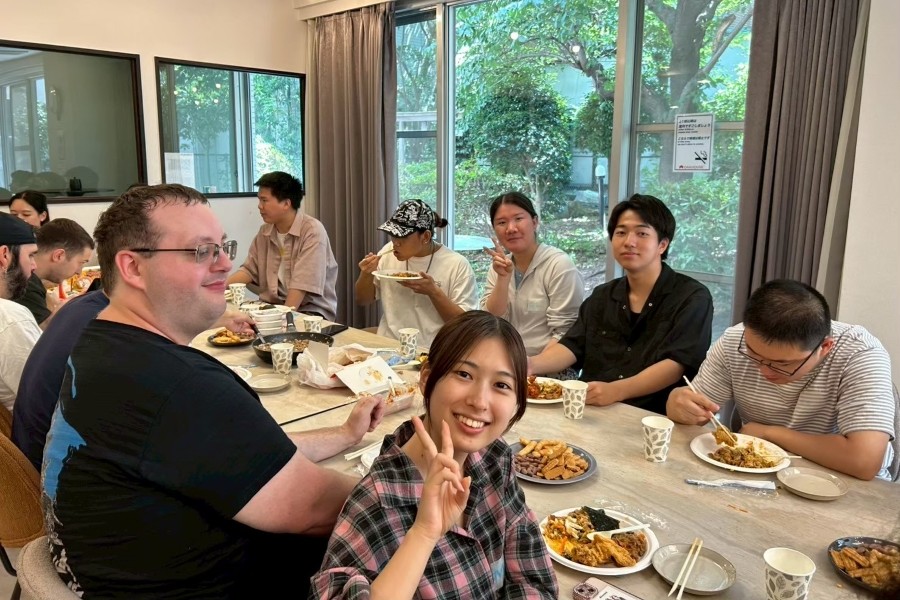 The project was launched after hearing - from a volunteer group active in Edogawa City - that international students attending universities in Edogawa wanted to interact more with Japanese people.
Photo Courtesy: Student Organization Origami
One of the International Team’s activities is the “Edogawa Second Home Project.” With the help of international students, the International Team is hosting events at a shared house in Edogawa City to create a community that serves as a “second home” for foreigners. “Many foreign residents live in Edogawa City. I’ve heard that some people feel lonely because they have no one to talk to. We planned (Second Home Project) with the idea of creating a place and opportunities for international students and other foreign residents to interact with fellow foreigners in similar situations as well as Japanese university students of the same age, and to give foreign residents people to talk to or opportunities when they’re in trouble,” says Ms. Nagata.
The project primarily hosts cooking events such as a workshop for making wagashi (Japanese confectionery) and other assorted cuisine workshops, where international students serve as instructors. “Rather than just sitting and talking, I hoped that having (participants) cook together would trigger conversation. I also feel it helps us learn about each other’s cultures. We also have international students help create events from the planning phases,” says Ms. Nagata.
Approximately 30 people, primarily from Asian countries such as Korea and China, gather to enjoy cooking each time.
“The Japanese language proficiency levels among international students vary. Some people have just arrived in Japan and can only speak simple words. (Such people) feel the difficulty of conversation while communicating using body language. Conversations (with international students) often get lively when the topic turns to Japanese anime. I was happy to feel that they were interested in Japan,” Ms. Sasaki recalls.
Exploring Forms of International Cooperation That Can be Conducted from Within Japan
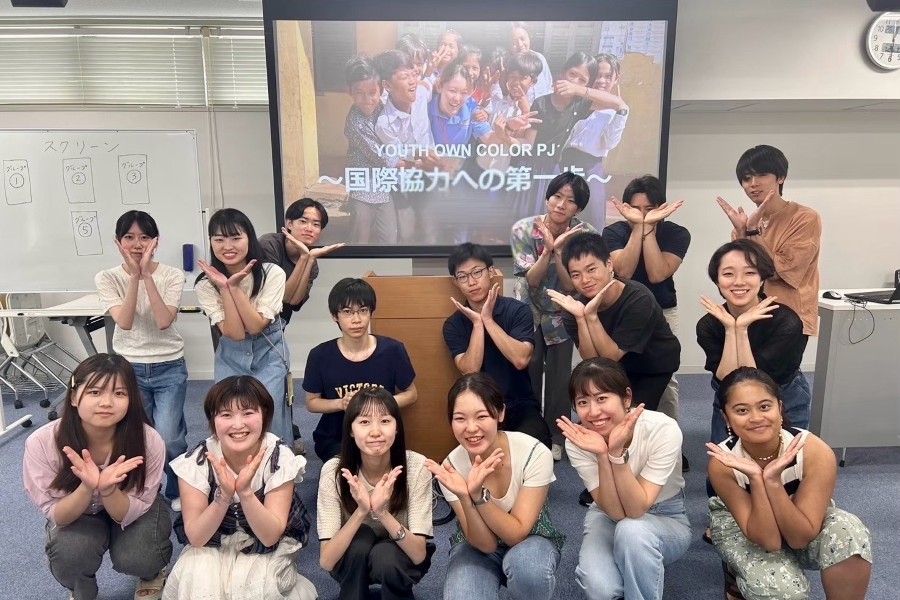 When creating a video, they made an effort to ensure the content was easy for children to understand, by using props and by conveying messages through smiles that speak without words.
Photo Courtesy: Student Organization Origami
Through the “YOUTH OWN COLOR Project,” the International Team explored ways to bring smiles to the faces of children in Cambodia, from within Japan. “Members who visited Cambodia witnessed children unable to attend school due to poverty-related labor and other reasons. We started this project because we wanted to do something for these children,” says Ms. Nagata. At the start of the project, they invited a university student with experience teaching English at Cambodian elementary schools as a lecturer, and held a workshop to learn about the current situation of Cambodian children. Then, the International Team created a video for children in Cambodia, explaining how to brush their teeth and wash their hands. And when they participated in the “SDGs Student Forum” held in Chiba Prefecture, they engaged in activities to share, with fellow student participants of the same generation, the Cambodian culture and the current situation they had learned about through the project. The International Team is currently seeking support organizations to deliver the created videos to children in Cambodia.
Additionally, the International Team runs the “Globicine Project” to help people feel more familiar with supporting international healthcare. By solving puzzles and creating art with plastic bottle caps, Japanese children learn about countries where people cannot access the healthcare that Japanese kids take for granted, and consider what they can do to help those countries. “We value not just conveying information, but also making learning enjoyable,” says Ms. Sasaki. The International Team is preparing to launch the “Globicine Project” at a children’s cafeteria at the end of 2025.
Providing Environments Where People May Easily Participate in International Exchange
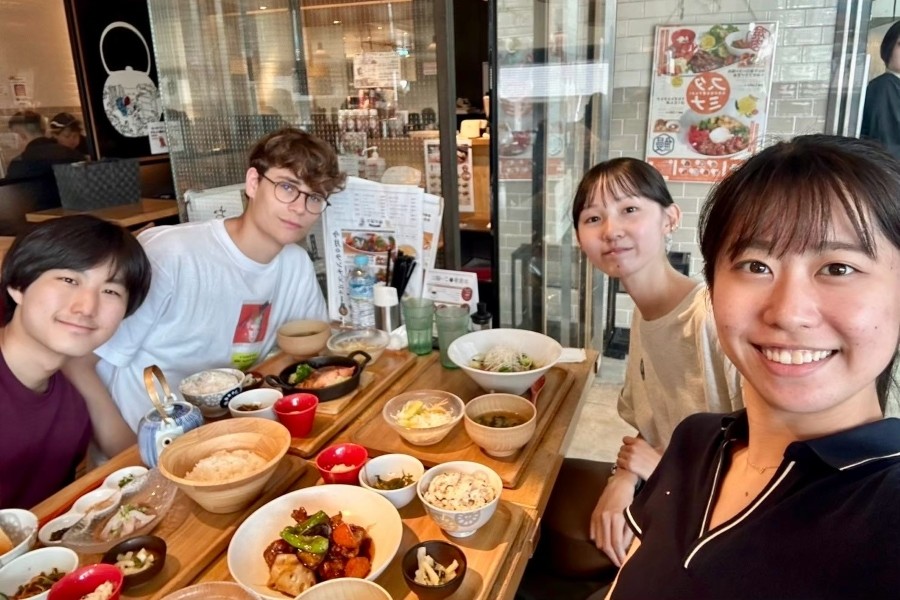 Event participants spent the day together, visiting the Ameyoko market street in Ueno as well as museums, and having breakfast.
Photo Courtesy: Student Organization Origami
The “Nakayoshi Project” is an initiative to organize exchange events with international students, making international exchange feel more accessible. “Many people think a barrier exists between themselves and foreigners because they don’t know about the latter’s cultures. We aim to break down barriers by learning about each other’s cultures and create opportunities to deepen our bonds,” says Ms. Sasaki.
Under the Nakayoshi Project, a Ueno sightseeing tour for international students was held in August 2025. About 20 international students from Canada, the United States, France, and other countries participated in the event. And the International Team guided them around Tokyo’s tourist spots to introduce them to Japanese culture. “We made preparations tailored to each culture and set of values, such as checking whether the restaurants we visited offered dishes suitable for vegetarians. The international students requested to go to karaoke, so we enjoyed karaoke together. Every time we did something for them, they’d say ‛thank you’ in Japanese. It made me happy to feel their interest in Japan and their desire to learn the language,” says Ms. Sasaki.
Through various projects, members of the International Team experience cultural differences between countries. “I was surprised that French people don’t know the method of curling our fingers inward to hold down ingredients when cutting them with a kitchen knife. It was interesting to realize that things we take for granted in Japan are not the norm elsewhere, and to experience cultural differences,” says Ms. Nagata. Ms. Sasaki says, “The Vietnamese people value their connections with family and community, and I was impressed by how they call their families every day.”
Increasing the Number of People Involved in Volunteering Through Activities that Students May Undertake
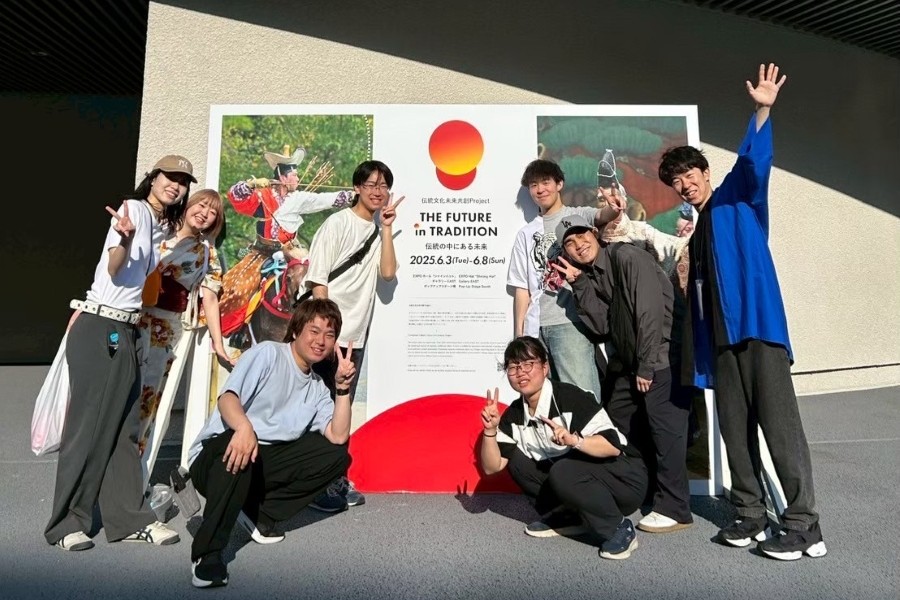 At the Osaka Expo, members also participated in a panel discussion about future societies.
 Photo Courtesy: Student Organization Origami
Origami has been involved in various events and activities as an organization. Recently, they participated in the Japan International Exposition 2025 (Osaka–Kansai Banpaku) and hosted the Paper Airplane Project. They were also involved in the operation of the Traditional Culture Future Co-Creation Project. “I believe there are things only students can do: things only students are capable of. I believe the Japan International Exposition 2025 (Osaka–Kansai Banpaku) was the embodiment of that idea,” reflects Ms. Sasaki, who volunteered at the Expo venue.
Regarding the International Team’s activities up to now, Ms. Nagata and Ms. Sasaki reflect as follows.
“We had about 10 members on the International Team during the last fiscal year, fewer than we have now. Since some team members expressed interest in volunteering overseas, some may have felt (that joining the International Team) required a lot of competence. After discussing with my fellow members, we came up with a plan that made it easier for people to participate. And as a result, many new members joined us,” says Ms. Nagata.
“International volunteering is often seen as something only people who can speak English do, and is often passed over. It should also involve feeling excited about, and being interested in, other countries’ cultures, so I want people to feel more familiar with it,” says Ms. Sasaki.
“As an organization, we want to continue valuing what we can do as students, expanding our activities in collaboration with various companies and organizations, and increasing the number of people involved in volunteering,” say Ms. Sasaki and Ms. Nagata.
Origami, a student organization that utilizes perspectives unique to being a student in order to spread the joy and appeal of volunteering, will continue its activities.