


Close UP
NPO ASIAN COMMUNITY TAKASHIMADAIRA (Takashimadaira ACT) ~ A mutually livable city utilizing the power of both foreign residents and elderly residents. ~

Takashimadaira housing complex in Itabashi ward is widely known as a large-scale housing complex built in the 1970s. The NPO ASIAN COMMUNITY TAKASHIMADAIRA (hereinafter referred to as Takashimadaira ACT) is based in this Takashimadaira housing complex. They aims to create a community where foreign residents and Japanese residents live and work together in harmony.
Takashimadaira ACT actively holds Japanese language classes, a series of lectures for multicultural understanding, and a wide variety of events. In the past, they also established a community space. Some foreign residents also actively participate, serving as members of the Takashimadaira ACT board of directors. We interviewed Mr. Katsuo Yoshinari, a board member of the organization, Ms. Kazuko Harada, and Ms. Kiyoko Kenmoku, volunteers for Japanese language classes, and Mr. Xiaofeng Chen, a graduate student, and volunteer for Chinese language classes.
A rapid increase in the number of foreign residents in the once-most-mammoth complex in the East.

Takashimadaira housing complex, which stretches across 2 and 3 Takashimadaira, Itabashi ward, was first tenanted in 1972. The rows of 11-to-14-story high-rise apartment buildings, which were not common in Japan at the time, strongly impressed the modernization of housing in Japan. Fifty years later, the Takashimadaira housing complex still boasts 8,287 rental housing units and 1,883 condominium units, for a total of more than 10,000 units. This complex was once known as “the most mammoth housing complex in the East,” but in recent years it has been rapidly becoming “multicultural” due to the increase in the number of foreign residents. Takashimadaira ACT was established in December 2011. The organization has been working to promote mutual understanding through exchanges between foreign residents and Japanese residents living in the Takashimadaira housing complex and to create a community that is comfortable for both parties to live in. The year after the organization was established, it obtained NPO status, and foreign residents actively participated in its activities, including a resident with Filipino roots who became a member of the board of directors. In addition, the number of Chinese has increased rapidly over the past year or two, and there is now a Chinese person on the board as an auditor. The organization has also worked with the residents’ association of the Takashimadaira housing complex, acting as a bridge to solve foreign-resident-related problems that the residents’ association has not been able to act on in the past.
“I believe that rather than conflicting with foreign residents in the community, foreigners should be included in the local community and work together to build the community, which will also lead to community cohesiveness,” says Mr. Yoshinari.
Uniting people as friends living in the same community through exchange and mutual understanding.
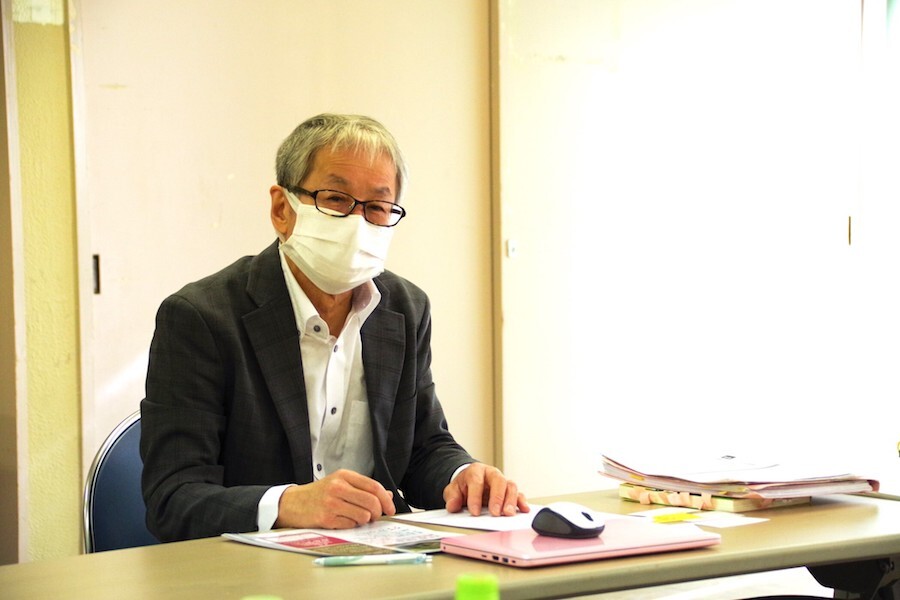
Although there were no actual major problems between foreign residents and Japanese residents of the Takashimadaira housing complex, as the number of foreign residents increased, they gradually began to hear voices that might lead to trouble. “For example, if bulky waste is dumped at the trash collection area, some people assume that it must have been thrown out by a foreigner. Even if they have not actually seen it, they might say that it must be a foreigner who does this kind of thing. Some people have developed such prejudice and discriminatory feelings unconsciously toward foreign residents with whom they have little interaction. However, I believe that such perceptions would be solved (if Japanese and foreign residents) could actually talk, interact, and understand each other,” says Mr. Yoshinari. The themes of the multicultural lectures held by Takashimadaira ACT to facilitate mutual understanding among residents span a wide range of topics, from laws that protect foreign residents, to disaster prevention and refugee issues. They say that residents’ participation in lectures and exchange events is increasing. “While there is anxiety about unknown people, there also seems to be a strong sense of curiosity, of wanting to know, to eliminate their anxiety. Many people are interested in multiculturalism and foreigners but feel they don't know how to get involved, so we hope to provide an opportunity for those people.”
Community development utilizing the strengths of both foreign residents and elderly residents.

In the beginning, Takashimadaira ACT’s activities started with the intention of providing support specifically for foreign residents. However, as they worked in the community, a relationship gradually became established between Takashimadaira ACT and the elderly residents who volunteered and participated in the classes. Under these circumstances, the issue of the aging population in the area - which is currently the most accelerated in the Itabashi ward - became something that they could not ignore as an NPO. Then, they began to explore activities that would take advantage of the two characteristics of the region: multiculturalization and population aging. “We thought that by utilizing the strengths of both the elderly and foreign residents, we could create activities where they would interact with each other,” says Mr. Yoshinari. Elderly residents with a wealth of experience and knowledge are assigned as instructors for a Japanese language class, which is necessary for foreign residents to live in Japan. Foreign residents are also assigned as instructors for foreign language classes and smartphone classes, to expand the world of elderly residents. In this way, they have been creating places and opportunities for elderly residents and foreign residents to help each other and learn from each other.
Ms. Harada, a Japanese language class volunteer, says, “Many (class participants) are from China, but even though they can read easily, many of them cannot speak in their own words. I think this is a place where we can help them have an experience in Japan.” In the classes, students are not evaluated based on scores, like in Japanese language schools. They study at a pace and via a teaching style suited to each participant, and this leads to everyday communication.
Connecting foreign residents and Japanese residents who wish to interact with each other.
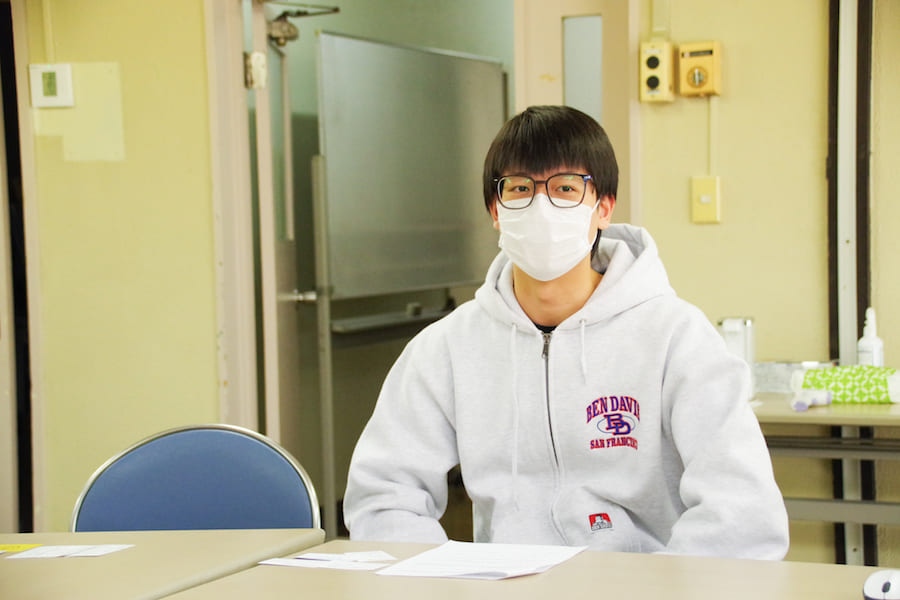
“I had lived in Japan before, but living here and participating in Takashimadaira ACT was my first experience with this kind of activity among residents. I have learned a lot. I would like to interact more (with local residents),” says Mr. Chen, a graduate student from China who is a volunteer instructor for the Chinese language class. He is also introducing Chinese culture to Japanese people through the Chinese language, in this area which has a large Chinese population. Many foreign residents like Mr. Chen have expressed an ambitious attitude to interact and socialize with Japanese residents, and in a previous survey conducted by the ward, more than 90% expressed such intentions. “Mr. Yoshinari approached me and I joined because I agreed with the concept. I thought it was important to connect with people from various countries and to have ties with the local community, too,” says Ms. Kenmoku, a Japanese language class volunteer.
From 2014 to 2017, Takashimadaira ACT opened Halo-Halo Gourmet, a community space where foreign residents and elderly residents may gather and interact. A wide variety of activities were held at the Halo-Halo Gourmet, including Japanese, English, and Tagalog classes, a dementia cafe, a lunch club, a monks’ dining, and a live performance by a Bangladeshi folk band. These activities continued even after the business closed, using a community center and other facilities.
Future Community Development Proposed by Takashimadaira ACT’s Activities

“I myself had very few neighborhood connections, and had never met my neighbors before I started my work with this organization,” says Mr. Yoshinari. Ms. Harada and Ms. Kenmoku, who have lived in the complex for more than 50 years since the neighborhood association was established, also agree, “With the number of young people decreasing, not many people pay attention to the activities of the neighborhood association.” The generation that once organized the neighborhood association and livened up local activities is now aging. In addition, as neighborhood relations are becoming weaker due to the changing of residents, Takashimadaira ACT’s activities offer a new solution: coexistence and collaboration between foreign residents and Japanese residents. In the future, they hope to expand the scope of their activities to include the education of children with foreign roots, in their mother tongues and cultures. When we asked Mr. Yoshinari about his future goals, he replied, “We would like to think of ways to make people want to participate in volunteer activities once they take our courses. As relationships in the local community are breaking down, we would like to work together with volunteers to build the community, by helping each other.”
Takashimadaira ACT’s initiatives may change the future of their community development dramatically.
*This article is based on information available at the time of the interview. For the latest information, please contact the organization directly.