


Close UP
Community Cafe Mincafe - PARC Interpeople's Cooperation (PARCIC) ~ Creating a "place" in Katsushika that transcends nationalities and generations by utilizing global activities. ~
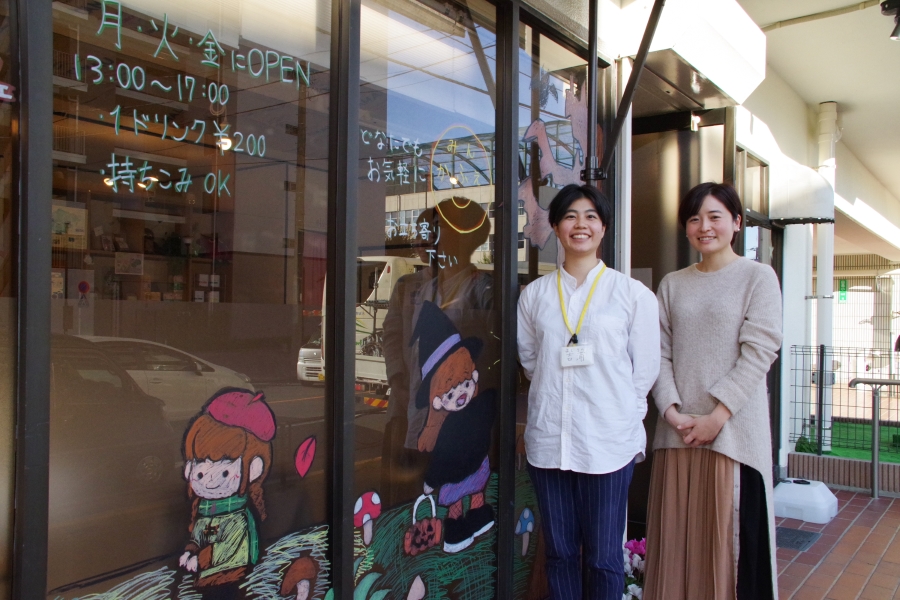
Mincafe is a community cafe opened by PARC Interpeoples' Cooperation (PARCIC) in Shiratori, Katsushika ward in June 2018, aiming to be a "place" where anyone - from children to the elderly, and people with foreign roots - may easily drop in and feel free to consult someone. Mincafe is operated by PARCIC, which has been working mainly overseas as an international cooperation NGO. Mincafe is involved in various activities such as a children's cafeteria, food pantry, and cross-cultural exchange events, while also providing and selling fair trade organic coffee, tea, and sweets at affordable prices. We interviewed two PARCIC employees, Ms. Sayaka Oguri, who supports Mincafe, and Ms. Ryoko Yoshiura, who manages Mincafe.
A wide range of activities centered on Interpeoples' cooperation.
PARCIC(PARC Interpeoples' Cooperation)was established in 2008, independent of its parent NGO, the Pacific Asia Resource Center (PARC). PARCIC has been involved in the "Interpeoples' cooperation projects" and in the "Fair Trade Project" with local people in East Timor, where they had been involved for a long time - since just after the nation's independence movement - as well as in Sri Lanka, Malaysia, Palestine, and other countries. In recent years, PARCIC has expanded its activities to seven countries, including support for Syrian refugees in Lebanon. The term "Interpeoples' cooperation" refers not to "International cooperation" between countries, but to cooperation between citizens, beyond nations. It expresses their desire to improve the world through trade and exchange with local citizens on an equal footing with each other.
"We think the Great East Japan Earthquake of 2011 was a turning point for PARCIC," says Ms. Oguri. At the time, activities were somewhat segregated, with NGOs working overseas and NPOs working domestically. But, the aftermath of the earthquake was a turning point for international cooperation NGOs, which began to work on domestic disasters as well. When information about the earthquake reached PARCIC's overseas project sites, local people were concerned. And they also began to take part in activities in Japan, such as developing reconstruction assistance for Ishinomaki City in Miyagi Prefecture.
A community space as a "place" in Japan, born out of realizations in overseas sites.
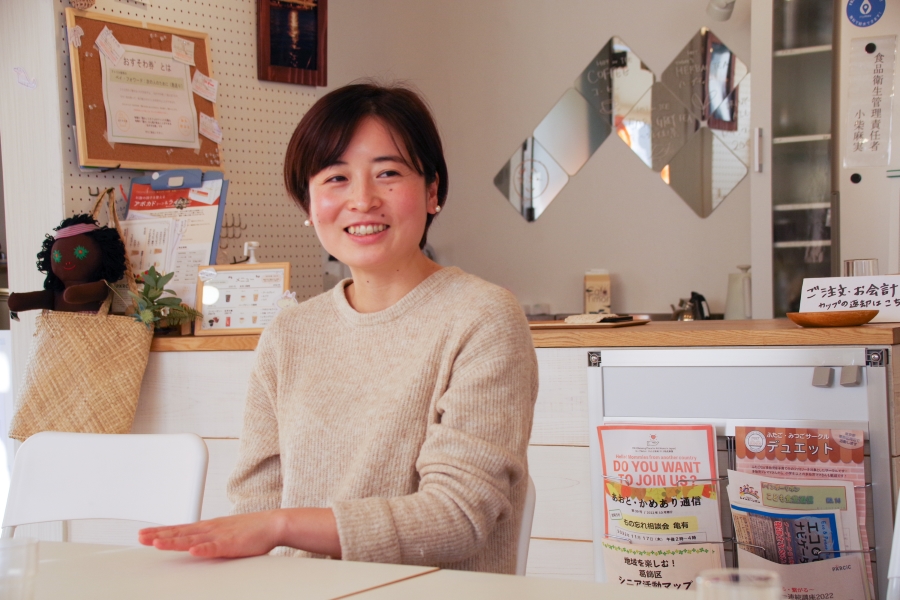
In 2015, the Comprehensive Survey of Living Conditions conducted by the Ministry of Health, Labor and Welfare, stated that 13.9% of Japanese children under the age of 18 (or one out of seven children) live in poverty, a fact that has a great impact throughout Japan. The idea for "Mincafe" was born at the suggestion of a staff who was working at East Timor and saw the news.
"Even in East Timor, where the country is economically poorer than Japan, there is a network of support among neighbors, relatives, and other adults who help children who cannot afford to eat. So why do some children in Japan have to eat alone every day? That staff thought that along with ‘economic poverty,' Japan has a ‘relationship poverty' between people. The idea of community space as a ‘place' was born from this staff's awareness of the need for a network where people support each other in the local community, and a place they can rely on when they have a problem," says Ms. Oguri. However, there was some discussion at the time if this was something PARCIC should do, as they did not have sufficient knowledge of how to address poverty and create a space for people to live in Japan.
"We came to the conclusion that because PARCIC has learned the importance of connecting with people at overseas project sites, there may be something we can do in Japan. We then started the community cafe with the aim of making it a space where local people may gather casually and consult with us about any problems they may have."
Support for those who need it, changing the system with the COVID-19 pandemic.
"The name ‘Mincafe' comes from ‘Minna-no cafe (Everyone's cafe)' and ‘min,' which stands for ‘min-sai' (Interpeoples') cooperation conducted by PARCIC. The name reflects our hope that we would create a place where people in the community can gather and support each other," says Ms. Yoshiura.
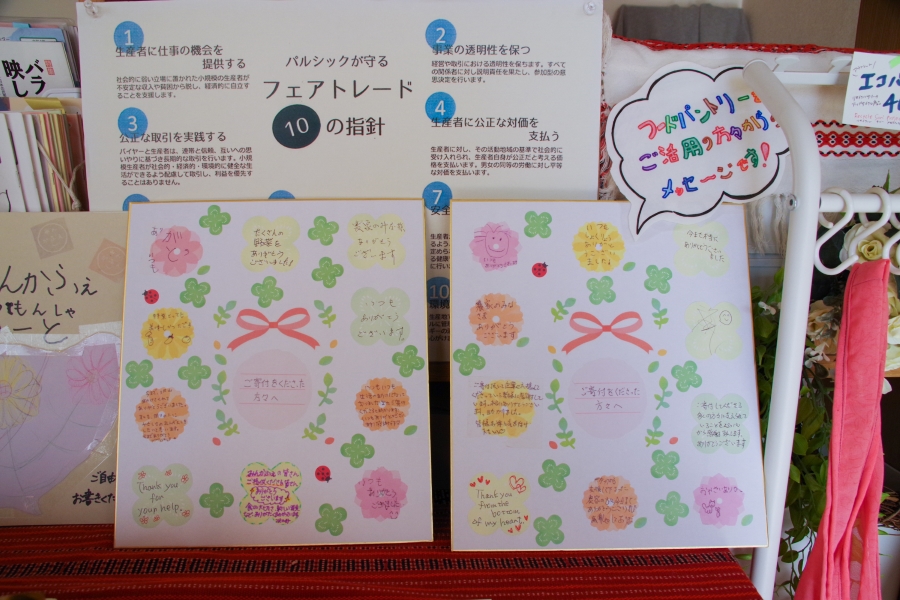
Katsushika ward was chosen as the location for the community cafe. At the time, several children's cafeterias were collaborating to launch the "Katsushika Children's Cafeteria and Spacemaking Network," and Mincafe also joined the network, learning from its know-how as they went along. After a year of preparation, Mincafe opened in 2018, but just as it was about to get off the ground, the COVID-19 pandemic struck. "When it became difficult to run the children's cafeteria, we sought ways to provide food to those with whom we have a connection such as boxed lunch distribution and a food pantry."
There are more than 100 families registered for the food pantry, but Mincafe does not place any restrictions on users based on their income, or on whether they have children or not. "We are concerned about whether the person is in need, so we have never raised the bar for use of the service."
Until September 2022, they distributed food to approximately 50 households at each of their weekly food pantry activities. However, when they think the system for "live with COVID-19", there was some discussion about how long the food pantry would continue to operate while focusing on the children's cafeteria and creating a space. However, there were people who needed food, and some volunteers said that they wanted Mincafe to continue such activities. So, PARCIC decided to continue the program as much as they could.
Creating relationships through events where people may ask for advice.
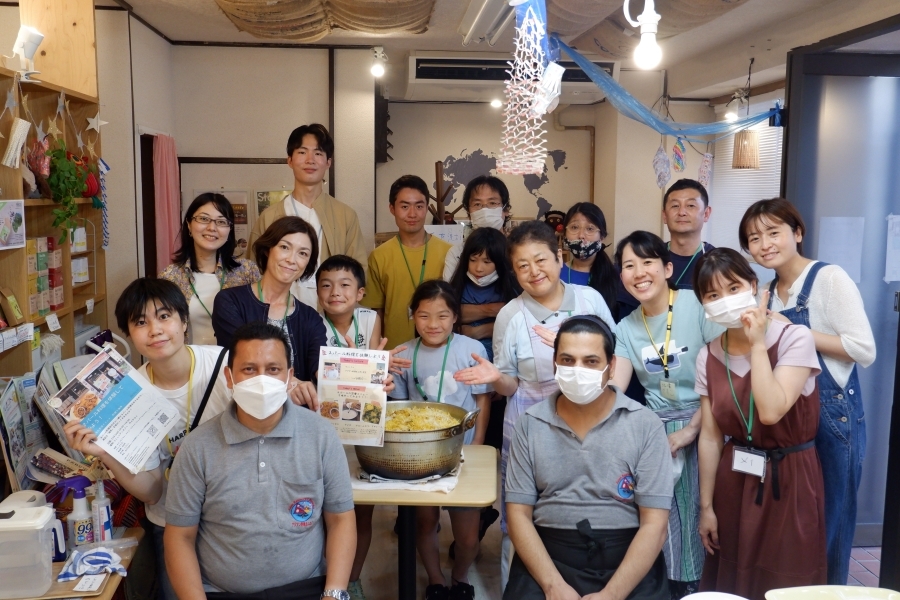
As the situation changes due to the COVID-19 pandemic, in 2022 PARCIC has newly started to provide assistance to people with foreign nationalities or foreign roots living in Japan.
"PARCIC considered that foreigners were being affected by the changing situation caused by the COVID-19 pandemic, such as problems with paperwork, access to information, and Japanese language skills. We thought that PARCIC could help in these areas," says Ms. Oguri.
To listen to the problems of foreign residents, PARCIC visited restaurants in the Katsushika ward which specialize in dishes specific to each nation and held a consultation at Mincafe twice a month. However, in the beginning, it was difficult to get them to open up about their problems.
"We wondered how we would feel if we were in that position, and if we would want to talk to someone we didn't know at all. Who we will rely on first would be our friends or acquaintances. If a stranger like us suddenly approaches foreign residents and says, ‘we offer consultation,' they would not rely on us. Returning to Mincafe's vision of creating a safety net through connections, we concluded that we should start by getting to know each other, and by creating a relationship where foreign residents may consult with us."
The current direction of Mincafe is first to get to know people through interaction at events, and then to make Mincafe a space where people may stay and talk about their problems with those they have met. At the regular "Global Cafe" event Mincafe hold on the first and third Saturdays of the month, people with foreign roots living in the Katsushika area and Japanese people can interact with each other. Also, they may provide consultation services there.
Rebuilding relationships that enable people in local communities to watch over each other in Japan, where poverty is on the rise.
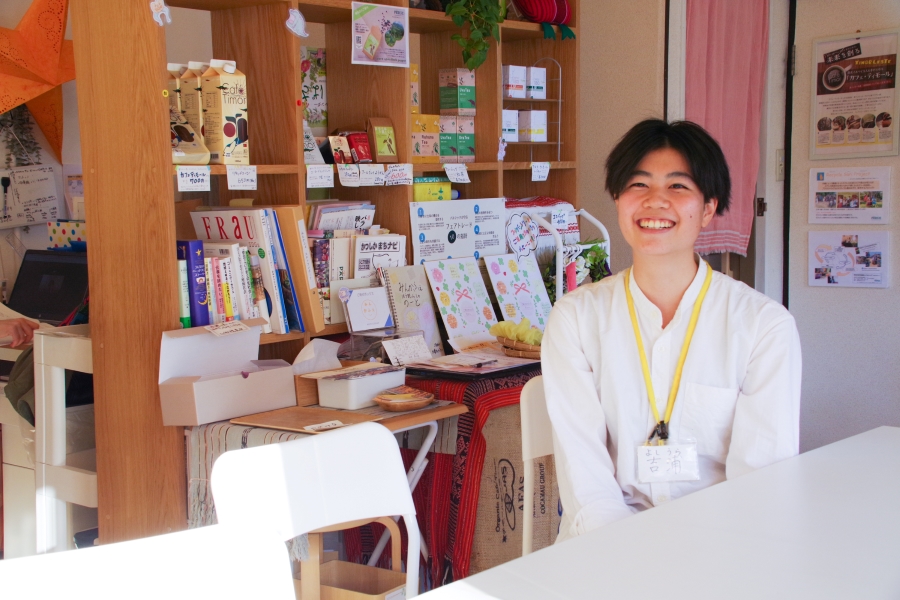
Since Mincafe was conceived in response to child poverty, the children's cafeteria was the main activity in the beginning. However, over the course of the operation of that, the range of visitors to has gradually expanded to include elderly people living alone in the community, single mothers, and people with foreign roots. The registered volunteers, who number 80 to under 100, are involved in events and other activities as administrative staff, and regular customers come to decorate their handmade lamps, so Mincafe is gradually spreading throughout the community, becoming a space created by local residents.
"Our future goal is to create a network of people who support each other as ‘people living in the Mincafe community,' without making any distinction between Japanese people - such as children, elderly people, and single mothers who have utilized Mincafe in the past - and people with foreign roots," says Ms. Oguri.
As we often hear people say that they don't know who lives next door or that they don't know anyone in the community, community connections fading away. In such a situation, there is a "space" where people can meet, get to know each other and connect with each other. The coffee we enjoyed at "Mincafe" tasted very relaxing.
Community Cafe Mincafe
Shiratori Diamond Mansion 1F, 4-1-24 Shiratori, Katsushika-ku, Tokyo
TEL: 070-2156-9179
HP: https://mincafe.parcic.org/
*This article is based on information available at the time of the interview. For the latest information, please contact the organization directly.