


Community "Nihongo Kyoshitsu" Activities Report, vol.24
The regional Japanese language education coordinators of the Tokyo Metropolitan Foundation “TSUNAGARI” are visiting Japanese classes in Tokyo and introducing them in the Community “Nihongo Kyoshitsu” Activities Report.
(This article was written by a foundation staff member who accompanied the coordinator on the visit.)
In our twenty-fourth report, we are introducing JCA Chitosefunabashi (Setagaya City)
About Setagaya City
Setagaya City is located in the southwestern part of Tokyo’s 23 special wards and has the largest population of any of the 23 wards. It is a popular residential area with an extensive transport network, including the Odakyu, Keio, and Tokyu lines, while also enjoying abundant greenery in places such as Kinuta Park and Komazawa Olympic Park. Many foreign residents live in the city, with a wide range of backgrounds, from international students and company employees to dependent family members. To support the daily lives of these diverse residents and foster communication within the community, Japanese classes and international exchange activities are held throughout the city.
Population (as of September 1, 2026): 931,655
Foreign resident population: 31,907
JCA Chitosefunabashi (Setagaya City)
JCA (Japan Culture Association) is a volunteer group founded in 1983 to support Japanese language learning. It helps foreign residents in the community learn Japanese and aims to deepen understanding of each other’s cultures and ways of life through exchange.
JCA Chitosefunabashi runs seven classes from Monday to Friday, each led on the initiative of two to three class committee members. About 150 supporters and about 150 learners take part, and support is generally provided one-on-one, tailored to each individual learner.
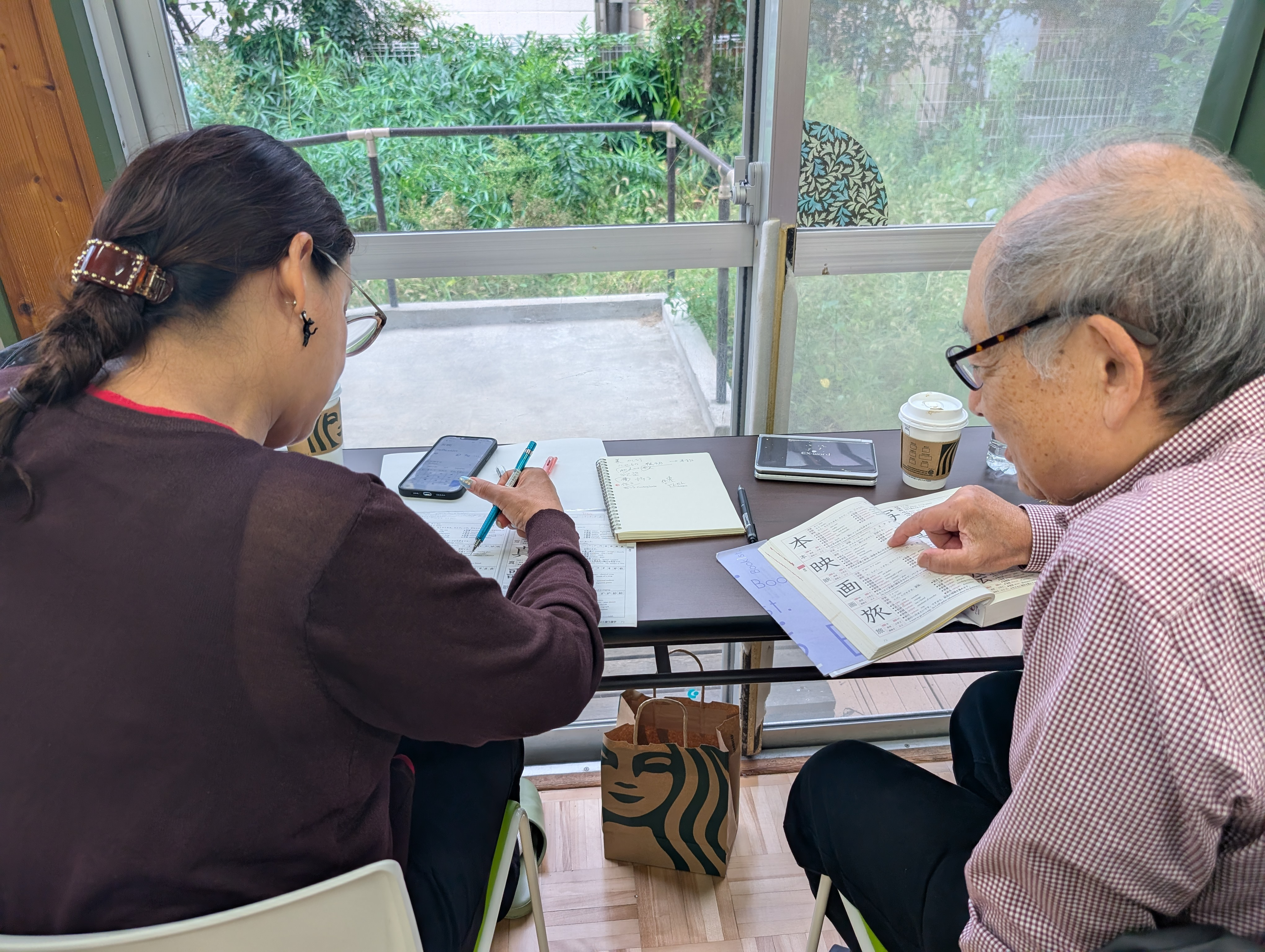
Studying kanji one-on-one
Visiting the Monday Class
This time, we visited JCA Chitosefunabashi’s Monday class, which meets at the Kitazawa Volunteer Bureau in Umegaoka.
The class brought together learners with roots in many different countries and regions. Their goals vary from person to person: some are company employees who don’t normally use Japanese at work, some are preparing for the Japanese-Language Proficiency Test, and some are international students who want to practice conversation. We were told that some learners had almost no prior experience studying Japanese.
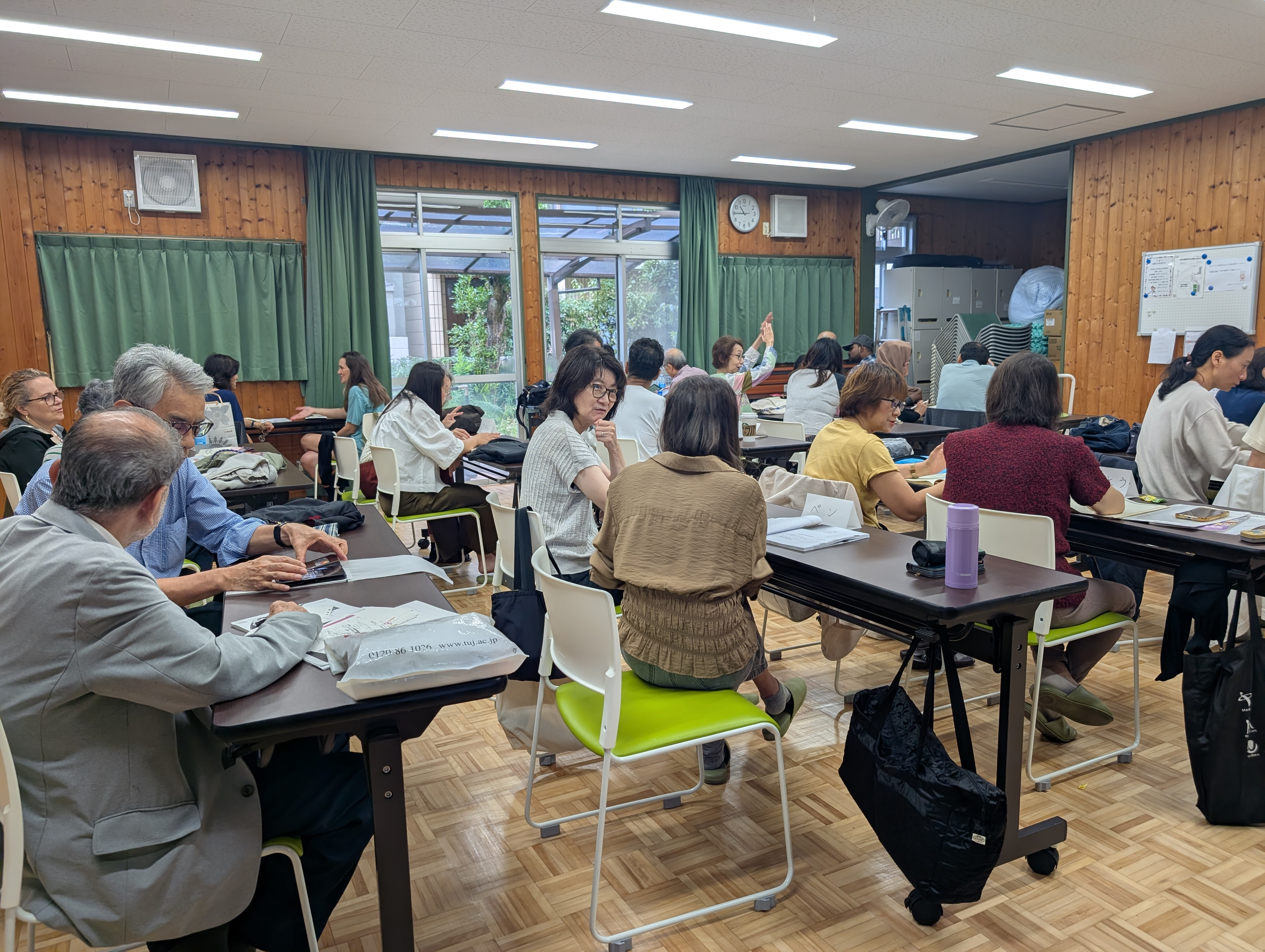
A scene from the classroom
Rather than following a fixed curriculum, the Monday class shapes its lessons around each learner’s wishes and challenges. Some study with learning materials, some come mainly for conversation, and others work through documents they have brought from work or school. With supporters and learners generally working one-on-one, each learner was progressing in a way that suited them, letting many different ways of learning take place in the same classroom.
What the whole class had in common was an emphasis on “what the learner wants to learn.” Rather than supporters deciding what to teach, the lessons followed the learners’ interests and the needs that arise in their daily lives, and this left a strong impression on us.
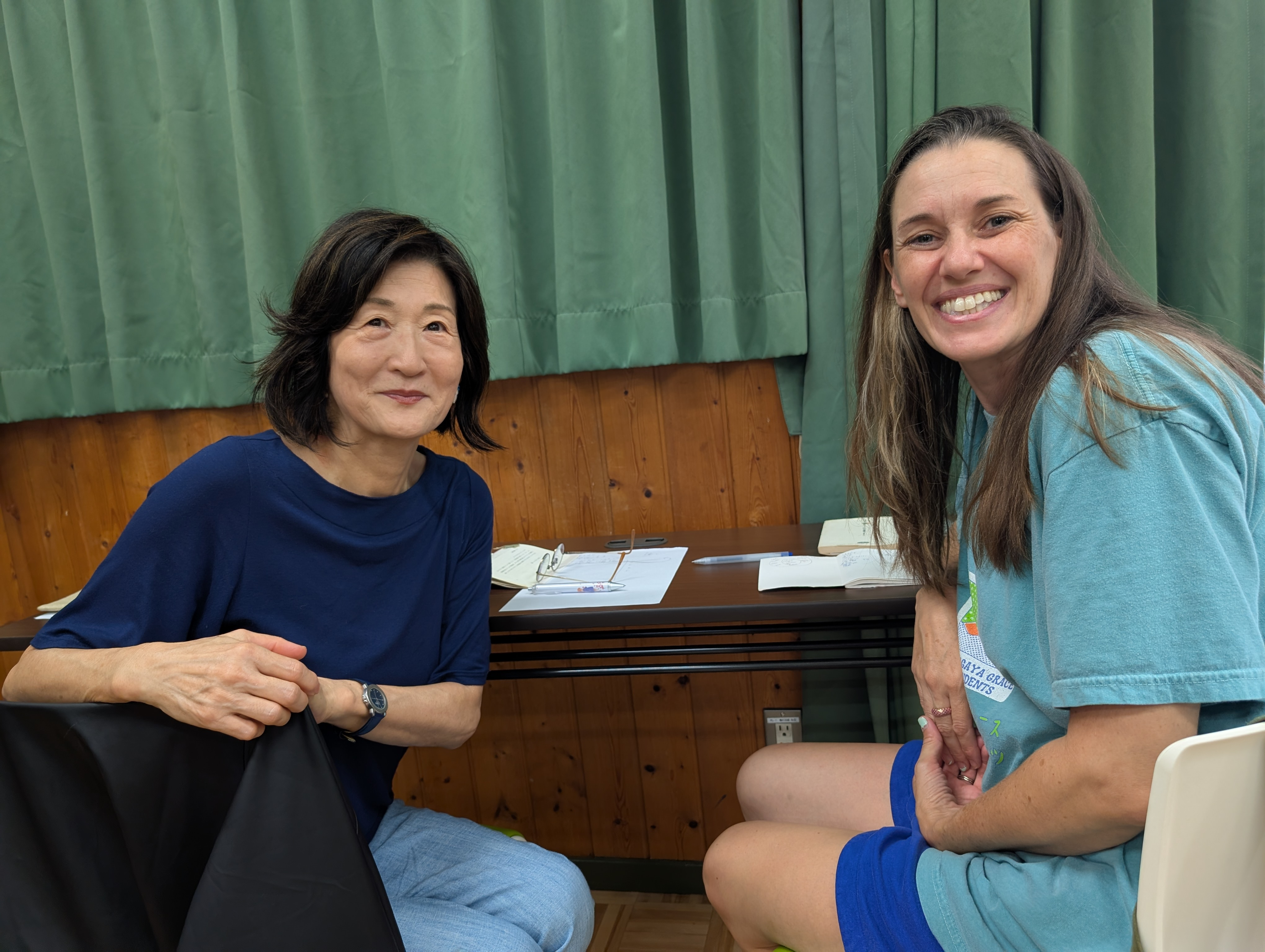
Enjoying learning with materials brought in by a learner
The Joy of Supporting Learners and Trying Different Ways of Teaching
Ms. Kashima, JCA Chitosefunabashi’s representative for FY2026, names “being able to support learners and learn together with them” as one of the appeals of JCA’s activities. Learners’ backgrounds, the circumstances that brought them to Japan, and their goals in studying Japanese vary greatly, and she says it is important for supporters to keep learning themselves as they think about the best way to support each person.
“What learners want to learn and how they learn differ from person to person. Some want to bring in materials other than textbooks. That’s exactly why being able to work together to find the learning method that suits each person, without being bound by set formats, is what makes these classes so engaging,” she told us.
JCA Chitosefunabashi website
https://jca-chitosefunabashi.jimdoweb.com/
Thoughts on our visit…
Throughout the class, we felt a warmth that can only be described as feeling “at home” and heard a great deal of conversation. Learners and supporters enjoyed natural conversations as they studied with a variety of materials, and they seemed to have built a relationship of learning from one another.
We learned that JCA, which has supported Japanese language learning in the community for more than 40 years, is able to keep running thanks to a fair system in which volunteers take turns serving as representative. Through this visit, we came to appreciate not only the importance of being able to tailor learning to each learner’s circumstances, but also the importance of an environment where learners and supporters can grow together.
by HM