


Community "Nihongo Kyoshitsu" Activities Report, vol.22
The regional Japanese language education coordinators of the Tokyo Metropolitan Foundation “TSUNAGARI” are visiting Japanese classes in Tokyo and introducing them in the Community “Nihongo Kyoshitsu” Activities Report.
In our twenty-second report, we are introducing the Volunteer Circle in Higashimurayama, Soraironotane (Higashimurayama City)
About Higashimurayama City
Higashimurayama City is located in the northwestern part of Tokyo, bordering Tokorozawa City in Saitama Prefecture to the north. Several Seibu railway lines and the JR Musashino Line run through the city in various directions, while the Shin-Ome Kaido and Fuchu Kaido highways intersect at its center, making it a well-connected city with abundant greenery.
Population (as of March 1, 2026): 151,933
Foreign resident population: 4,674
Soraironotane, the Volunteer Circle in Higashimurayama
Soraironotane, the Volunteer Circle in Higashimurayama, was founded in June 1995. Two years prior, in the autumn of 1993, a civic course titled “Volunteer Training for Japanese Language Instruction” was held at the local community center (kominkan). It was from among the participants of this course that a group of motivated individuals came together to establish the association.
As recorded in the association’s 15th anniversary commemorative publication, the course — the first of its kind held in the city — received 102 applications for just 30 available places. However, it turned out that many applicants had enrolled hoping to practice English conversation with foreigners, and when organizers subsequently called for volunteers to start a Japanese language teaching circle, only three people came forward. The plan stalled at that point. Two years later, however, those who had kept the idea alive eventually brought Soraironotane into being.
The association has continued its activities steadily ever since, and last year marked the milestone of its 30th anniversary. During our visit, we had the opportunity to meet Ms. Hattori, a volunteer who has been active since the very beginning.
When we asked her the secret to continuing volunteer work for thirty years, she told us:
“Everyone here has such a warm personality, and it’s a group where you can be yourself.”
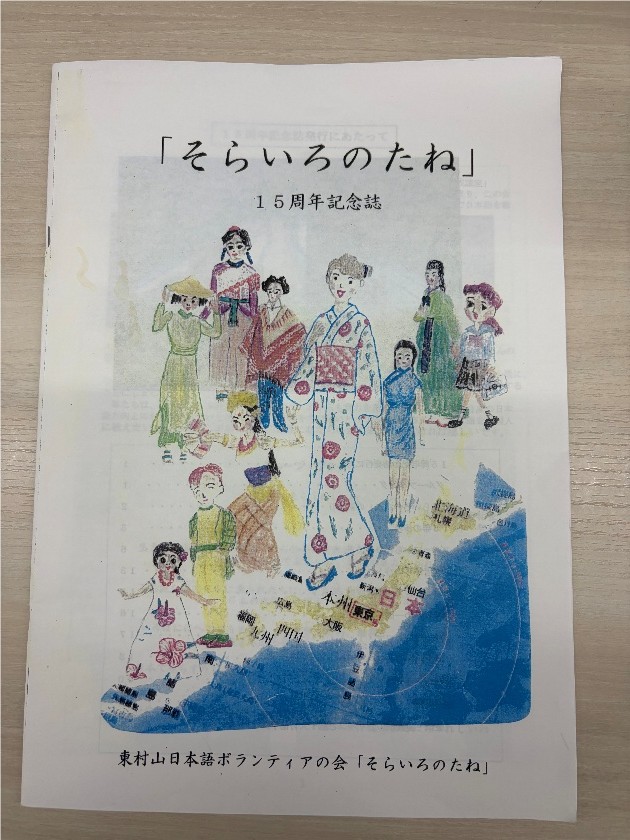
Volunteer Activities
The current coordinator, Ms. Kobayashi, has been involved with Soraironotane for 20 years. She shared that the first ten years were often filled with uncertainty, particularly about how to approach her role as a volunteer. These days, however, her philosophy is that worrying too much gets you nowhere, and that if something seems worthwhile, you should simply try it.
Unlike in the early days of the association, formal training courses for new volunteers are no longer held; instead, prospective volunteers are welcomed on an ongoing basis. When we asked Ms. Kobayashi about the classes, she said:
“I don’t think you can truly understand what makes volunteering both rewarding and challenging until you’ve done it for two or three years. This isn’t the kind of activity you can do halfheartedly just because it seems ‘cool’ or ‘easy,’ so it’s important to approach it with a real sense of responsibility.”
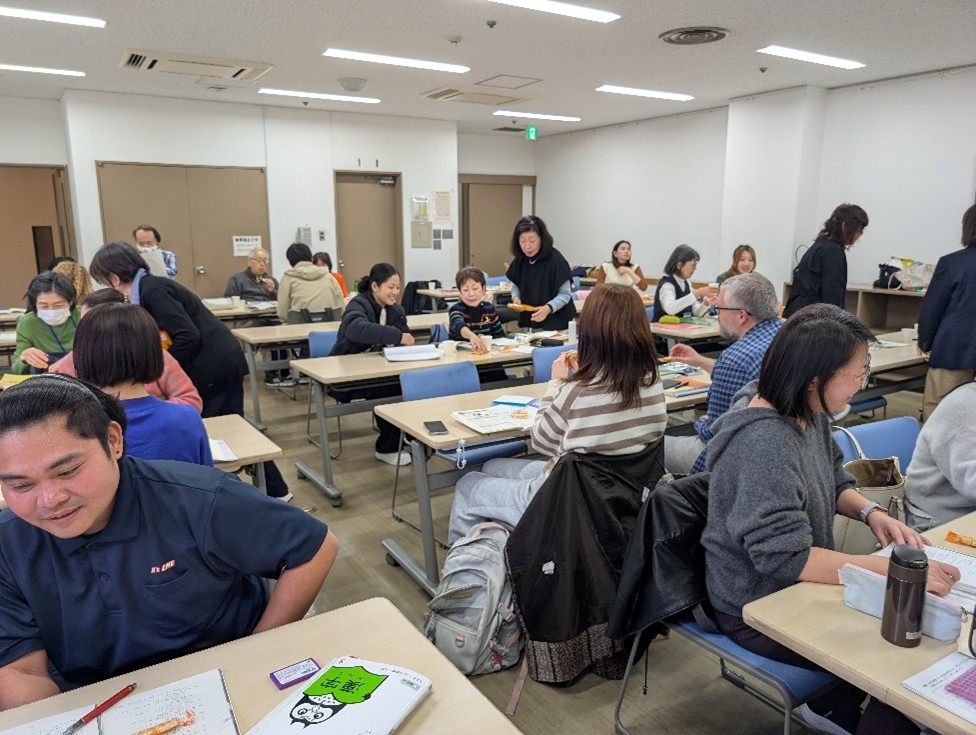
Activities at Soraironotane
One of the volunteers, Ms. Kitamura, spent many years as a Japanese language teacher at a language school. Drawing on that experience, she regularly reminds fellow volunteers of their core motto: to listen to learners “all the way to the end” and “never to interrupt.” As a result, although learners do use Japanese language textbooks, the emphasis is not on reading passages or writing exercises — instead, learners are actively encouraged to speak.
Advice of this kind is shared at a gathering of volunteers held before each class begins. These sessions are not only a space for guidance from Ms. Kitamura, but also a forum where volunteers can share any concerns or difficulties they have encountered, so that no one has to carry their worries alone. Every volunteer we spoke with described the group dynamic using the same words: “a relationship where we can say anything to each other.”
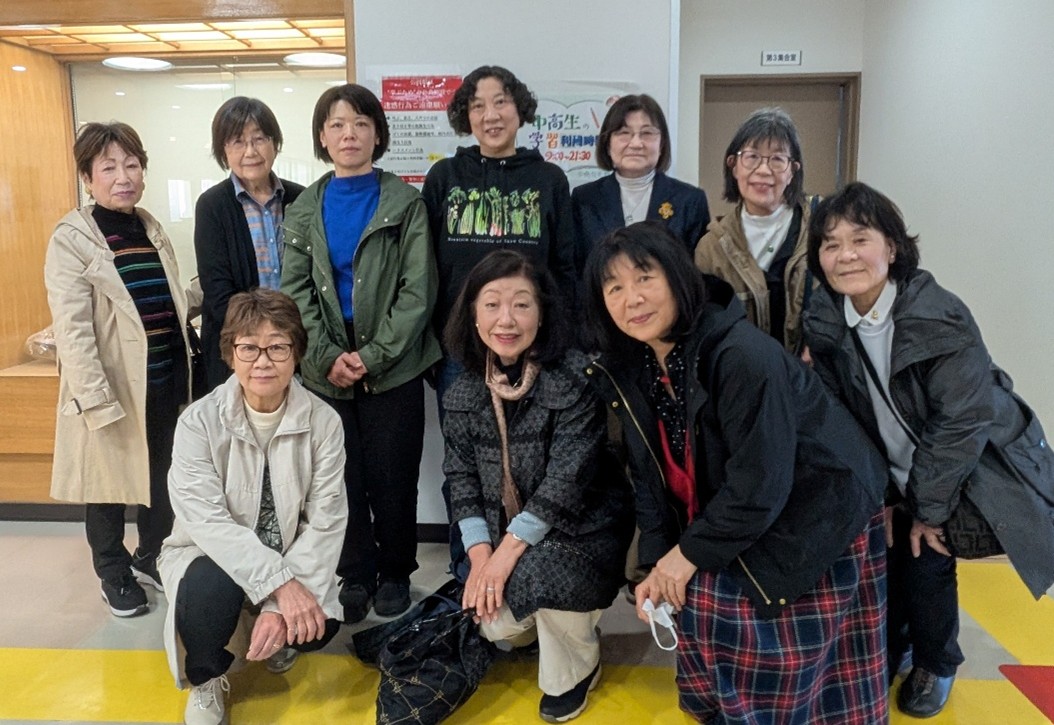
Members of Soraironotane who shared their stories with us:
Ms. Hattori (far right, back row), Ms. Kobayashi (third from right, back row), Ms. Kitamura (far left, front row)
The Joy of Seeing People Change
Ms. Kobayashi told us that one of the most rewarding aspects of the Japanese language classroom is seeing people with diverse personalities come together, grow, and change. This transformation is not limited to learners gaining confidence in their Japanese; volunteers, too, find themselves influenced and changed by the learners around them.
Ms. Kobayashi herself, inspired by a learner who practiced aikido, has started attending the same dojo. She also described how a volunteer who initially seemed quite reserved gradually became more and more confident and engaged — the kinds of transformations that, she said, you simply could not predict.
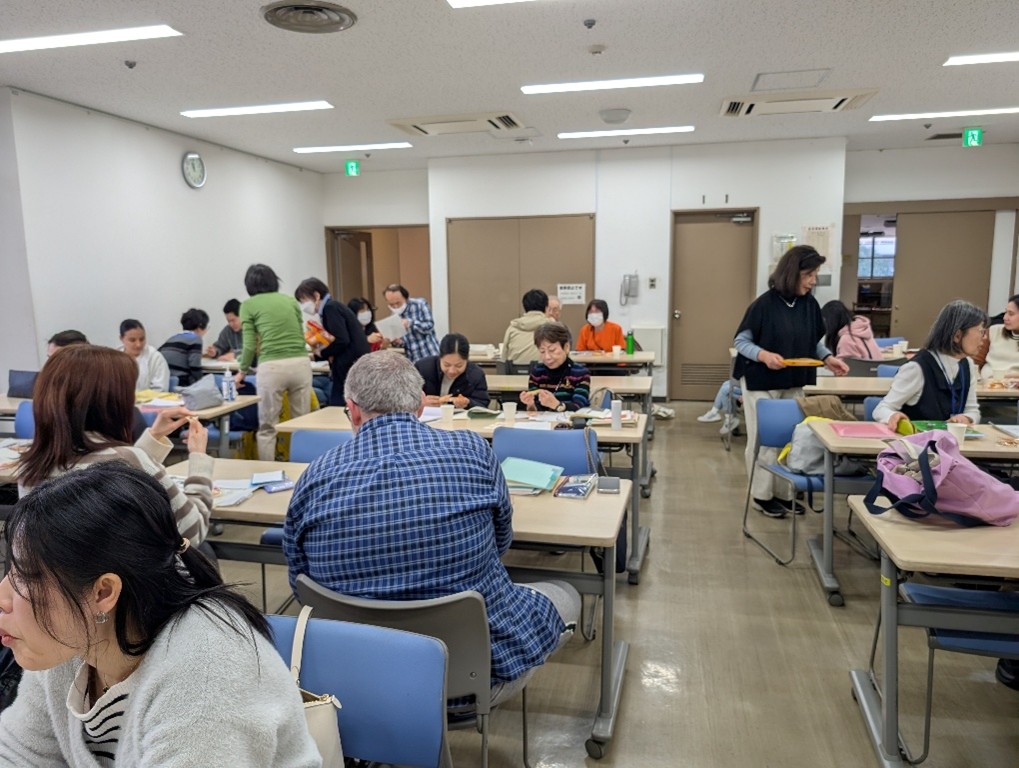
Thoughts on our visit…
“I do this because I love it and it makes me happy. It’s no different from the flower arranging or dance circles that use the community center,” Ms. Kobayashi said. “Treating the activity as something special or out of the ordinary feels somehow off.” Other volunteers echoed this sentiment cheerfully: “I keep coming back because the learners teach me so much too,” and “I’m hooked on the wonderful people in this group — I couldn’t leave if I tried.”
Volunteer training courses often focus on instilling the right attitudes in volunteers, but at Soraironotane, it struck us that those attitudes are absorbed naturally, simply through working alongside everyone else.
It was a visit from which we ourselves came away having learned a great deal.
by AS