


Community "Nihongo Kyoshitsu" Activities Report, vol.20
The regional Japanese language education coordinators of the Tokyo Metropolitan Foundation “TSUNAGARI” are visiting Japanese classes in Tokyo and introducing them in the Community “Nihongo Kyoshitsu” Activities Report.
In our twentieth report, we are introducing the Nihongo-Runrun Book Club in Itabashi City
About Itabashi City
Itabashi City is located in the northwestern part of Tokyo, adjacent to Saitama Prefecture across the Arakawa River. Its transportation is well-developed, with the Toei Mita Line and Tobu Tojo Line running through the City, providing excellent access within and outside the area. The City is also known as a comfortable place to live, ranking highly in nationwide rankings such as the “Best Cities for Working Parents Raising Children” and “Long-term Care and Aging Response Survey.”
Population (as of October 1st, 2025): 583,618
Foreign population: 40,514
A Japanese Language Class in a Coffee Shop
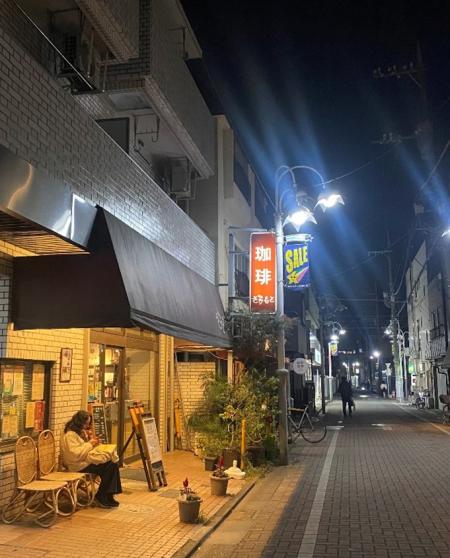
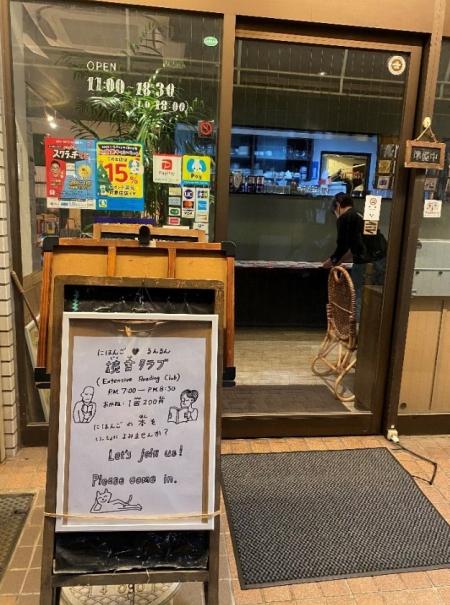
Nihongo-Runrun Book Club is a Japanese language class held by Mr. Sakamoto in his store Kissa Sakamoto, a small coffee shop located in the Kami-itabashi North Exit Shopping District.
How Nihongo-Runrun Book Club Operates
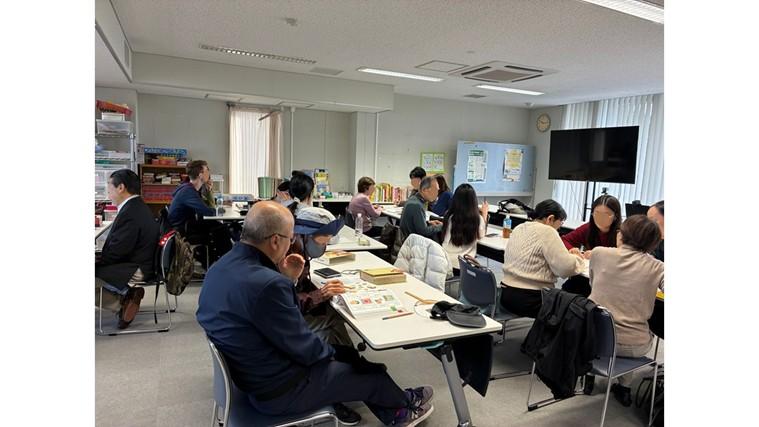
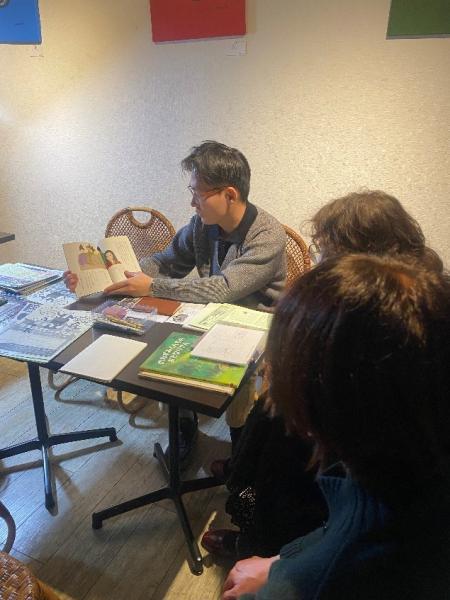
On the day of our visit, there were 5 learners and 2 supporters, including Mr. Sakamoto.
The class activities begin with everyone gathering around one table to watch a kamishibai (picture-card story).
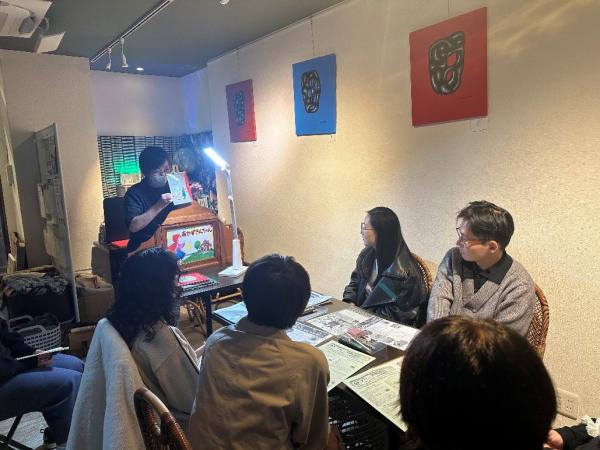
The kamishibai on this particular day was “Little Red Riding Hood,” read by Mr. Sakamoto.
After everyone has watched the kamishibai, Mr. Sakamoto facilitates a session where everyone shares their impressions and broadens the conversation. On the day of our visit, they talked about how “Little Red Riding Hood is a famous story in our home countries too” and “the ending is a little different.”
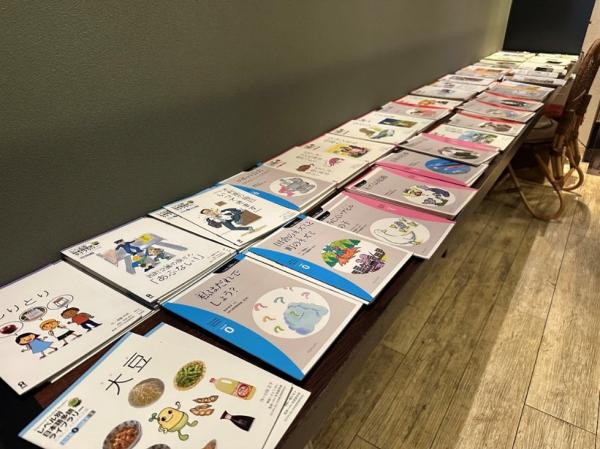
Learners select their favorite books from the tadoku collection lined up on the counter.
After they have finished reading, the learners briefly summarize the content of the book they have read and present it within their group. Others then ask questions about it or engage in exchanges using that book as a topic, and that learner's turn ends.
Then it becomes the next learner's turn, repeating the flow of presentation, questions, and exchanges. During this time, the supporters play a role in facilitating and bridging interactions between learners.
Finally, the learners write their reading records, and the day's activities conclude.
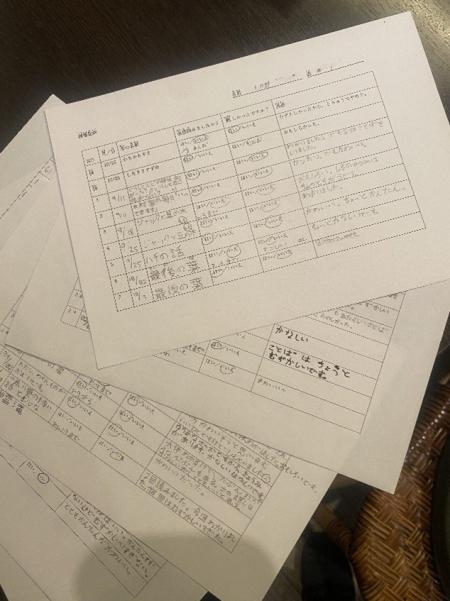
The reading record contains the name of the book read and the learner’s impressions.
Japanese tadoku
Mr. Sakamoto, who hosts these sessions, was inspired to start Japanese language classes by the activities of NPO Tadoku (Tadoku Supporters). The books used in the classes are also written or supervised by NPO Tadoku.
NPO Tadoku: Organization Introduction Page
https://tabunka.tokyo-tsunagari.or.jp/organization/dantai/TADOKU.html
The books are created by Japanese language level, and the content covers a wide range including famous folktales, fairy tales, and short novels and essays, with over 150 books available at Nihongo-Runrun Book Club.
Kissa Sakamoto also has a large bookshelf lined with books collected by Mr. Sakamoto, who loves books. There is also a “Small Picture Book Library”*, an initiative by the Itabashi City Library, so there are many picture books as well. Some learners choose to read those books instead of the tadoku books.
*Small Picture Book Library
The Itabashi City Library has established “Small Picture Book Libraries” at facilities throughout the City, as well as at “Baby Stations” and shops that offer diaper changing and nursing facilities.
Link to Itabashi City Library “Small Picture Book Library”
https://www.city.itabashi.tokyo.jp/library/bologna/2000091.html
Thoughts on our visit…
During this visit, I read tadoku books for the first time. I could imagine how conversations would naturally flow—feeling nostalgic about fairy tales I'd read as a child, or being intrigued by the content of essays.
Nihongo-Runrun Book Club is recruiting supporters, so if you're interested in the activities (especially if you live locally), why not get in touch?
Tokyo Japanese Language Class Site “Nihongo Runrun Book Club”
You can send an email to Mr. Sakamoto through the email form at this link:
https://nihongo.tokyo-tsunagari.or.jp/jp-class/200/
I think having time once a week to gather at a neighborhood coffee shop and talk about books would be a wonderful part of life. This was a visit where I felt the excellent compatibility between “coffee shops” and “Japanese language classes.”
by AS